
An office floor takes a particular kind of punishment. Not the dramatic single events of a domestic floor — a spill here, a scratch there — but the sustained, relentless accumulation of hundreds of pairs of shoes crossing the same surface every working day. Reception areas wear faster than breakout spaces. The route between the door and the lifts wears faster than the boardroom. The areas under desks wear differently from the areas between them. And because nobody in the business is watching it happen gradually, the floor tends to look fine right up to the point where it clearly doesn't.
That's usually when we get the call.
Office floor restoration is technically the same discipline as residential restoration — the same sanding machines, the same grit sequences, the same professional lacquers. What's completely different is everything around the work: the timing, the logistics, the constraints on access, and the need to deliver results that allow the business to operate normally with as little disruption as possible.
Here's exactly how we approach it.
The Challenge That's Specific to Offices
In a home, floor restoration is disruptive but manageable — rooms can be cleared, the family can adapt for a few days, furniture can be moved to another part of the house. In an office, the stakes are different. The floor can't be out of commission for days without a direct business cost. Staff need to be somewhere. Clients still arrive. Equipment can't always be moved.
The first specific challenge of office floor sanding is timing — and timing in an office context means working around the business rather than the business working around the work.
The second challenge is technology. Offices contain servers, computers, monitors, cabling, and electronic equipment that can't always be removed from the space being sanded. In a domestic setting, the most complex thing to work around is usually a piece of furniture. In an office, it's an IT infrastructure that represents significant value and can't tolerate fine particulate settling on sensitive components.
This is why dust-free sanding equipment isn't just preferable in a commercial context — it's the only responsible approach. At Floorworks, all our office floor sanding projects use Bona dust-free sanding systems that capture particles at source. The floor gets sanded; the rest of the office stays clean.
Timing: When the Work Happens
The most important conversation in any office floor restoration project is when the work will take place — and the answer is almost never during office hours.
We regularly work overnight for office projects. The work happens between the time the last person leaves in the evening and the time the first person arrives in the morning. For a well-organised project in a single open-plan space, the sanding and a first coat of lacquer can be completed overnight, with the floor ready for light foot traffic before the office opens. Additional coats are applied on subsequent nights.
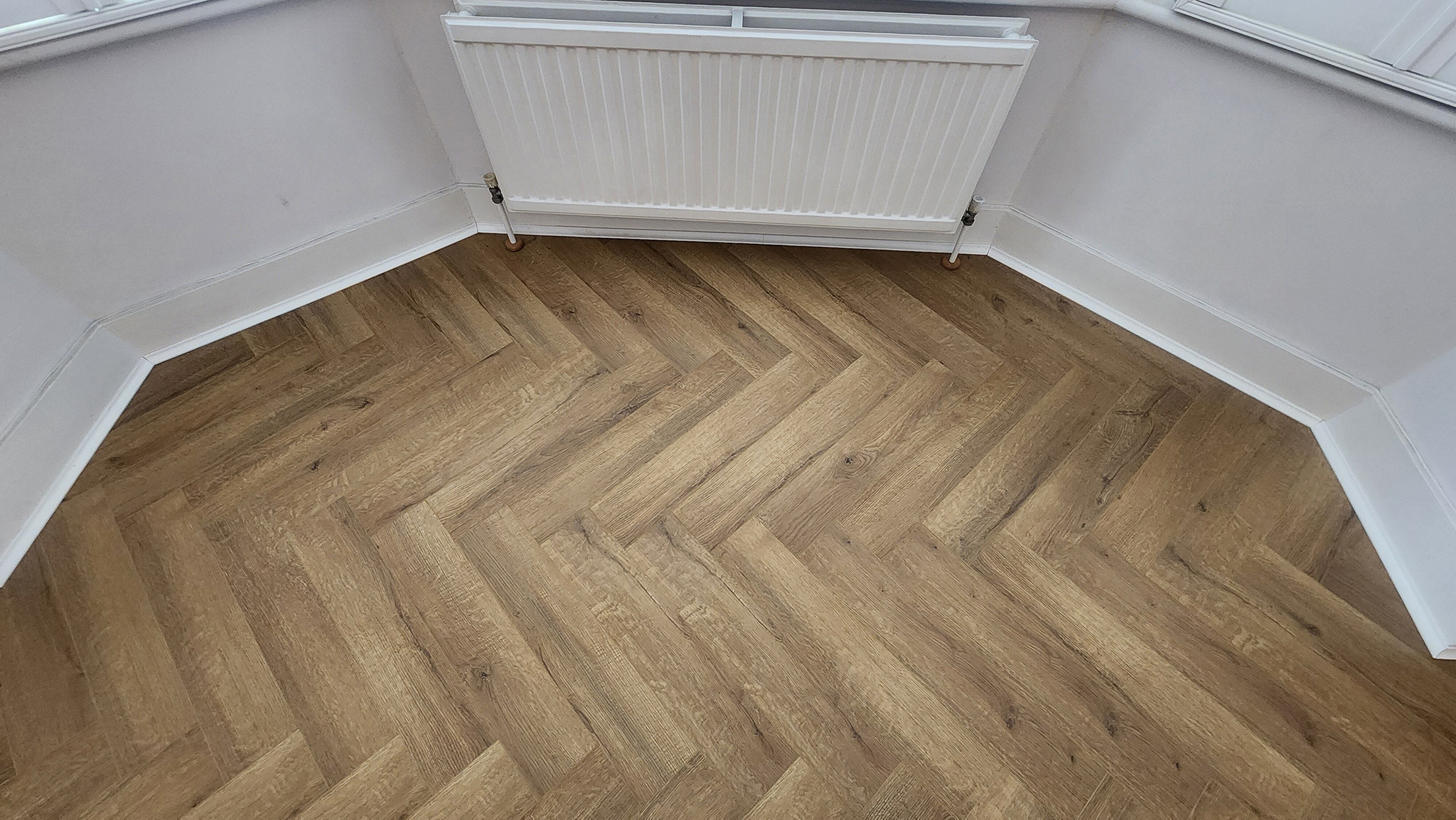
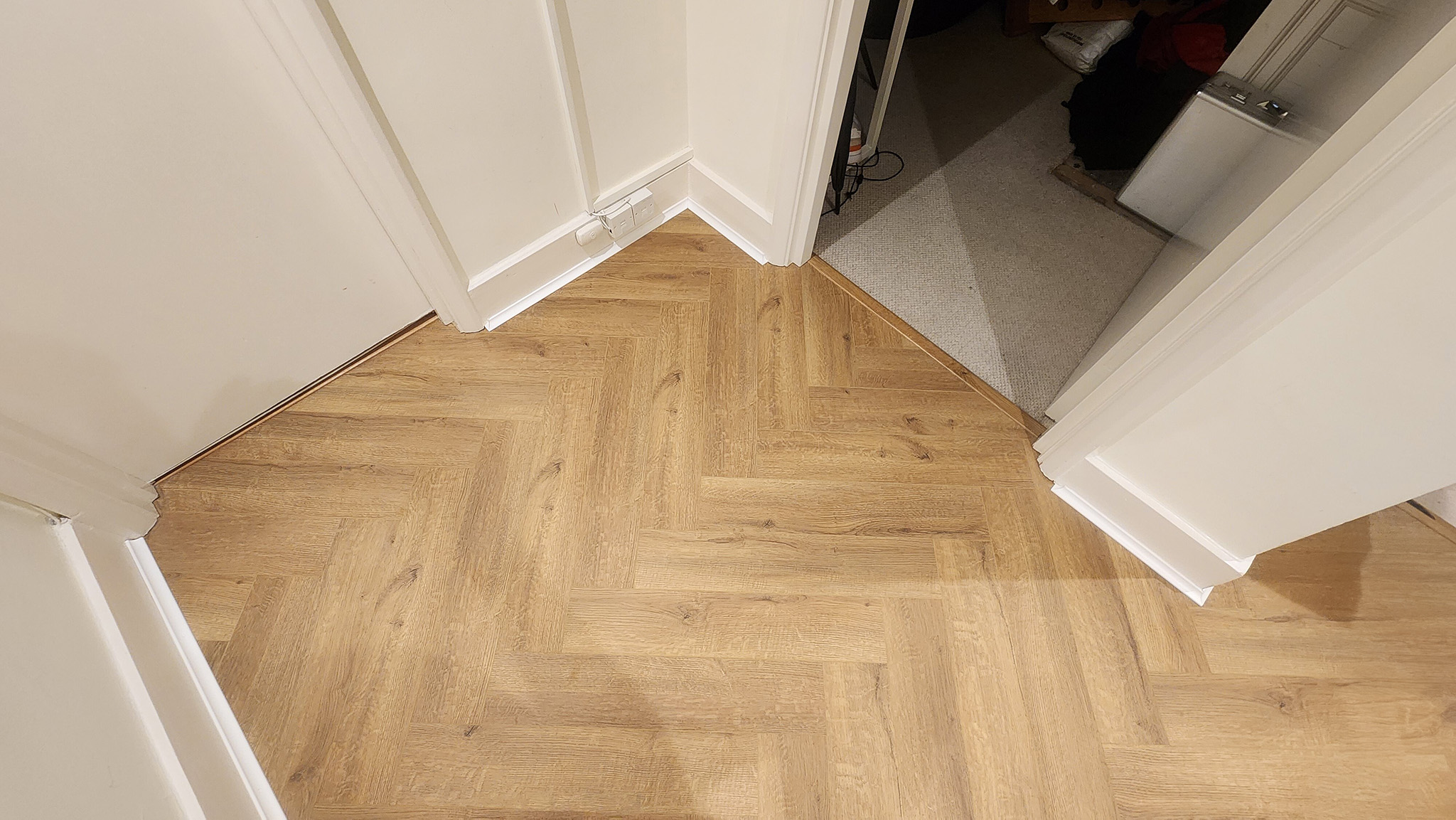
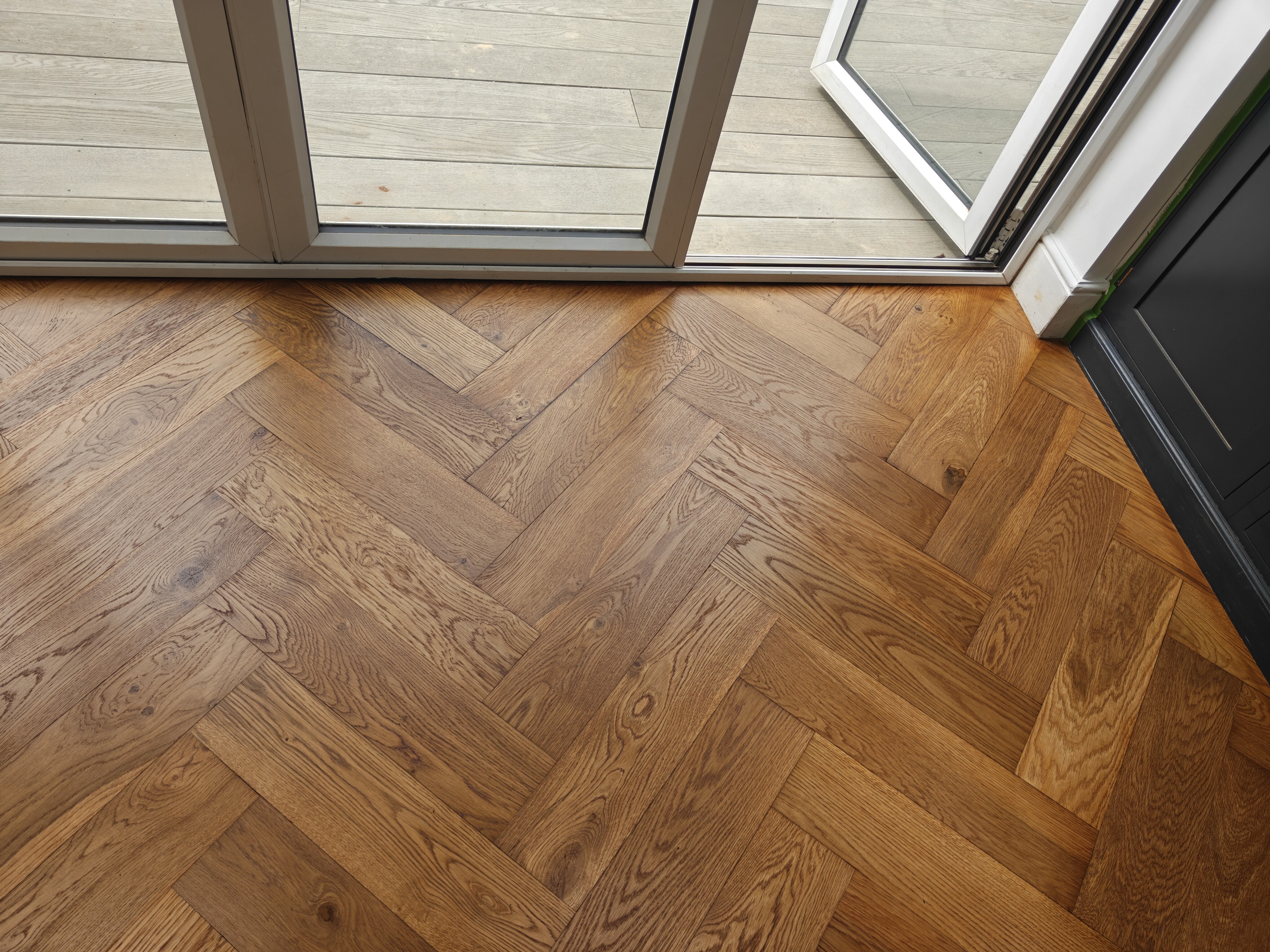
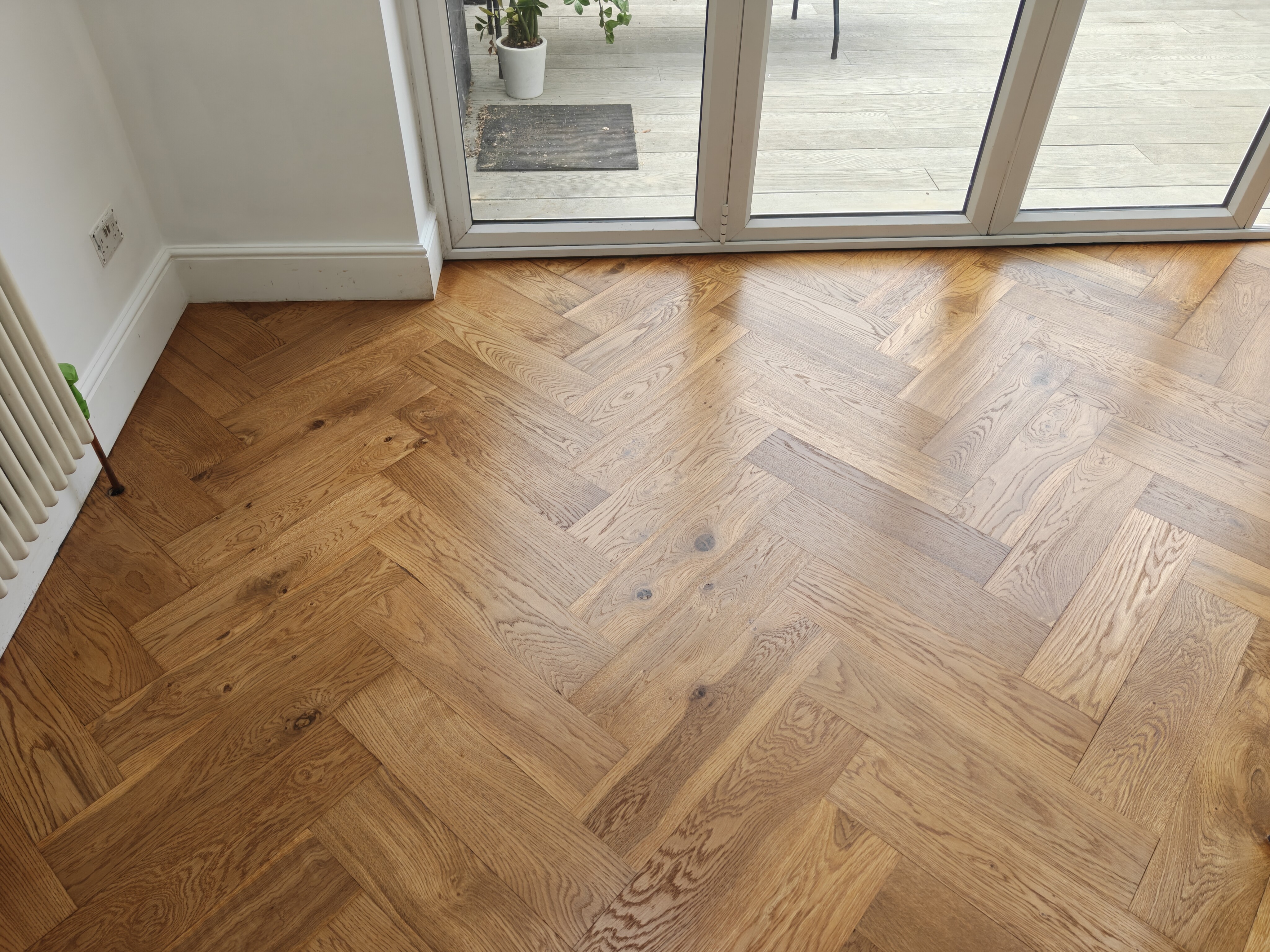
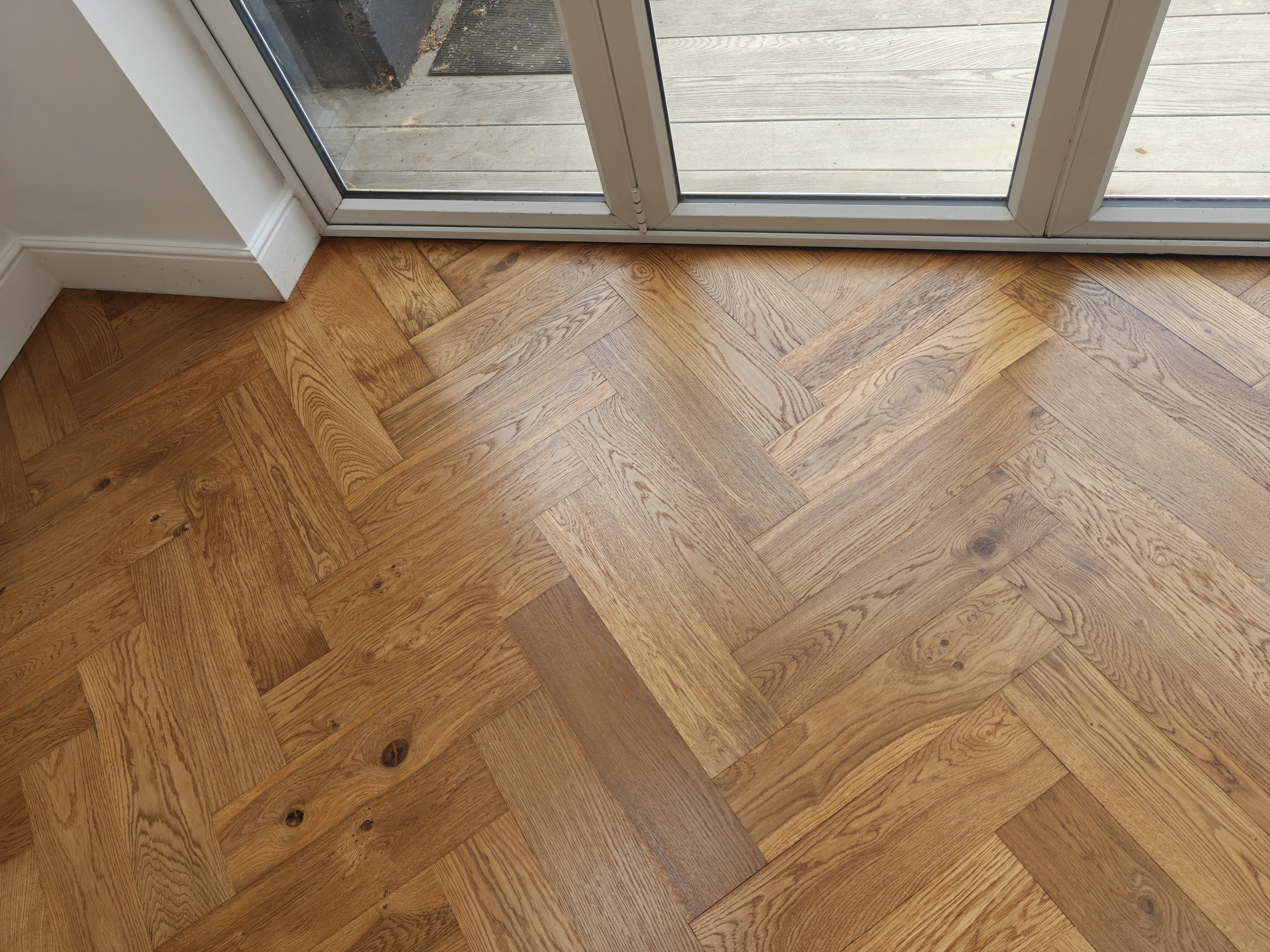
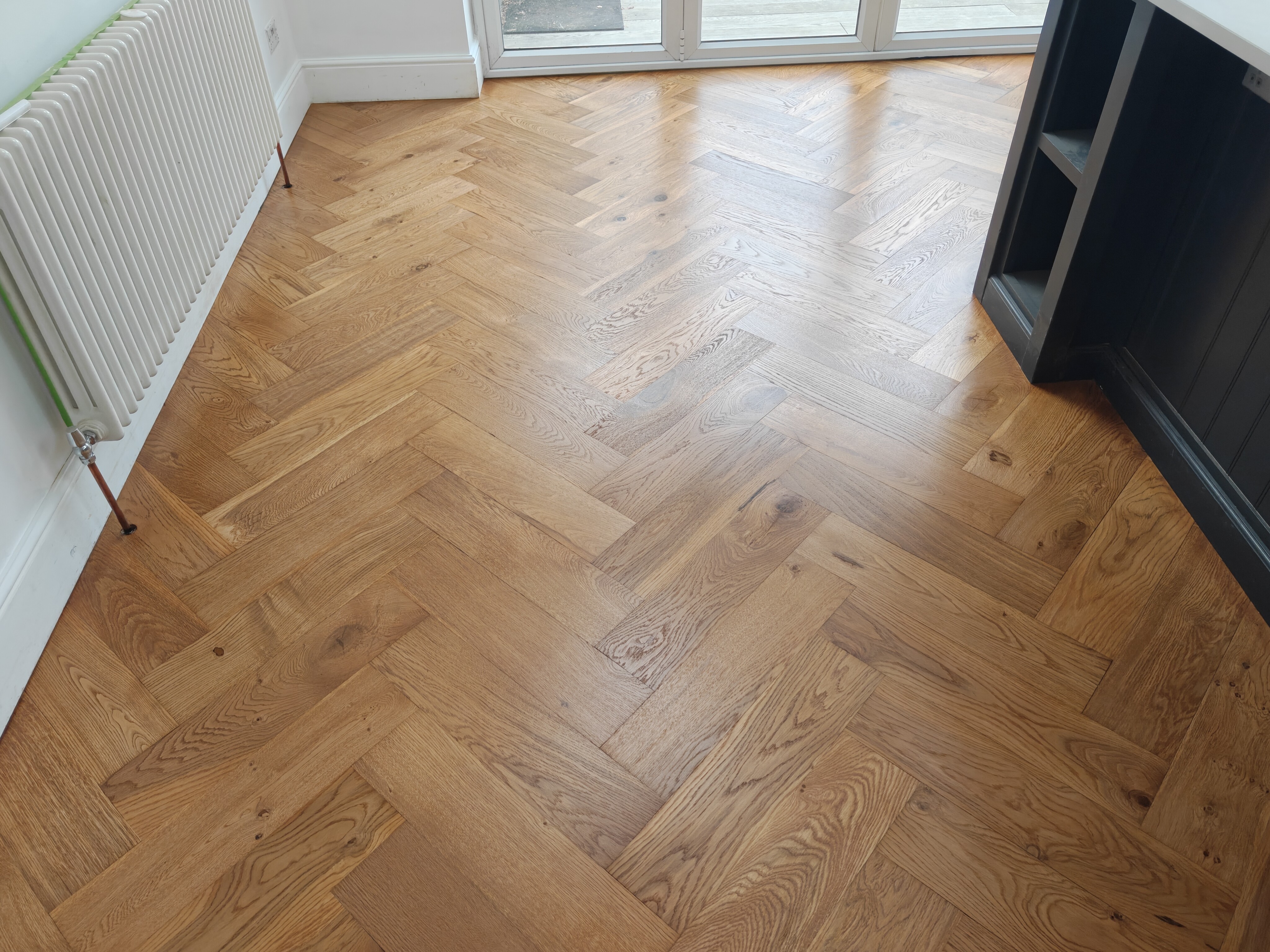
This approach — which we carried out on a commercial floor sanding project in Islington, sealed with Bona Traffic in a satin finish — means the office experiences zero disruption to its normal operation. Staff arrive in the morning to a floor that has been transformed overnight. The pleasant surprise of the result is genuinely one of the rewards of this way of working.
We also work weekends for larger projects where a single overnight isn't sufficient — a bigger floor area, a more complex multi-room layout, or a project that includes repairs before sanding begins. A weekend gives more continuous access without the morning deadline that overnight working imposes, and for larger offices it's often the most practical approach.
The key thing is that the working arrangement is always discussed and agreed before any work begins — the schedule is built around the business's needs, not around a standard working day.
The Assessment: What We Look at Before Quoting
Office floor restoration doesn't start with a sanding machine. It starts with a site assessment that's more detailed than a residential visit, because the constraints are more complex.
-
Floor type and condition
The type of timber, the current finish, the depth of wear — particularly in the high-traffic zones that will have worn through faster than the rest of the floor — and whether any boards need repair or replacement before sanding can begin. For offices with parquet flooring, the adhesive condition of individual blocks needs to be checked — particularly in areas near heating units where the adhesive can dry out and release over time.
-
Subfloor condition
Relevant for offices where a screed or concrete subfloor is involved, particularly in commercial conversions where a new floor has been laid over an old one. Moisture testing of the subfloor is standard practice before any timber floor restoration in a commercial setting.
-
Technology and equipment
What's in the space that can't be moved? This determines whether sections need to be worked around, whether any additional protection is needed for equipment that remains in place, and whether the dust-free equipment we use is sufficient protection or whether additional measures are needed.
-
Access and timing
How the space is accessed out of hours, who needs to be present or available, whether the building management has specific restrictions on night or weekend working, and what the deadline is for the restoration to be complete.
From this assessment, we produce an itemised quote that covers every element of the work — preparation, repairs, sanding, and finishing — with a clear timeline that shows when each stage happens and when the floor will be ready for full use.
The Products: What Goes on an Office Floor
The finish specification for an office floor is different from a residential floor — not in the type of product, but in the standard it needs to meet.
For most office environments, we specify Bona Traffic HD — the two-component water-based polyurethane that represents the benchmark for professional commercial lacquers. It's the product we specified on the Islington office project, and it's our default recommendation for any office or retail floor that takes sustained daily traffic.
The reason Bona Traffic HD suits office environments specifically comes back to the same properties that make it exceptional for schools and restaurants: it cures fast enough to allow foot traffic the morning after application, it doesn't yellow over time (which matters for the appearance of a floor that the business is looking at every day for years), and it's hard enough to resist the concentrated wear that desk chair wheels, stiletto heels, and the abrasion of grit brought in from outside produce on a floor that handles hundreds of people daily.
For the highest-traffic areas — receptions that handle visitor volumes, ground-floor retail areas, corridors that act as main thoroughfares — we add additional coats beyond the standard specification. Primer plus three coats of Bona Traffic HD produces a film build that significantly extends the service life of the finish between restoration events. For a business that can't afford frequent disruption for floor maintenance, investing in the additional coat at the initial restoration is consistently the right decision.
For commercial environments with extremely high foot traffic — beyond standard office use — we also specify Tover Maxima 2K or Loba 2K Fusion, both of which provide comparable or superior abrasion resistance to Bona Traffic HD in the most demanding situations. For a detailed comparison of these products and how they perform in different commercial environments, see our guide to the most durable water-based lacquers on the UK market.
The Process: What Actually Happens on the Night
For a typical overnight office floor restoration, the sequence looks like this.
Arrival and setup. The team arrives after the office closes — usually between 6pm and 8pm. The space is assessed against what was surveyed, any final furniture or equipment movement is completed, and the equipment is set up. Protective coverings go over anything that's remaining in the space.
Preparation and repairs. Any loose boards, squeaking sections, or damaged areas identified at the survey are addressed first. This is the work that makes the sanding result last — a floor that still has structural problems after sanding has those problems sealed in rather than resolved. See our article on what causes wood floors to squeak and how to fix it for more on why this stage matters.
Sanding. The main sanding sequence proceeds using Bona dust-free equipment — drum sander on the main floor areas, edge sander on the perimeter, and the Mirka DEROS machines for tight areas around fixed furniture, desk legs, and architectural features. The grit progression moves from the starting grit appropriate for the floor's condition through to the fine finishing grades. For more detail on the grit sequence and why it matters, see our article on what grit sandpaper should be used for wood floor sanding.
First coat application. The primer or first coat of lacquer goes on after the final sanding pass. This coat needs to dry fully before the next is applied — typically two to four hours for Bona Traffic HD under standard conditions. The working arrangement determines whether additional coats can be applied overnight or whether they're completed on subsequent nights.
Handover. Before leaving, the space is cleaned, equipment protective coverings are removed, and the floor is ready for light foot traffic by the time the office opens. The timeline for furniture moving back in and full normal use is confirmed at handover — see our article on how long does floor lacquer take to dry and cure for the specific timelines that apply.
What the Business Needs to Do
The office-side preparation for a floor restoration project is less than most facilities managers expect — but what there is needs to happen before the team arrives.
Clear what can be moved. Desks, chairs, meeting room furniture, movable storage — anything on wheels or light enough to carry needs to be out of the restoration zone before the team arrives. Anything that can't be moved needs to be identified at the survey so appropriate protection can be planned.
Communicate with staff. People coming in early or staying late on restoration nights need to know the team will be on site. Building security needs to be briefed. Anyone with access requirements during the night — cleaning staff, security rounds — needs to know what areas are restricted.
Plan the desk chair re-entry. Desk chairs with hard castors are one of the most damaging things on a freshly lacquered floor. During the curing window — the first three to seven days after the final coat — they should not be used on the new finish without chair mats. See our article on how long does floor lacquer take to dry and cure for the full timeline and what to protect against during curing.
Source chair mats or equivalent protection before the restoration is complete. Having these in place from the first morning prevents the concentrated wear from chair castors that is one of the fastest ways to degrade a freshly lacquered office floor.
After the Restoration: Making It Last
An office floor that's been properly restored with a commercial-grade lacquer system should look excellent for several years under normal business use — but how long it stays looking excellent depends partly on what happens in the weeks and months after the restoration.
- The right cleaning products matter. Commercial cleaning companies often use generic multi-surface products that aren't appropriate for sealed timber floors. A product that leaves a residue, has a high or low pH, or contains wax will gradually degrade the lacquer film and make the floor look dull before the finish has actually worn through. Agreeing the right cleaning specification with the building's cleaning contractor before the restoration is complete means the correct products are in use from day one.
- Entrance matting is the single most effective maintenance measure. Grit brought in from outside on shoes is responsible for the majority of floor wear in any commercial space. Good entrance matting at every external door — properly specified, long enough to clean shoes effectively — captures that grit before it reaches the floor. The difference in wear rate between an office with adequate entrance matting and one without is significant and visible within months.
- Schedule a maintenance recoat. A screen-and-recoat — lightly abrading the existing lacquer and applying a fresh topcoat — every two to three years in a busy office extends the life of the finish significantly without requiring a full sanding project. This is the intervention that makes the economics of a high-quality initial restoration work — because the lacquer stays in good condition longer, and when it does need attention, a recoat rather than a full restoration is all that's required.
Contact Floorworks™ today for a free consultation

Summary
Office floor restoration is technically identical to residential restoration — the same equipment, the same products, the same grit sequences and professional lacquers. What's completely different is the context: the need to work around a business that can't stop, the technology that can't be moved, and the requirement to deliver results that are ready for use the next morning without compromising the quality of the finish.
At Floorworks, our office and commercial flooring service is built around exactly these requirements — overnight and weekend working as standard, dust-free equipment throughout, commercial-grade lacquers specified for sustained office traffic, and a workflow that delivers the restoration without the business ever knowing it happened.
For more on the commercial flooring work we do across different sectors, see our business flooring services page, our article on the most suitable flooring for restaurants and cafés, and our guide to school and sports hall floor restoration.
Get in touch for a free site assessment — we'll come out at a time that suits the business, assess the floor properly, and give you a clear timeline and quote before any commitment is made.


