
Good hardwood floor care starts with understanding what your floor actually needs. Genuine wood flooring brings warmth, elegance and timeless appeal. It can turn a house into a home and last for generations, if you protect it properly.
But wood is a natural material that reacts to its environment, and well-intentioned habits often do more harm than good. The same applies to engineered wood flooring and parquet, which share many of the same weaknesses.
To protect your hardwood floors and avoid an expensive floor refinishing bill, make sure you aren't making these five mistakes.
Using Too Much Water When Cleaning
The absolute golden rule of hardwood floor maintenance is that water and wood do not mix.
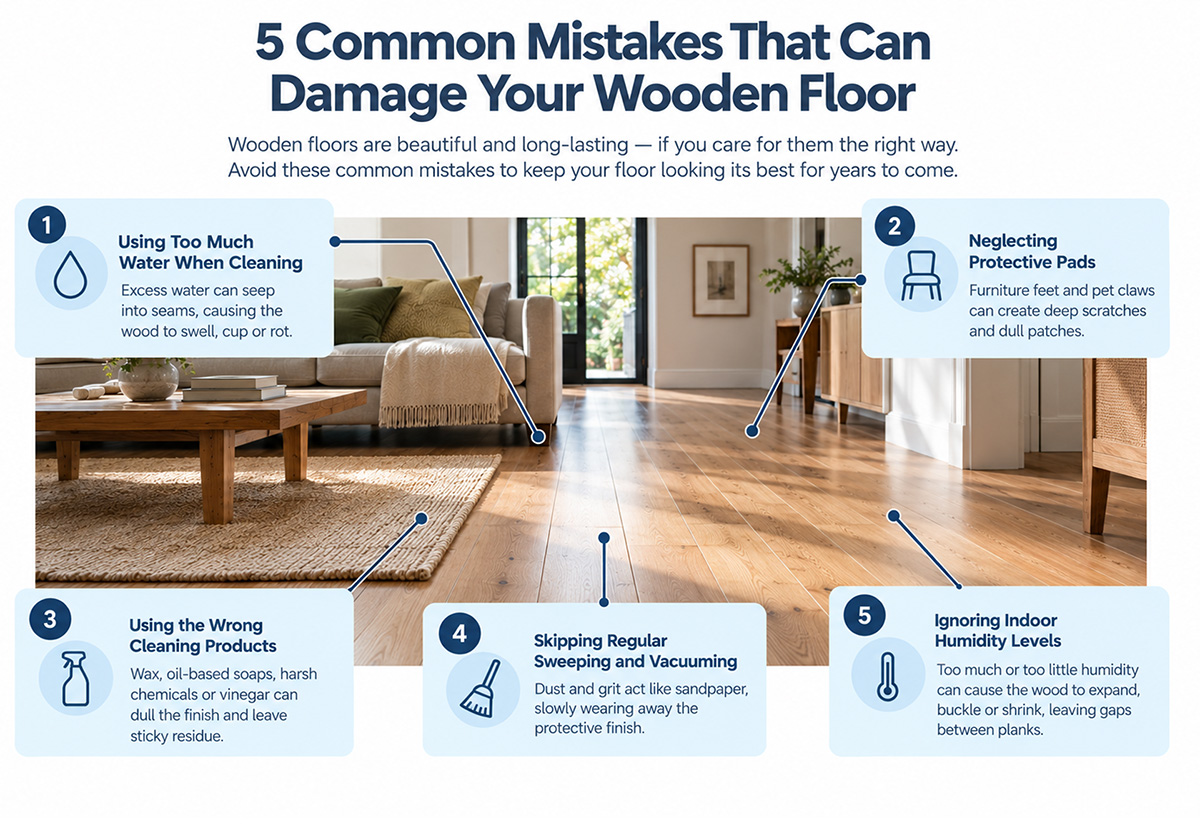
Many homeowners treat their wooden floors like tile, using a dripping wet mop and a bucket of water. When excess water seeps into the seams between planks, the wood absorbs the moisture and expands. This leads to:
-
Cupping
Where the edges of the planks become higher than the center.
-
Crowning
Where the center of the board swells and raises.
-
Molding and Rotting
In severe cases, moisture trapped underneath can ruin the subfloor.
The Fix: Ditch the traditional mop. Use a microfiber mop that is only slightly damp to the touch, or a specialized hardwood spray mop that releases a minimal, controlled mist. If you spill liquid, wipe it up immediately.
Neglecting the Power of Protective Pads
It is easy to underestimate how much damage a simple dining chair or a heavy sofa can do. Every time someone sits down, shifts, or slides a piece of furniture, the hard feet grind dust and grit directly into the wood’s finish. Over time, this creates deep scratches and dull patches that ruin the floor's uniform sheen.
Furthermore, don't forget about your pets. Untrimmed dog and cat claws act like tiny chisels on hardwood, leaving a trail of micro-scratches wherever they run.
The Fix: Attach heavy-duty felt protector pads to the bottom of all furniture legs, and replace them every few months as they wear down or trap grit. Keep your pets' nails neatly trimmed, and avoid walking across the wood in high heels or heavy work boots.
Reaching for the Wrong Cleaning Products
Walk down any supermarket cleaning aisle, and you will see dozens of products promising to make your wood floors "shine like new." Sadly, many of these are wolf in sheep's clothing.
Avoid any products that contain wax, silicone, or oil-based soaps. While they might provide a temporary, beautiful gloss, they leave behind a sticky residue. This residue actually attracts dirt and traps it. Worse yet, it creates a barrier that prevents future coats of polyurethane from adhering, meaning you will have to completely sand down the floor to bare wood just to fix a dull finish.
Similarly, steer clear of harsh chemicals, ammonia, or DIY vinegar solutions. Vinegar is an acid, and over time, it will eat away at the protective topcoat, leaving your floors looking hazy and unprotected.
The Fix: Only use cleaning products explicitly labeled as safe for polyurethane-finished or engineered wood floors (such as Bona). A pH-neutral cleaner is always your safest bet.
Skipping Regular Sweeping and Vacuuming
It’s easy to look at a floor, see no visible spills, and decide to skip cleaning for the week. However, the biggest enemy of a hardwood floor's finish isn't a major spill—it's microscopic dust and dirt.
When daily dust, outdoor dirt, and tiny pebbles are left on the floor, they act exactly like sandpaper underfoot. Every step you take grinds these abrasive particles into the wood, slowly wearing away the protective sealant.
The Fix: Sweep or vacuum at least twice a week in high-traffic areas. When vacuuming, always turn off the beater bar (the rotating brush). The stiff bristles of a rotating brush are designed for carpets and can easily scratch and dull a wood floor's finish. Use the hard-floor setting or a soft brush attachment instead.
Ignoring Indoor Humidity Levels
Because wood is hygroscopic, it constantly absorbs and releases moisture from the surrounding air. Many homeowners don't realize that the climate inside their home plays a massive role in the health of their floors. For more specific information read our guide: how to protect your wood floors during different seasons.
During humid summer months, the wood absorbs moisture from the air and expands, which can cause boards to squeeze against each other and buckle. In the dry winter months, when the heating is cranked up, the wood loses moisture and shrinks, leaving unsightly gaps between the planks.
The Fix: Aim to keep your home's relative humidity consistently between 35% and 55%. Use an air conditioner or dehumidifier during sticky summer months, and invest in a humidifier during the dry winter season to keep your floors stable and gap-free year round.
Contact Floorworks™ for Professional Flooring Solutions

The Bottom Line
Wooden floors are incredibly resilient, but they require a specific type of care. By swapping out harsh chemicals for gentle cleaners, keeping moisture to a minimum, and protecting the surface from abrasive dirt and heavy furniture, you can easily maintain that "just-installed" beauty for decades to come. Treat your floors well, and they will return the favor by adding value and warmth to your home for a lifetime. Consistent wood floor cleaning with gentle products, minimal moisture and protection from grit and heavy furniture will keep your floors looking new for decades. Treat your floors well and they will return the favor, adding warmth and value to your home.


