
There are few household sounds more irritating than a squeaky floor. The kind that announces every footstep. The one that wakes a sleeping baby every time you cross the landing at night. The creak under the dining room that you've learned to route around without thinking. You know exactly where it is. You know exactly how to avoid it. And you've probably been meaning to do something about it for longer than you'd like to admit.
The good news is that squeaking wooden floors are almost always fixable. The less good news is that the fix depends entirely on understanding what's actually causing the noise — and there are several different causes that look identical from the surface but need completely different approaches. Getting this wrong doesn't just fail to solve the problem; it can sometimes make it worse.
Here's a proper explanation of what's happening and what can be done about it.
Why Wood Floors Squeak: The Real Explanation
A squeak is always caused by movement. Specifically, by two surfaces that shouldn't be moving against each other, moving against each other. The squeaking sound is friction — timber against timber, timber against a nail or screw, timber against subfloor material — generated when pressure is applied by a footstep and released as the foot lifts.
There is no such thing as a squeak that has no movement behind it. If you can find the exact spot, replicate the squeak consistently, and then stop the movement in that spot, the squeak disappears. The question is always: what is moving, and why?
The Main Causes — and Why Each One Happens
-
Boards Moving Against Each Other
The most common cause of squeaking in solid timber and original floorboards is movement between adjacent boards at the tongue-and-groove joint. As the boards flex slightly under foot traffic, the tongue of one board rubs against the groove of the neighbouring board and produces the familiar creak.
This happens for several reasons. If the boards have dried out and shrunk — which happens during winter when central heating runs continuously and indoor humidity drops significantly — the tongue-and-groove joint becomes slightly loose and allows movement that wasn't there when the boards were at full moisture content. This is why many floors squeak seasonally: they're quiet in summer and vocal in winter. The boards have contracted, the joints have loosened, and the friction has appeared.
Shrinking wood can loosen connections between boards or between the floorboards and the subfloor. This looseness causes creaking or squeaking sounds when the floor is walked on — most commonly in high-traffic areas or spots where boards meet subfloor fasteners. For more on how humidity drives this movement, see our article on how air humidity and damp can affect your wooden floors.
-
Boards Loose from the Joists
Original floorboards — particularly Victorian and Edwardian pine in older London properties — are fixed to joists beneath them, either by cut nails or by screws depending on the era and any previous repair work. Over decades, those fixings can work loose. The board lifts slightly away from the joist when unloaded, and when a foot applies pressure it flexes down to contact the joist and springs back up when the foot lifts — and the movement against the loose fixing, or against the joist surface itself, produces the squeak.
Boards that have come loose from the joists or are causing irritating squeaks can often be re-secured, tightened, and fastened properly to eliminate movement. This is one of the most straightforward repairs in flooring — if the cause is correctly identified and the right fixings are used in the right locations.
-
Joists That Are Moving
Sometimes the squeak isn't in the floorboard at all — it's in the joist beneath it. Joists can move against the timber they're bearing on at the wall ends, or against the bridging pieces between them, or against each other if they're running close together and making contact under load. In this case, the floor above is transmitting the sound of joist movement rather than generating its own noise.
This is the most difficult cause to diagnose from above, because the squeak feels like it's coming from the floor when it's actually coming from the structure beneath it. Access from below — through a crawl space or a ceiling void — is usually needed to properly assess joist movement and address it.
-
Floors Laid Directly Over Joists Without a Subfloor
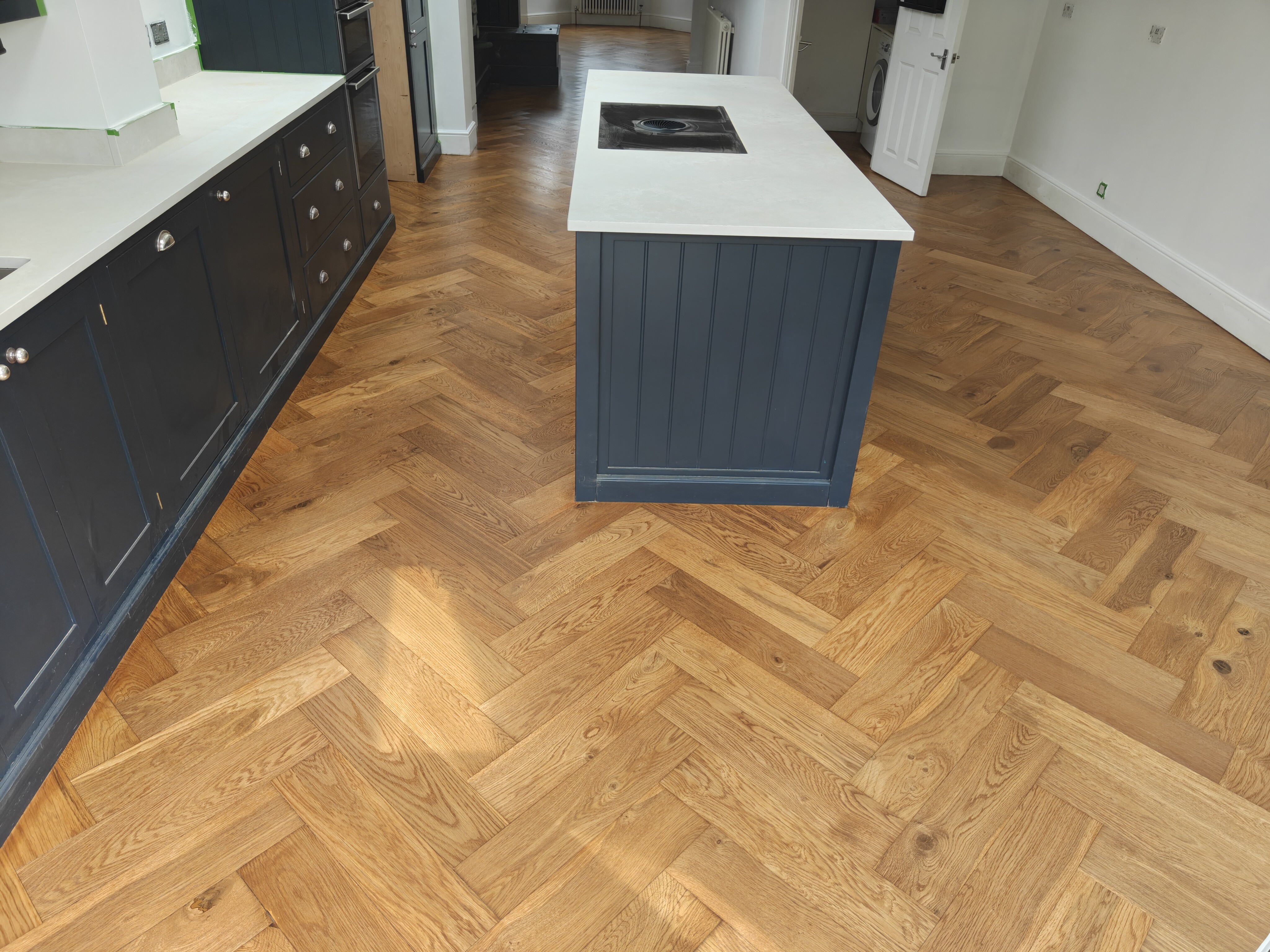
We encountered this specifically on a project at Richmond Park — beautiful solid oak flooring that had been laid directly over joists, causing a gappy appearance and a creaky noise in places. When solid timber is fixed directly to joists without an intermediate subfloor layer, the floor can flex between joist points under load, the boards can work slightly against their fixings, and the overall assembly is less stable than a floor that has a continuous subfloor beneath it.
This is a structural consideration from installation — flooring that should have had a plywood subfloor between it and the joists but doesn't. The fix in these situations is more involved than a simple board re-fixing, and may involve lifting sections of the floor to add appropriate subfloor material.
-
Floating Floors Moving Against Each Other
Floating floors — engineered timber and laminate installed without adhesive over an underlay — produce a different kind of squeak from fixed floors. The click-lock joints between planks can develop slight movement over time, particularly if the floor has expanded and contracted significantly through humidity cycles or if the underlay beneath it has compressed unevenly. The planks click or creak against each other at the joints when walked on.
In engineered or glued floors, low humidity can strain adhesives, potentially causing detachment or lifting. For floating floors specifically, the underlay is the key variable — a compressed or degraded underlay allows the floor to flex unevenly, which creates the movement at the joints that produces the noise.
-
Humidity and Seasonal Movement
This deserves a separate mention because it explains a pattern that many homeowners find confusing: floors that squeak in winter and are quiet in summer, or vice versa.
Wood moves with moisture. In dry winter conditions with central heating running, boards contract — the tongue-and-groove joints between them open slightly and the movement that was absent in summer becomes present in winter. In humid summer conditions, the reverse happens: boards expand, press against each other, and in some cases create a different kind of noise at the perimeter where the expansion gap is inadequate.
If your floor squeak has a seasonal pattern, the cause is almost certainly humidity-related movement rather than a structural problem — and managing indoor humidity is part of the solution alongside any physical repair. Our article on how air humidity and damp can affect your wooden floors covers this in detail.
Diagnosing the Squeak: Finding the Real Cause
Before any repair work begins, the cause needs to be correctly identified — because the wrong fix wastes time and money without solving anything.
Walk the floor slowly and map the squeak. Note exactly where it occurs — which board, which direction of walking, which part of the stride produces it. A squeak that occurs when you step on a specific spot and load it fully is in a different category from a squeak that occurs at the transition between your weight going on and coming off.
Check whether the squeak is seasonal. If it's much worse in winter and better in summer, humidity is the primary driver. If it's consistent regardless of season, the cause is structural.
Try to isolate which surface is moving. Kneel next to the squeaking area and press on the board with your hands while someone else walks on it. If you can feel movement in the board — a slight flex under pressure — the issue is between the board and what's beneath it. If the board feels solid but the squeak continues, the movement may be deeper in the structure.
Look at the gap pattern. Boards with visible gaps at the edges, or boards that have clearly lifted slightly at one end, give visual clues about what's moving and why.
At Floorworks, our wood floor repairs service always starts with an honest assessment of the cause before any work is proposed. The fix depends completely on the diagnosis.
The Fixes: What Actually Works
-
Re-securing Loose Boards
For boards that have come loose from their joists, the fix involves re-securing them with the appropriate fixings — screws rather than nails in most cases, because screws pull the board down to the joist and hold it there under load, whereas nails rely on friction that can work loose again over time.
The access question matters here. If access is possible from below — through a ceiling void or crawl space — screws can be driven up through the joist into the board from beneath, which is both more effective and less disruptive to the floor surface above. If there's no access from below, screws from above are used — countersunk, filled, and sanded flush with the board surface.
-
Lubricating Board-to-Board Movement
For boards that are squeaking at the tongue-and-groove joint rather than at the joist, lubrication is sometimes effective as a temporary measure. Talcum powder or a specialist wood floor lubricant worked into the joint reduces the friction between surfaces and quiets the squeak — but it's a treatment of the symptom rather than the cause, and it needs to be repeated as the lubricant disperses.
For a more permanent solution, the affected boards may need to be lifted, the joints checked for damage or debris, and the boards refixed with appropriate care.
-
Addressing Humidity
For seasonal squeaks driven by boards contracting in dry winter conditions, the most effective long-term intervention is maintaining indoor humidity within the 40–60% RH range throughout the year. A humidifier in rooms with significant timber flooring adds moisture back into the air that central heating removes — reducing the seasonal contraction that produces the movement.
This doesn't fix structural problems, but for genuinely seasonal squeaks it addresses the root cause rather than the symptom.
-
Board Replacement
For boards that are structurally compromised — cracked, rotted at the fixing point, or so thin from previous sanding that they flex excessively — replacement is the right answer. Our original floorboards restoration service includes repairs, refitting and replacement of boards with matching age and appearance material. We work with reclamation yards and timber mills to source reclaimed and seasoned pine floorboards that match existing floors in age, appearance, and character — so replacement boards don't look obviously new against boards that have been there for a century.
-
Addressing the Joist Structure
Where joist movement is the cause — identified through access from below or through careful diagnosis from above — the fix involves addressing the movement at its source: bridging between joists to prevent lateral movement, securing loose joist hangers or bearings at the wall ends, or adding blocking between joists to stiffen the overall assembly.
This is structural work that goes beyond flooring repair, and it requires a proper assessment rather than a guess from the surface.
-
Subfloor Improvement
Where the issue is a floor laid directly over joists without adequate subfloor support — as in the Richmond Park project — the correct long-term solution involves lifting the floor, adding the appropriate plywood subfloor layer, and relaying the floor over it. This is a significant intervention and not always necessary for every squeak, but where the floor is also being restored or refinished as part of wider project work, it's the opportunity to address the underlying structural deficiency at the same time.
What Doesn't Work
There are a few approaches that circulate online for squeaking floors that either don't work or cause problems worth knowing about.
Pouring lubricant or talcum powder over a floor as a general treatment — this treats the symptom and clogs the gaps between boards, creating a maintenance problem and potentially affecting how the floor takes a finish if it's restored later.
Adding more weight to the squeaking area — rugs and heavy furniture over a squeaking spot suppress the noise by preventing the floor from moving freely, but they don't fix anything and the squeak will reappear when they're moved.
Random re-nailing without identifying the cause — if the squeak is board-to-board friction rather than board-to-joist movement, adding nails at the joist positions does nothing. If the board is thin and fragile, additional nailing can split it.
Assuming the squeak will go away on its own — seasonal squeaks sometimes do reduce in summer. Structural squeaks don't improve over time; they usually worsen as the movement continues and the fixing points degrade further.
When to Call a Professional
Some floor squeaks — a single board that's worked slightly loose in an accessible location — are within the reach of a careful DIY approach. But there are situations where professional assessment and repair is the right call.
Multiple or widespread squeaking across a floor suggests a systemic issue — humidity, a compromised subfloor, or widespread joist movement — rather than a single loose board. This needs assessment and a plan rather than individual spot fixes.
Squeaking in conjunction with visible movement — boards that visibly flex under foot traffic, or boards that have lifted at the edges — indicates structural movement that's beyond cosmetic repair.
Squeaking that's been getting progressively worse over months or years suggests the cause is developing rather than stable. Addressing it before the movement causes secondary damage — split boards, damaged fixings, wear at the joint faces — is always cheaper than waiting.
Squeaking in a floor that's about to be restored or refinished — if the floor is going to be sanded and finished as part of a wider renovation, addressing the squeaking at the same time is the logical approach. Loose or squeaky boards can often be re-secured, tightened, and fastened properly to eliminate movement as part of the preparation work before sanding begins. Our floorboards restoration service always includes assessment for and repair of loose or squeaking boards before the sanding stage — because sanding a floor that still has structural movement in it doesn't produce results that last.
Summary
Squeaking wood floors are caused by movement — and the movement has a specific cause that determines the right fix. Board-to-joist movement needs re-securing. Board-to-board movement at the tongue-and-groove joint may need lubrication, board lifting, or humidity management. Joist movement needs structural attention. Floors laid directly over joists without adequate subfloor support may need the subfloor issue addressed. Seasonal squeaks that track with dry winter conditions are often primarily a humidity management issue.
The diagnosis is what determines the fix — and getting the diagnosis right before any work begins is what makes the difference between a squeak that's resolved and one that's been temporarily suppressed.
Contact Floorworks™ for Professional Flooring Solutions

At Floorworks, our wood floor repairs service covers squeaking and loose board repairs across London — residential and commercial, original floorboards, engineered, and solid hardwood. We assess the cause honestly before proposing any work, and where repairs are part of a wider floorboards restoration project, they're handled as part of the preparation stage that makes the finished result last.
Get in touch for a free site assessment — we'll find the cause, explain the fix, and give you an honest picture of what the repair involves before any commitment is made.


