
A pipe bursts overnight. A washing machine hose fails. A radiator valve gives up quietly and spends three hours doing damage before anyone notices. However it happens, the moment you walk into a room and feel the floor give slightly underfoot — or see water sitting on timber that should be dry — your stomach drops.
The good news is that a water leak on a wooden floor is not automatically a disaster. Timber is more resilient than most people give it credit for, and if you act quickly and in the right order, there's a very good chance the floor can be saved. The bad news is that time matters enormously. What's recoverable in the first 24 hours can become irreversible in 72.
Here's exactly what to do — and what to expect at every stage.
The First Hour: Stop the Water Before You Do Anything Else
This sounds obvious, but in the panic of finding water on a floor, people sometimes start mopping before they've found the source. Don't. Stop the leak first. Turn off the water supply, isolate the appliance, do whatever needs doing to make sure water has stopped coming before you start worrying about what's already there.
Once the source is dealt with, get the surface water off as quickly as you can. Towels, a wet vacuum if you have one, anything that works. The longer water sits on timber, the deeper it goes — and it's what gets beneath the surface that causes the real damage, not what's sitting on top of it.
Clear the room completely. Rugs, furniture, everything — not shifted to one side, actually out. Anything sitting on wet timber slows the drying down and traps the kind of damp, airless conditions that mould needs to get started.
Contact Floorworks™ for Professional Flooring Solutions

What's Actually Happening to the Wood
It's worth understanding what water is actually doing to your floor, because it explains why every hour matters.
Wood is a cellular material. It absorbs moisture, swells, and when it swells it has nowhere to go — which is what makes a wet floor feel soft or spongy underfoot. If the moisture is limited and drying starts quickly, the boards can return to their original shape with minimal lasting damage.
The problem starts when moisture sits long enough to cause permanent structural change. Boards begin to cup — edges rise, centre drops, creating a concave curve across the width. They can bow along their length. In severe cases they start to buckle, lifting entirely from the subfloor because the expanding timber has run out of room.
A floor that's cupped or buckled significantly can't simply be dried flat. The cellular structure has shifted and the board holds its new shape even after the moisture leaves. That's when you need professional help.
There's also the part you can't see: the subfloor. Water that gets through the surface boards and into what's beneath is harder to detect and much slower to dry. A floor that looks fine from above can be sitting on a subfloor that's been wet for days — and that's where rot, mould, and structural problems start.
Drying It Out: What Works and What Makes It Worse
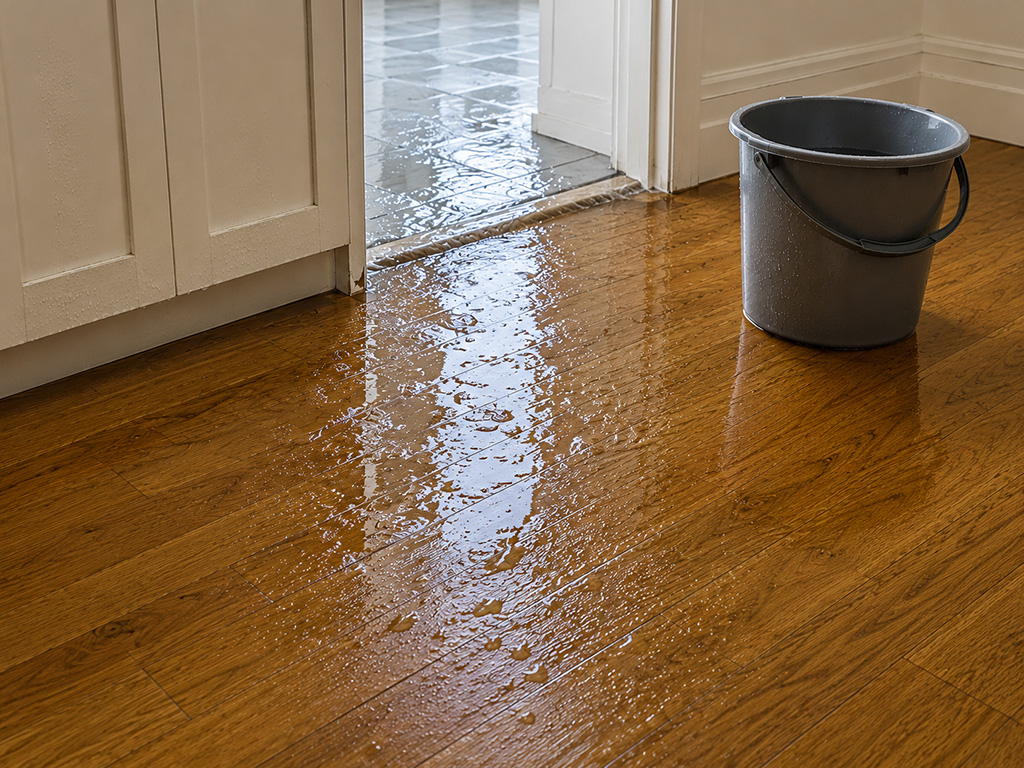
Once the standing water is gone, the priority is controlled drying — and this is genuinely where most people make things worse.
Open windows and doors. Airflow is one of the most effective drying tools you have and it costs nothing. If the weather outside is dry, use it.
Get a dehumidifier in there. A dehumidifier pulls moisture from the air as the timber releases it, which speeds up drying considerably. A domestic unit is better than nothing. An industrial one — the kind we'd bring in — is dramatically more effective, but don't wait for one if you can get something working now.
Don't crank the heating up. We know it feels like it should help. It doesn't. Rapid temperature changes put enormous stress on wet timber and can cause it to crack, split, or deform even more than the water already has. Slow, steady drying with good airflow is what the floor actually needs.
Leave the room clear. Don't put rugs back down, don't move furniture back in, don't do anything that covers the floor while it's still drying. It needs to breathe.
How Do You Actually Know When It's Dry?
This is the part that catches most people out. A floor can feel completely dry on the surface while still holding significant moisture in the board itself and in the subfloor beneath it. The surface dries first. Everything underneath takes longer — sometimes much longer.
The only reliable way to know is with a moisture meter. It gives you an actual reading of the moisture content in the timber. For a wood floor in a heated UK home, normal moisture content sits between 8 and 12 percent. Anything significantly above that and the floor is still drying, regardless of how it looks or feels underfoot.
One more thing worth knowing: a floor can take up to four weeks to show the full extent of its reaction to a leak. Cupping or buckling that wasn't obvious on day one can develop gradually as moisture redistributes through the board. Don't make any permanent decisions — repair, replacement, anything — until the floor has had time to settle and you have an accurate moisture reading.
If you don't have a moisture meter, watch for these: soft spots or movement underfoot, a musty smell developing in the room, boards that sit visibly higher or lower than their neighbours, or cupping at the edges. Any of these mean the floor isn't ready — and that you probably need someone in to assess it properly.
How Different Floor Types Actually React
Not all floors respond to water the same way — and knowing which type you have changes what you should expect and what your options are.
Solid Wood Flooring
Solid wood is the most vulnerable to water of all the timber types. Because the boards are hardwood all the way through, they absorb moisture quickly and can cup, bow, and buckle relatively fast. The saving grace is that solid wood is also the most restorable — thick enough to be sanded multiple times, which means even significant surface damage can often be addressed through professional floor sanding and restoration once the floor has fully dried. The benchmark we work to: if cupping is within 2mm, restoration is almost always viable.
Parquet Flooring
Traditional solid block parquet tends to be more resilient than solid planks because the individual blocks are shorter and more constrained by the pattern and adhesive bond. That said, blocks can loosen and lift when exposed to moisture, particularly in older floors where the adhesive has aged. Parquet floor repairs after a leak usually involve re-securing or replacing affected blocks before the floor is sanded and refinished. The pattern can almost always be preserved.
Engineered Wood Flooring
Engineered boards handle moisture better than solid wood because the plywood core is more dimensionally stable. They're less likely to cup or buckle as dramatically, and they tend to recover better once dried. The catch is the surface layer — it's thin, and if the floor has been sanded previously, there may not be enough material left to sand again. Our benchmark: cupping within 1mm, engineered floor sanding is viable. Beyond that, replacement becomes the realistic conversation.
Original Floorboards
Old Victorian and Edwardian floorboards — pine or oak, dense and thick — are among the most resilient floors you can have when it comes to water. Their density means they absorb moisture more slowly and recover more reliably. A well-dried original floorboard that's cupped slightly will often flatten back naturally over several weeks. Floorboards restoration after a leak is almost always viable, and you're very rarely looking at replacement.
Laminate Flooring
Laminate is the worst-case scenario with water. It simply can't be saved. Unlike real timber, it can't be dried and restored — once the core swells and the surface layer starts to peel or delaminate, the boards are finished. Even a relatively contained leak can cause visible bubbling and lifting at the joints that can't be repaired. In almost every case, water-damaged laminate needs to come out and be replaced through laminate floor installation. There is a silver lining, though — a lot of our clients who've had laminate damaged by water decide it's the right moment to put something better down.
LVT Flooring
LVT is the most water-resistant floor you can have. A leak that would seriously damage a timber floor will often leave LVT entirely unaffected at the surface level. The risk is if water gets underneath it and affects the subfloor or adhesive — dryback LVT can lift if that happens, though click LVT is generally very forgiving. In most cases, LVT floors can be dried, inspected, and returned to use without any restoration work. Where sections have lifted, LVT floor installation of replacement boards is straightforward.
Restoration or Replacement: The Honest Conversation
After a water leak, this is the question that actually matters — and it deserves a straight answer rather than a guess.
When Restoration Makes Sense
For timber floors — solid wood, parquet, engineered, original floorboards — restoration is the right path when the structural movement is within manageable limits and the floor has dried fully before any work begins.
For solid wood, cupping up to 2 mm is generally within the range that sanding can correct. The floor is brought back to flat once it's properly dry, and the finish is restored.
For engineered wood, the threshold is tighter — 1 mm of cupping is where we draw the line for restoration being realistic. Beyond that, the surface layer may not have enough material to sand flat without breaking through to the core.
For parquet and floorboards, it's less about a single measurement and more about the overall condition — the adhesive, the remaining timber thickness, how the pattern has held. That's something we assess properly on site rather than guessing from a description.
What never changes: the moisture level at the point of assessment. At Floorworks, we take readings before we agree to any restoration work — and we take them again immediately before sanding starts. A floor that still holds elevated moisture cannot be sanded or finished. Any sealant applied over damp timber will bubble, peel, or fail. We won't start work until the numbers are right.
When Replacement Is the Right Call
We'll always tell you honestly when restoration isn't viable. That happens when cupping or buckling is beyond what sanding can correct, when boards have delaminated, rotted, or sustained deep structural damage, when the subfloor itself needs replacing before any surface work makes sense, when the floor is laminate — no exceptions — or when the existing timber was already at the end of its sanding life before the leak happened.
We'd rather give you that answer upfront than take your money for work that won't hold.
When to Call Us
There's a version of water damage you can manage yourself — a small, contained leak caught quickly, a limited area, a floor that dries flat and clean within a few days. But call us when:
The leak was significant or went unnoticed for more than a few hours — water that's had time to reach the subfloor needs proper assessment, not just surface drying. The boards are cupping, bowing, or buckling — this is structural movement and the decision about what to do next needs to be based on measurement, not optimism. There's a musty smell that won't clear — mould beneath boards or in a subfloor spreads quickly and gets significantly more expensive the longer it's left. The affected area is large — anything beyond a small, contained zone needs more than towels and a domestic dehumidifier.
When we come out, the first thing we do is establish the true extent of the moisture — what's in the board, what's in the subfloor, and what's in between. That assessment tells us what's possible. We'll give you an honest picture before any commitment is made.
Contact Floorworks™ for a free professional consultation
What the Restoration Actually Looks Like
Once the floor is fully dry — confirmed by moisture meter, not by feel — here's what the work typically involves.
Surface staining is almost always present after a water leak. Watermarks, tide lines, discolouration where moisture sat or spread — all of this is addressed through professional floor sanding, stripping the damaged surface layer back to clean timber and refinishing from scratch.
Minor cupping that has resolved as the floor dried can usually be sanded flat. The sanding corrects both the visual damage and the unevenness between boards in the same pass.
Significant structural movement — boards that have cupped beyond recovery or buckled and lifted — means board replacement before sanding begins. In most cases we replace the affected sections and sand and refinish the whole floor to a uniform result. Our wood floor repairs service covers all of that.
Subfloor damage has to be resolved before any surface work starts. There's no point finishing a floor beautifully if what's underneath it is still compromised — the movement and instability will come through regardless of how good the work on top is.
Can You Claim on Insurance?
In many cases, yes — and it's worth understanding how the process works before you're in the middle of it.
Check your policy first. Call your insurer as soon as the damage happens. Confirm whether your policy covers wooden floor damage from leaks or floods, and what the terms actually say. Understanding this upfront saves a lot of confusion later.
Don't make permanent decisions too quickly. The full extent of water damage can take up to four weeks to become apparent. Most insurers will want a professional assessment before any work begins — and that assessment needs to happen on a floor that's had time to show what it's going to do.
Get a professional survey done. A qualified flooring surveyor takes moisture readings, assesses whether restoration or replacement is the right recommendation, and produces the documentation your insurer needs to process a claim. Those initial moisture readings are important — they become the baseline that proves the extent of the damage and confirms when the floor is dry enough for work to start.
Get at least two quotes. Insurers typically require a minimum of two itemised quotes from different contractors. Make sure each quote details the specific work — repairs, sanding, finishing — not just a single total.
Clarify who pays whom before work starts. Some insurers pay you directly; others pay the contractor. Get this confirmed in writing. The person who books the work is responsible for payment on completion — if your insurer is paying you, make sure those funds are in place before the job finishes.
Wait for the final moisture check. Before we start any sanding or finishing at Floorworks, we check moisture levels one more time. The wood has to be back within normal range before any finish goes on — sealant applied over damp timber will bubble and peel, and the whole restoration fails. This step isn't optional.
The insurance side of water damage is a whole process in itself. If you're not sure where to start with a claim, our guide to restoring wood floors under insurance walks you through every step — from the first call to your insurer to the moisture check before we start work.
Summary
A water leak on a wooden floor isn't automatically catastrophic — but the response has to be quick and in the right order. Stop the source, get the surface water off, start controlled drying with airflow and a dehumidifier, and don't go near direct heat. Different floors behave differently — LVT is the most resilient, laminate can't be saved, and timber floors sit between those extremes depending on the type and how quickly you act. Restoration is viable for most timber floors when cupping is within 2mm for solid wood and 1mm for engineered — but only once the floor has fully dried and a moisture meter confirms it, not just when it feels dry underfoot. If boards are moving, there's a smell, or the area affected is significant, get someone in before the situation develops further.
Timber is forgiving. But it needs the right response at the right time.


