
If you've never had a floor sanded before, the idea of a site survey can feel a little mysterious. Someone comes round, looks at the floor, asks a few questions, and a few days later you get a quote. But what are they actually looking at? And what do they need to know?
The honest answer is that a survey for a floor sanding service isn't complicated — but the questions we ask matter, because the answers directly affect whether the work is possible, how long it takes, and what the result will look like. Here's exactly what we go through on a typical visit, and why each question is worth asking.
What's the Subfloor?
Everything starts here. Before we even look at the timber surface, we need to know what's underneath it — because the subfloor is what the whole floor sits on, and it affects every decision that follows.
Around 60 to 80 percent of the properties we visit have old floorboards as the subfloor. This is the first thing we need to establish because it tells us whether the floor can actually be sanded at all. If the timber sitting on top of that subfloor has already been sanded down too many times and is below the minimum thickness required — less than 15mm for solid floorboards, less than 3mm for the hardwood layer on engineered boards — then sanding simply isn't possible. No matter how good the equipment or how experienced the team, there isn't enough material left to work with safely. In that situation, we'll tell you straight — and we'll talk through what the alternatives are rather than proceeding with work that would damage the floor further.
Has the Floor Been Sanded Before — and Can It Be Sanded Again?
This follows directly from the subfloor question — and it's the one clients are least prepared for, even though it's one of the most important things we establish at a survey.
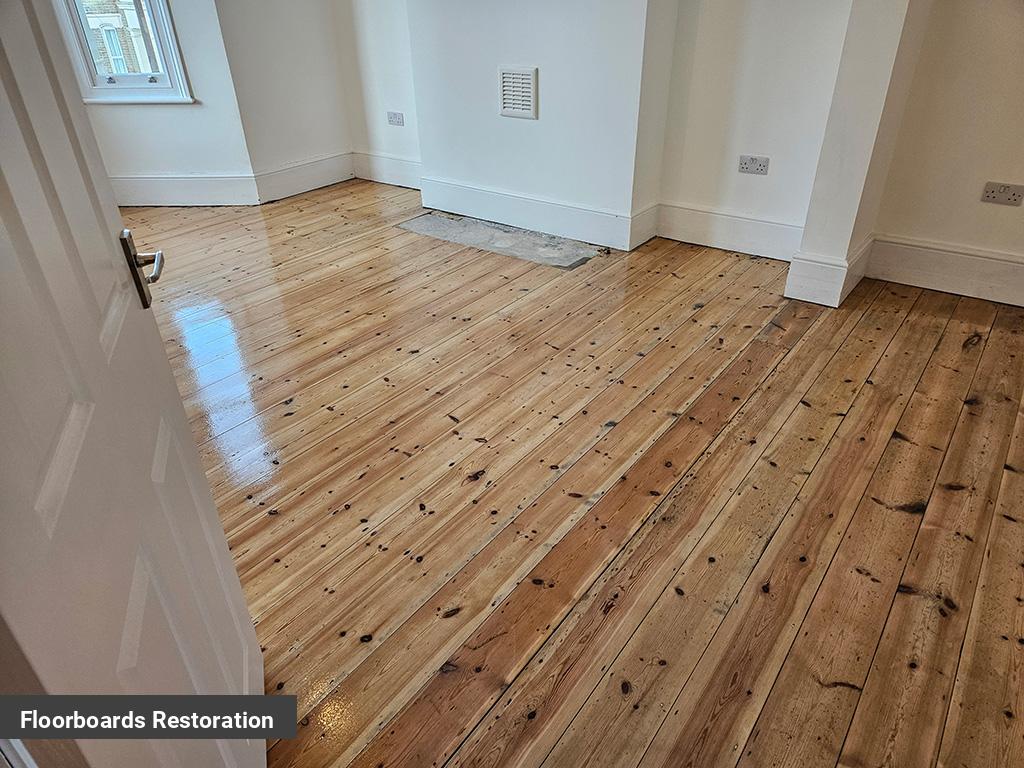
Every time a timber floor is sanded, a thin layer of wood is removed. That's the whole point — stripping back the damaged, worn surface to reveal fresh timber underneath. But there's a limit to how many times that can happen. Once the timber has been sanded down too far, there simply isn't enough material left to work with safely — and no amount of skill or equipment changes that.
For solid floorboards, that limit is 15 mm. Below that thickness, the board can't withstand the floor sanding process without risk of damage. It's not a guideline — it's the point at which, sanding stops being restoration and starts creating a risk for destruction.
For engineered wood floors, the limit is tighter and reached more quickly. The real hardwood surface layer on an engineered board is typically between 3 mm and 6 mm depending on the product — thinner than most people expect. Once that layer has worn or been sanded down to less than 3 mm, it can't be sanded again. At that point the realistic options are either to refinish the surface without sanding, or to look at replacing the floor altogether.
If you're not sure whether your floor has been sanded before, or how much material is left, that's completely normal — it's not something homeowners would be expected to know. It's exactly what we're there to find out. We check on site with the right tools, give you an honest assessment of what's there, and if further restoration isn't possible we'll tell you straight and talk through what the alternatives are.
What Size Is the Area?
We need accurate measurements before we can quote — and this is one of the things clients can prepare in advance if they want to make the survey quicker and the quote faster to produce.
We measure the total floor area in square metres, working room by room and accounting for alcoves, bay windows, irregular shapes, and any fixed obstacles — fitted wardrobes, kitchen islands, fireplace hearths — that won't be moved during the sanding work and therefore reduce the area we'll actually be working on.
If you'd like to measure ahead of the survey, we've put together a step-by-step guide to measuring your property — including how to handle irregular rooms, what to include and what to deduct, and how we calculate the five percent buffer we add to account for the edge work and the time that intricate areas around pipes, architraves, and tight corners always require.
Will You Need Gap Filling?
Gaps between floorboards come up at almost every floor sanding survey, and the question we ask clients is a simple one: do you want an overall fill across the whole floor, or just the areas where the gaps are most noticeable?
It's worth being clear about what gap filling does and doesn't solve. Small gaps that open in winter and close again in summer are completely normal — timber breathes with seasonal humidity changes and that movement is natural. Filling these with a rigid product can actually cause problems when the boards expand and push against it.
Wider gaps are a different matter. If they're causing draughts, trapping dirt, or creating an uneven surface that will show through the finished floor, they're worth addressing before sanding begins.
For an overall fill — which gives the most uniform result and works particularly well on parquet floors — we use a slurry made from the floor's own sanding dust mixed with a flexible resin. Because it uses dust from the actual floor, the colour match is as close as it's possible to get. For targeted filling in specific areas, the approach is less invasive and more straightforward.
We'll look at what's there on site and give you an honest recommendation. If we don't think gap filling will make a meaningful difference to the result, we'll say so.
What Finish Do You Want — Lacquer or Oil?
This is the question that comes up at every floor sanding survey without exception — and the answer matters more than most people realise, because the finish determines not just how the floor looks on the day but how it performs over years of use and what the maintenance routine looks like going forward.
- Floor Lacquer sits on top of the timber as a hard protective film. It's more resistant to everyday wear, moisture, and the kind of daily punishment a busy household produces. Maintenance is simple — a damp mop is all that's needed for routine cleaning. It's the right choice for high-traffic areas, homes with young children or pets, kitchens, and anywhere that takes serious daily use. The one trade-off is that when a lacquered floor eventually needs attention, it generally needs the whole floor sanded and refinished rather than just spot-treated.
- Hardwax-Oil works differently — it penetrates the timber rather than coating it, feeding the wood and producing a finish that looks and feels more natural. The grain comes through more clearly, the surface has a softer appearance. The trade-off is that oiled floors need more regular maintenance and are less resistant to moisture and heavy wear than a well-specified lacquer system.
One isn't better than the other in absolute terms — they suit different floors, different spaces, and different ways of living. That said, for most busy households we tend to recommend lacquer. The durability, the ease of cleaning, and the resistance to everyday wear make it the more practical choice for the majority of the floors we work on. But it's not a blanket rule, and we'd never specify a finish without seeing the floor and understanding how the space is actually used.
We talk through both options at the survey and make a recommendation based on what's there — the timber species, the traffic the floor takes, the look the client is after, and the level of maintenance they're realistically going to keep up with. The right finish for your floor might not be the same as the right finish for your neighbour's, even if the floors look identical from the outside.
What About the Price?
Most clients arrive at a floor sanding survey with a rough sense of what they're expecting to pay. And most of the time, they're in the right ballpark. Where quotes vary significantly between contractors, it almost always comes down to the same three things: the products being specified, the number of coats being applied, and how much preparation work is included in the scope.
A quote that looks noticeably cheaper than others, isn't automatically better value! It might mean fewer coats, a lower-grade product, or preparation steps that have quietly been left out. We go through every line of our quotes so you understand exactly what you're paying for and why — because a floor that needs redoing in three years because the finish was underspecified isn't a saving. It's the same cost twice, with the disruption of having the work done again on top.
Contact Floorworks™ for a Free Assessment and Consultation

A floor sanding survey is a practical conversation, not a formal inspection. The questions we go through — what's the subfloor, has the floor been sanded before and can it be sanded again, how big is the area, is gap filling needed, and what finish suits the space — are all aimed at the same thing: making sure the quote is accurate and the work we're planning will actually deliver what you're expecting.
Coming prepared with a rough sense of what you want the finished floor to look like, and an honest account of the floor's history if you know it, makes the whole visit more useful for both sides.


