
A hotel floor lives a strange double life. In the lobby, it has to say something — first impressions, brand identity, the sense of arrival that sets the tone for a guest's entire stay. Two floors away, in a guest room, the same building needs a floor that a exhausted traveller barely registers, because it's simply doing its job quietly: comfortable underfoot, dead silent to the room below, and still looking flawless after the thousandth wheeled suitcase has rolled across it.
That tension — statement versus workhorse, sometimes within the same corridor — is what makes hotel flooring specification genuinely different from almost any other commercial project. Get it right and nobody notices the floor at all, which, oddly, is exactly the point. Get it wrong, and it's one of the fastest ways a property starts to look tired despite everything else being maintained beautifully.
The Real Demands of a Hotel Floor
Before getting into which materials go where, it's worth being honest about what a hotel floor actually has to survive — because the answer is more specific than "lots of foot traffic."
-
Wheeled luggage.
This is the demand most people underestimate. A hard-shell suitcase dragged across a floor puts a very different kind of stress on a surface than a shoe does — concentrated, repetitive, and often dragged rather than lifted, especially by guests in a hurry.
-
24-hour operation
Unlike a shop or office that closes overnight, a hotel rarely has a genuinely dead period long enough for extensive floor work. Corridors and lobbies see traffic at nearly every hour, which makes phasing and scheduling as much a part of the specification as the material itself.
-
Noise transfer between floors and rooms
Few things damage a guest's perception of a property faster than hearing every footstep from the room above. Acoustic performance is a genuine specification requirement in hotels in a way it simply isn't in most other commercial settings.
-
Consistency across a huge area
A restaurant might have one dining room to get right. A hotel might have two hundred nominally identical rooms, all of which need to look and perform the same way — which puts a premium on product consistency and installation quality that's harder to achieve at scale.
-
Moisture in bathrooms and spa areas
Hotel bathrooms, spa facilities, and pool surrounds see sustained, heavy moisture exposure that a domestic bathroom rarely matches, and the flooring specified there has to be genuinely built for it, not just tolerant of the occasional splash.
With that context, here's how the main flooring categories actually perform across a hotel's different zones.
Lobbies and Public Areas: Where the Floor Does the Talking
The lobby is where a hotel floor is allowed — arguably expected — to be a design statement. Herringbone or chevron parquet, a striking timber species, a bold stone-effect pattern: this is the one area of the building where visual impact genuinely earns its place in the specification, because it's doing real work shaping a guest's first impression.
Hardwood timber, finished to a genuinely commercial standard, remains one of the strongest choices here. It photographs beautifully, ages with real character rather than looking tired, and when specified with the right finish, holds up to the volume of traffic a busy lobby generates. For guidance on which species tends to suit a project like this, our piece on which timbers are most popular in the UK for wood flooring is worth reading alongside this one — oak's versatility makes it a dependable default for large public areas, while a species like walnut can deliver real drama in a smaller, more intimate reception space.
Whatever the species, the finish matters enormously in a space this busy. We always specify the most durable commercial lacquers on the UK market for lobby and public-area timber — the kind of two-component, commercial-grade film that can genuinely take sustained footfall, wheeled luggage, and daily commercial cleaning without looking worn within the first year.
Corridors: Durability Over Everything
Corridors are arguably the hardest-working floors in the entire building. Every guest, every housekeeping trolley, every wheeled case passes along them, repeatedly, day and night — and unlike a lobby, corridors rarely get the benefit of a design-led material choice. Practicality has to lead here.
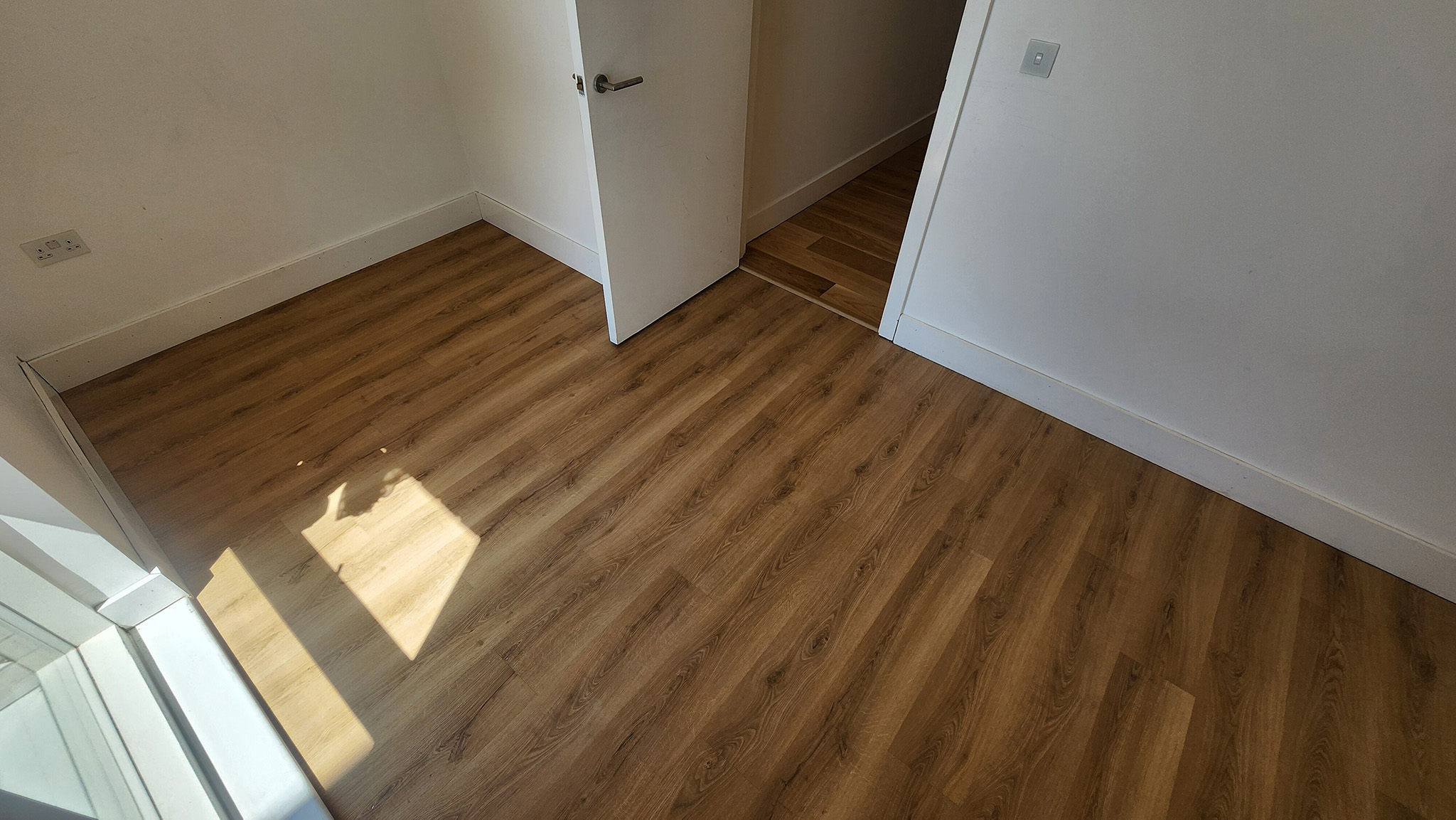
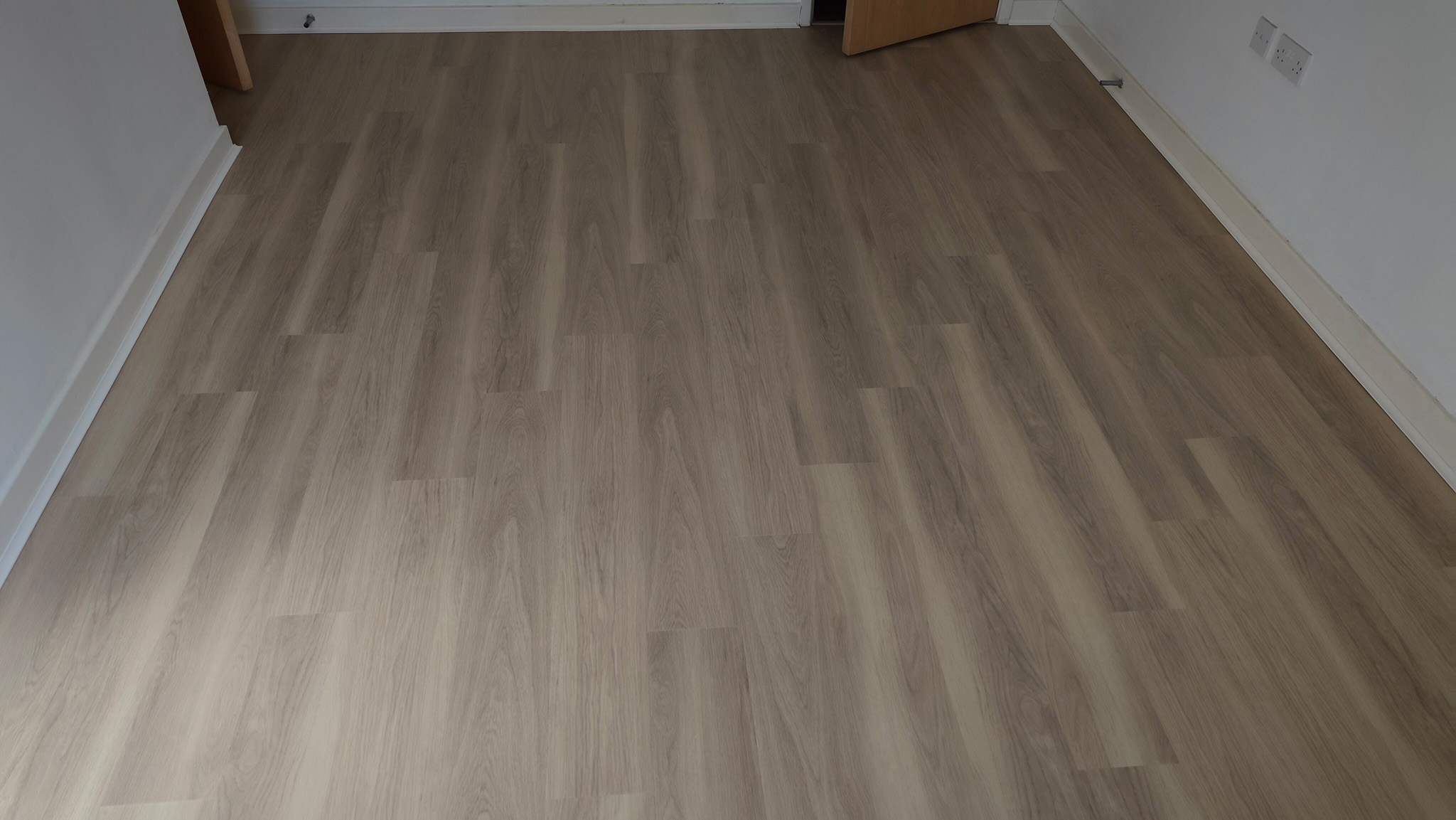
This is where LVT and SPC genuinely shine. Fully waterproof, resistant to the scuffing and impact that wheeled luggage generates, and available in convincing wood and stone visuals that keep the aesthetic consistent with the rest of the property. SPC in particular, with its rigid composite core, tends to be the stronger choice for the heaviest-traffic corridors, since its dimensional stability and impact resistance outperform more flexible alternatives under sustained daily punishment. Our LVT and SPC installation service covers exactly this kind of large-scale commercial specification.
Acoustic underlay matters just as much here as the flooring itself. A corridor is one continuous run above and below other occupied spaces, and getting the sound performance wrong is one of the most common — and most avoidable — sources of guest complaints in hotels generally. Our guide on floor insulation and soundproofing covers how underlay choice genuinely changes what guests hear from adjoining spaces, and it's a conversation worth having early in a hotel project rather than after complaints start coming in.
Guest Rooms: Comfort, Quiet, and Consistency at Scale
Guest room flooring has to satisfy two audiences at once: the guest standing in the room, who wants comfort and a sense of quality underfoot, and the operations team, who need a floor that performs identically across dozens or hundreds of rooms without becoming a maintenance headache.
Engineered timber and high-quality LVT both do well here, and the choice often comes down to brand positioning as much as pure performance — a boutique property leaning into a premium, characterful feel might specify engineered oak throughout, while a larger operation prioritising consistency and lower long-term maintenance might standardise on LVT across every room. Either way, the acoustic underlay discussion from the corridor section applies with even more force in guest rooms — nothing undermines a guest's night's sleep faster than hearing the room above.
Bathrooms and Spa Areas: Where Waterproofing Isn't Optional
Guest bathrooms, and spa or pool-adjacent areas especially, are where flooring genuinely has to be built for sustained water exposure rather than merely tolerant of it. This is squarely LVT and SPC territory — fully waterproof at the core, unaffected by standing water, and available in slip-resistant specifications that matter enormously in these environments from a safety standpoint as well as a performance one.
Getting the subfloor right underneath matters just as much as the visible finish, particularly in bathrooms and spa areas where moisture pressure from below can undermine even a genuinely waterproof surface finish if the groundwork isn't right. Our guide on damp-proofing for floors covers exactly this kind of preparation, and it's a step that's easy to underestimate in areas where moisture exposure is constant rather than occasional.
Restaurants, Bars, and Function Spaces
Many hotels operate their own restaurant, bar, or event spaces, and the specification considerations there largely mirror what any standalone restaurant or café needs — hard-wearing commercial timber finishes, careful attention to spill resistance, and cleaning regimes that hold up under industrial-strength products used daily. The same demanding combination of foot traffic, spills, and appearance-over-time pressures applies, just under a hotel's brand rather than an independent restaurant's.
Scheduling: The Hidden Half of Every Hotel Project
Perhaps more than any other type of commercial client, hotels need floor work planned around genuine operational continuity rather than a simple "when's convenient" conversation. A hotel that's fully or even partially closed is losing revenue every single hour, which means phased work — treating a section of corridor or a batch of rooms at a time while the rest of the property keeps operating — is very often the only realistic approach.
This is exactly why we lean on fast-curing water-based lacquer systems and dust-free sanding equipment wherever timber work is involved, and why LVT and SPC's rapid, low-disruption installation makes them such a practical fit for phased hotel refurbishment. Every project starts with a proper conversation about how the work fits around occupancy, events, and seasonal booking patterns — because the best-specified floor in the world is still the wrong choice if the installation plan can't actually work around a live, trading hotel.
What This Actually Costs
Hotel flooring specification spans a genuinely wide range depending on zone, material, and finish — a durable SPC corridor spec sits at a very different price point to a bespoke herringbone lobby floor in a premium timber. Our flooring services pricing page gives a general sense of where different options land, though a hotel-scale project is always worth discussing directly given the volume and zone-specific specification involved.
Contact Floorworks™ for Professional Flooring Solutions

Getting the Specification Right, Zone by Zone
The single biggest mistake we see in hotel flooring projects is treating the whole property as one specification decision rather than several. The lobby, the corridors, the guest rooms, and the bathrooms all have genuinely different demands, and a floor that's perfect for one zone can be entirely the wrong choice for another just a few metres away.
At Floorworks, our approach to hotel and hospitality flooring is built around exactly this zone-by-zone thinking — backed by our service guarantee, so every specification decision comes with real accountability behind it, not just a recommendation on paper.
Get in touch via Floorworks for a site assessment and honest recommendation across your property — lobby to corridor to guest room to spa — so every zone gets the floor that's actually right for what happens on it, not a one-size-fits-all specification that quietly underperforms somewhere in the building.


