
Premium timber flooring adds value to a property in three distinct ways: it increases the surveyor's assessed value directly, it strengthens buyer perception and offer strength at point of sale, and it reduces the future maintenance costs a buyer would otherwise factor into their offer. Together, these three effects make it one of the most financially efficient upgrades a homeowner can make.
According to UK property experts and estate agents, hardwood flooring can add anywhere between 3% and 5% to a property's market value — on a £400,000 home, that's between £12,000 and £20,000. Parquet patterns like herringbone and chevron can push that further in competitive markets, where premium finishes are expected and buyers will actively walk away from properties that don't meet that standard. If you're considering a pattern floor, see how we supply and lay solid and engineered parquet flooring in herringbone and other patterns.
The reason timber achieves this — when most other home improvements don't — comes down to one word: permanence. A new sofa leaves when the owner does. A fitted timber floor stays, and a surveyor treats it as part of the building's fabric. It signals that the property has been maintained and invested in, which justifies a higher valuation and gives buyers confidence to offer closer to the asking price rather than negotiating down.
Most homeowners planning a renovation go straight to the kitchen or bathroom. But here's something we see time and again: a well-fitted timber floor changes the feel of a home in a way that a new worktop simply can't — and it genuinely moves the needle on what a property is worth.
Why Bank Surveyors Care About Flooring
To understand how flooring influences a mortgage, it helps to see your home through the eyes of a bank-appointed surveyor. They're not assessing interior style or how cosy a room feels — they're assessing risk on behalf of a lender, working from standardised metrics: square footage, structural condition, local comparables, and the condition of permanent fixtures.
Flooring is one of those permanent fixtures. Unlike furniture or curtains, it stays with the property, so its quality becomes part of the building's baseline grade. A worn, tired, or bubbling floor signals deferred maintenance costs — and that nudges a valuation toward the lower end of local comparables. A solid timber floor in good condition signals the opposite: a well-maintained asset, which supports a stronger valuation.
At remortgage time, that difference in valuation can shift your Loan-to-Value ratio enough to unlock a more competitive interest rate. At point of sale, it directly shapes what buyers are willing to offer.
How Flooring Can Influence Your LTV Ratio
The potential financial impact of a flooring upgrade becomes clearer when you look at how it interacts with your Loan-to-Value (LTV) ratio — the size of your mortgage relative to your home's assessed value.
Lenders typically price mortgages in LTV bands, often breaking around figures like 90%, 85%, 80%, 75%, and 60%. Generally, the lower your LTV bracket, the lower the risk to the lender — and the more competitive the rate they may offer.
-
Illustrative example
Imagine an outstanding mortgage balance of £300,000 on a home previously valued at £375,000 — exactly 80% LTV. If a property's surveyor valuation increases by 5%, to £393,750, the LTV would fall to roughly 76% on the same outstanding debt. Combined with a small amount of additional capital repayment or market growth, this could be enough to cross into a lower LTV bracket.
Moving down even one LTV bracket can meaningfully reduce the interest rate offered on a new fixed term, which — over two or five years — can translate into significant savings.
Note: these figures are illustrative only. Actual valuations, LTV thresholds, and savings depend on individual circumstances, lender criteria, and market conditions — always confirm specifics with a mortgage advisor.
Why Timber Outlasts Everything Else
Scratch a hardwood floor, and a professional floor sanding service brings it back. That cycle of restoration can repeat across decades, which means timber doesn't depreciate the way synthetic products do — it just needs looking after.
When a laminate or LVT floor reaches the end of its life, it gets ripped out and replaced — a cost buyers factor into their offer. When a timber floor reaches the same point, it gets sanded and refinished for a fraction of the cost, and comes back better than before.
Engineered timber sits in a similar category — the same authentic hardwood surface, with greater stability over underfloor heating and in rooms with fluctuating humidity. In a surveyor's report, it carries almost identical weight to solid wood.
Herringbone and Chevron: When a Floor Becomes a Feature
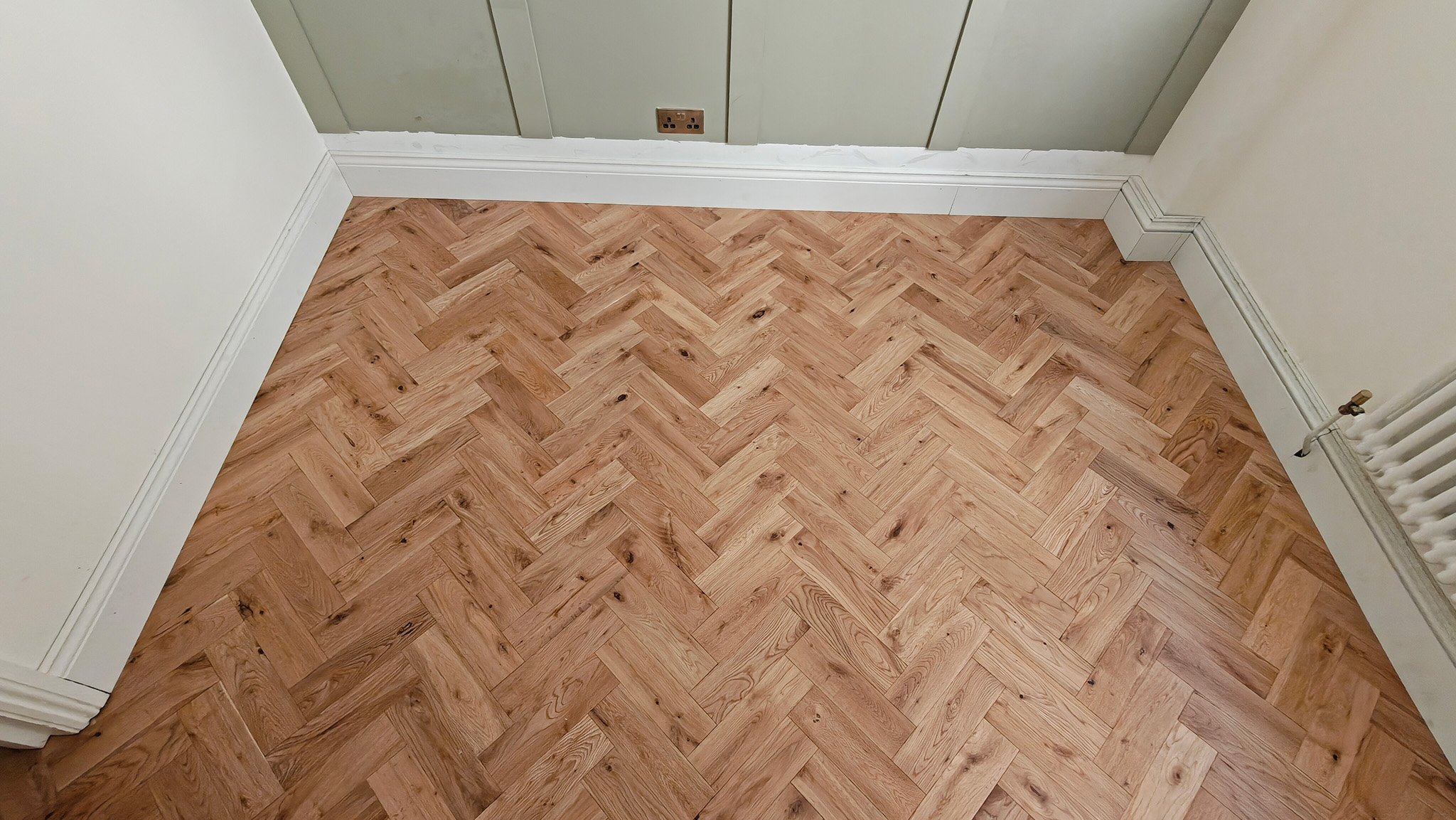
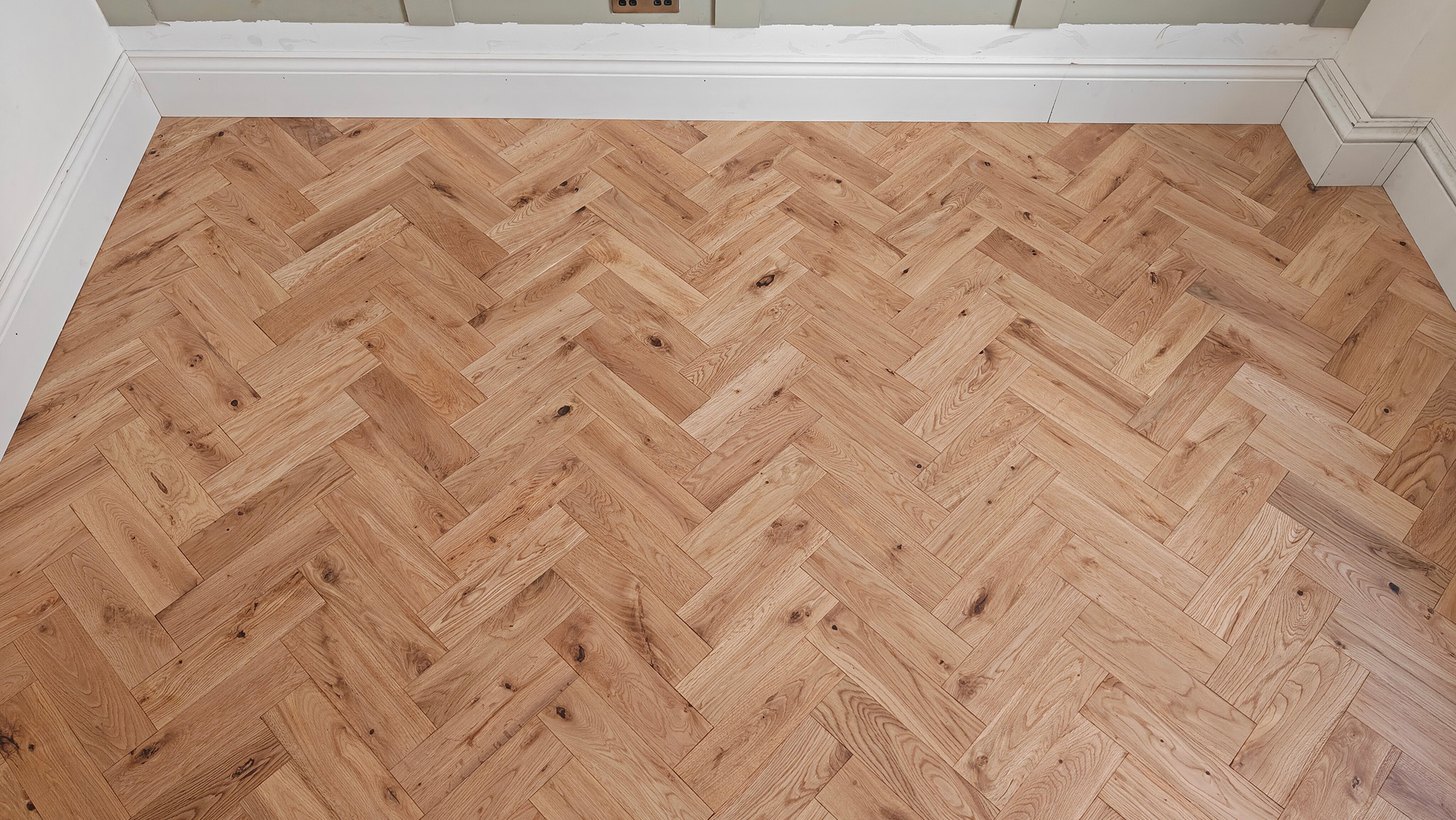
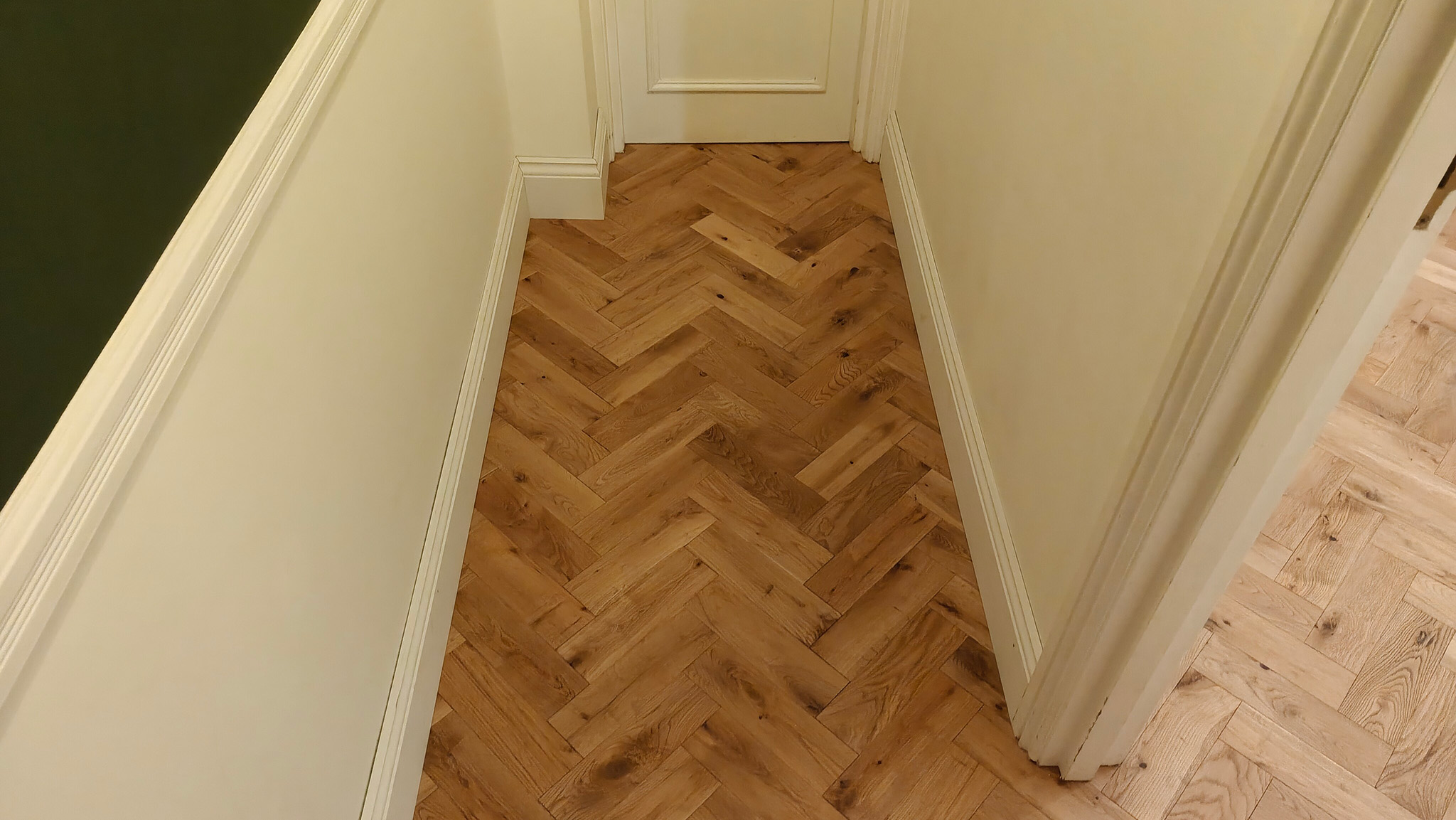
There's a reason herringbone appears in almost every high-end UK property listing right now. When a buyer walks into a room with a well-laid herringbone oak floor, they're reading the room: someone invested properly here. Herringbone is just one option. We also lay chevron, basket weave, Versailles and mosaic finger patterns, with optional single or double borders.
-
Herringbone
Herringbone — rectangular blocks interlocked at 90-degree angles — adds architectural weight that no straight-lay plank can match.
-
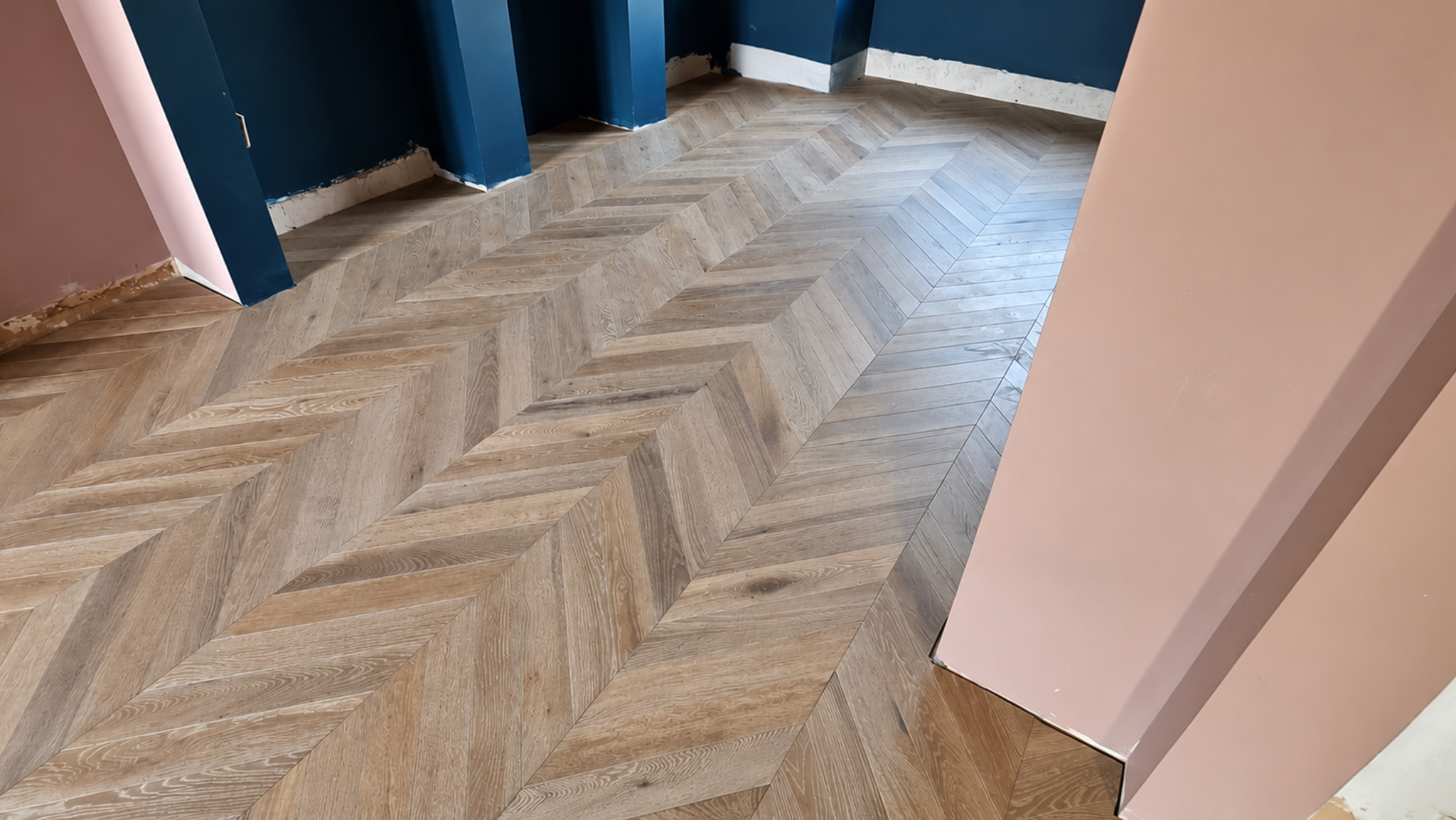
Chevron
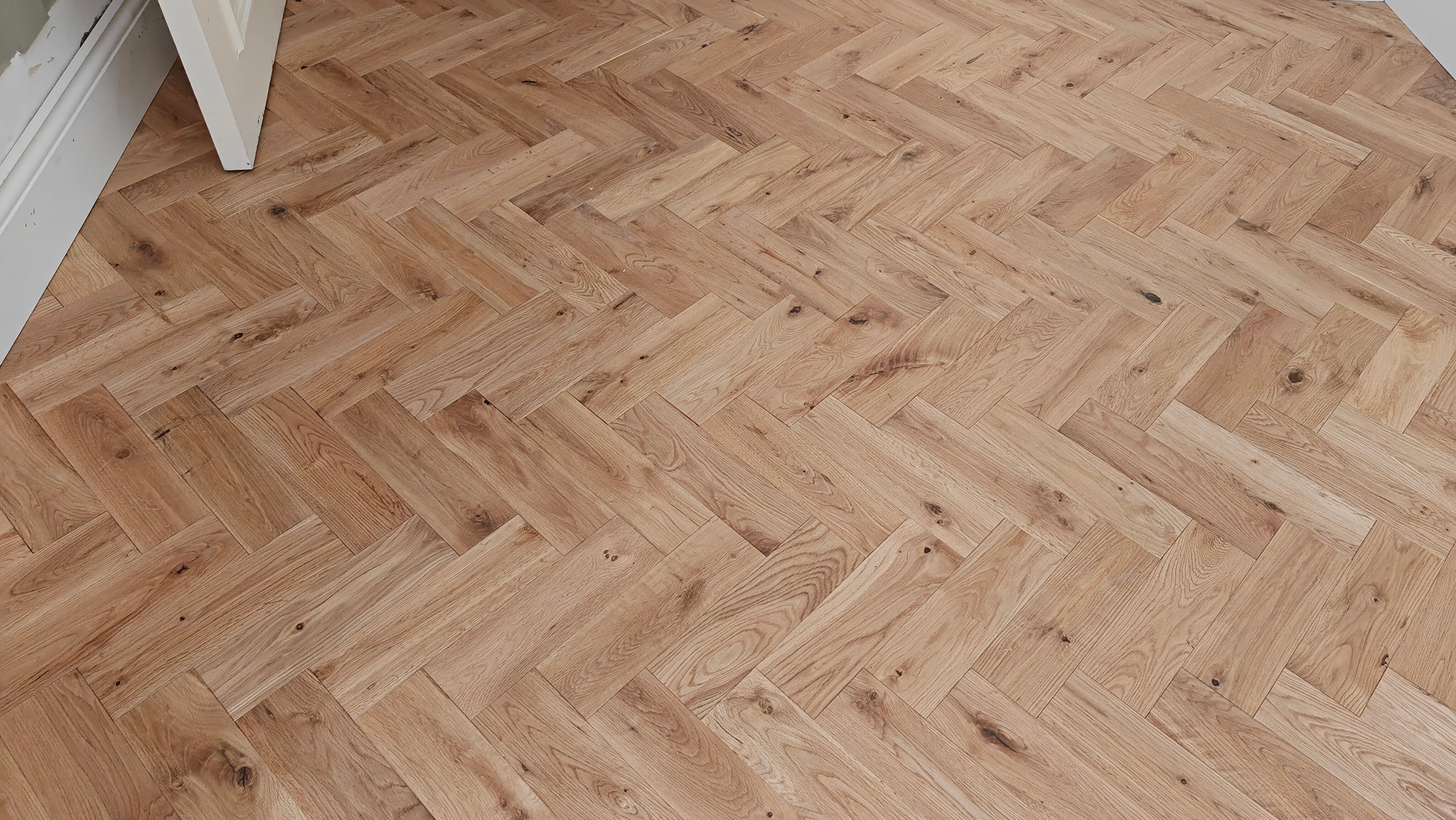
Chevron delivers the same premium signal with a sharper, more contemporary edge. Both patterns take more skill, more material, and more time to lay, and that's reflected directly in perceived value.
Why the Fitting Matters as Much as the Floor
A herringbone pattern laid without the right experience looks wrong immediately — and doesn't just fail to add value, it actively costs you. Before a single board goes down, there's real preparation: subfloor levelling, layout planning, working out where the pattern should center to suit the room.
At Floorworks, we treat every floor installation as a complete system. We use Tovcol MS adhesive throughout — a professional-grade product engineered to hold its bond through underfloor heating cycles and the natural seasonal movement of timber.
Once the floor is laid, our team advises on the right finish for the space: Bona Traffic HD for areas where long-term durability and heavy foot traffic demand a hard-wearing lacquer, or Osmo Polyx Hardwax-Oil where a more natural finish is the goal — one that feeds the wood and lets the character of the grain speak for itself.
A Floor That Gets Better With Age
Synthetic flooring has a fixed lifespan. Timber does something different — it develops a patina, deepens in character, and often becomes more appealing to buyers over time. A herringbone oak floor that's thirty years old and well maintained can be more desirable than one laid last year. That's not something you can manufacture.
Contact Floorworks™ for Professional Flooring Solutions

Premium timber flooring — solid hardwood, engineered boards, or parquet patterns like herringbone and chevron — adds lasting, genuine value to a property. It ages well, carries real weight with surveyors and buyers, and with professional floor fitting behind it, it's not a renovation cost. It's a permanent upgrade that keeps paying back.


