
Wood moves with moisture — and most floor damage that looks like a fitting problem is actually a humidity problem. Here's what's happening, why it matters, and what to do about it.
Walk into most conversations about wooden floor problems and the same words come up: gaps, cupping, squeaking, lifting, buckling. Different symptoms, different appearances, different degrees of disruption — but in a surprising number of cases, the same underlying cause. Not poor installation. Not cheap timber. Not heavy foot traffic. Humidity.
Wood moves with moisture. It always has and it always will — it's one of the fundamental properties of the material, built into every cell of every piece of timber. Understanding how that movement works, what conditions cause problems, and what you can do about it is the difference between a floor that performs well for decades and one that keeps surprising you with issues you didn't expect.
Here's what's actually happening beneath your feet.
Why Wood Moves in the First Place?
Timber is a hygroscopic material — which is a technical way of saying it naturally absorbs and releases moisture from the surrounding air. As it absorbs moisture, the wood cells expand and the board gets wider. As it releases moisture, the cells contract and the board narrows. This cycle happens constantly, driven by changes in the relative humidity of the air around the floor.
This isn't a manufacturing defect or a sign of low quality. It's the nature of the material. A piece of timber from a two-hundred-year-old floor does the same thing as one laid last year. The difference between a floor that manages this movement gracefully and one that develops problems is usually in how well the conditions have been controlled and how well the installation was designed to accommodate the natural behaviour of the wood.
The key number to understand is relative humidity (RH). For a timber floor in a UK home, the ideal range is between 40% and 60% RH. Within this range, the movement of the boards is manageable and the floor behaves as it should. Outside this range — in either direction — is where problems start.
What High Humidity Does to a Wooden Floor?
High humidity — RH above 65% consistently — means the air around the floor is carrying more moisture than the timber is comfortable with. The wood absorbs that moisture and swells. The boards get wider. And because the floor is a fixed surface with walls and skirting boards on all sides, that swelling has nowhere to go.
Cupping
This is the most common result of excessive moisture from above or from the air. The edges of the board absorb moisture faster than the center — either because the surface finish has worn through at the edges, or because moisture is coming from the sides and underside of the board. As the edges swell faster than the center, they rise. The board develops a concave shape across its width — higher at the edges, lower in the middle.In mild cases, cupping is barely visible. In more significant cases, you can feel it clearly underfoot and see it clearly in raking light across the floor. If the humidity causing it is brought under control while the cupping is still relatively minor — within about 2mm on a solid floor — the boards will often flatten back naturally as they dry. If left too long, the wood can take on the cupped shape permanently.Buckling
More severe than cupping, buckling is what happens when boards have absorbed so much moisture that their expansion has nowhere to go and they lift entirely from the subfloor — sometimes quite dramatically. A buckled floor has sections that are visibly raised from the surface, and in serious cases boards can pop free from fixings or adhesive entirely.Buckling is usually the result of a sudden or significant moisture event — a leak, flooding, a period of very high humidity in a newly built property before the structure has dried out — rather than gradual seasonal change. It's more serious than cupping and requires professional assessment to determine whether drying can restore the floor or whether boards need replacing.Swelling at Joints
In a floor with tight joints between boards, high humidity can cause the boards to swell against each other. If there was insufficient expansion gap left at the perimeter when the floor was installed, the boards have nowhere to expand and push against each other with significant force. The result can be joints that open and close seasonally, surface cracking along the length of the board, or in extreme cases structural damage to the joint itself.What Low Humidity Does to a Wooden Floor?
Low humidity — RH consistently below 35% — is less commonly discussed, but causes just as many problems. This is the situation in many UK homes during winter, when central heating is running continuously and the air becomes very dry.
Gaps
When the air is very dry, the timber releases moisture and the boards shrink. In a floor with many individual boards, that shrinkage accumulates — each board gets fractionally narrower, and the gaps between them open up. In a large room or a wide-plank floor, those gaps can become quite noticeable over a winter.These seasonal gaps are normal and will often close again in summer when humidity rises — but if the house consistently runs very dry in winter, the boards may not return fully to their original width, and the gaps become a permanent feature. They're draughty, they trap dirt, and they collect debris that's difficult to clean properly.Surface Checking and Cracking
Extreme dryness can cause the surface of timber boards to develop fine cracks or checks along the grain. This happens when the surface of the board dries faster than the core — the surface contracts while the interior is still at a higher moisture content, and the tension between them causes the surface to crack. This is more common in wide plank floors and in environments where heating is concentrated or direct.Loose Boards and Squeaking
As boards shrink in dry conditions, they can lose the tight contact with neighbouring boards and with fixings that keeps them stable. Loose boards flex slightly underfoot, and that flex creates the squeak that many people assume is a sign of poor installation. In a floor that was installed correctly, squeaking that appears or worsens in winter is almost always a humidity issue rather than a structural one.The Specific Risks in UK Homes
The UK climate creates a particular pattern of humidity fluctuation that timber floors have to manage — and understanding the seasonal rhythm helps anticipate and prevent problems.
- Winter brings low outdoor humidity and the drying effect of central heating running at full capacity. Indoor RH can drop significantly in a well-heated home — sometimes to 35% or below in rooms with radiators and poor ventilation. This is when gaps appear and squeaking increases.
- Summer brings higher outdoor humidity — particularly in the wetter months — and less heating, which means indoor RH rises. This is when cupping can appear, particularly in kitchens, bathrooms, and rooms with poor ventilation.
- Newly built properties present a specific challenge. A new build contains significant moisture in the concrete, plaster, and structure that takes time to dry out — sometimes one to two years. Timber floors installed in a new build before the property has fully dried out are exposed to consistently high moisture levels from the structure itself, which can cause significant movement. This is why moisture testing of the subfloor is essential before any timber floor is installed, and why engineered timber performs better than solid wood in new builds.
- Ground floor rooms and basements are more susceptible to damp rising from below — particularly in older properties without a damp-proof membrane or with a failing one. Moisture rising through a concrete or earth subfloor creates conditions at the underside of the boards that are different from conditions at the surface, which drives cupping and structural movement from below.
How to Know If Humidity Is the Problem
Most humidity-related floor problems are diagnosed by what they look like and when they happen.
- Gaps that appear in winter and close in summer are classic seasonal humidity movement. Normal and expected in a timber floor. If they're small enough not to cause draught or cleanliness issues, they don't require intervention — just an understanding that this is how timber behaves.
- Cupping that appears in summer or after wet weather points to elevated humidity or moisture from below. If it's minor and the cause is addressed, it may resolve naturally.
- Cupping or gaps that don't reverse with the seasons suggest either that the RH has been consistently outside the normal range for long enough to cause permanent change, or that there's a specific moisture source — a leak, rising damp, condensation — that's driving the problem regardless of ambient humidity.
- Squeaking that's worse in winter is almost always dryness-related, not structural.
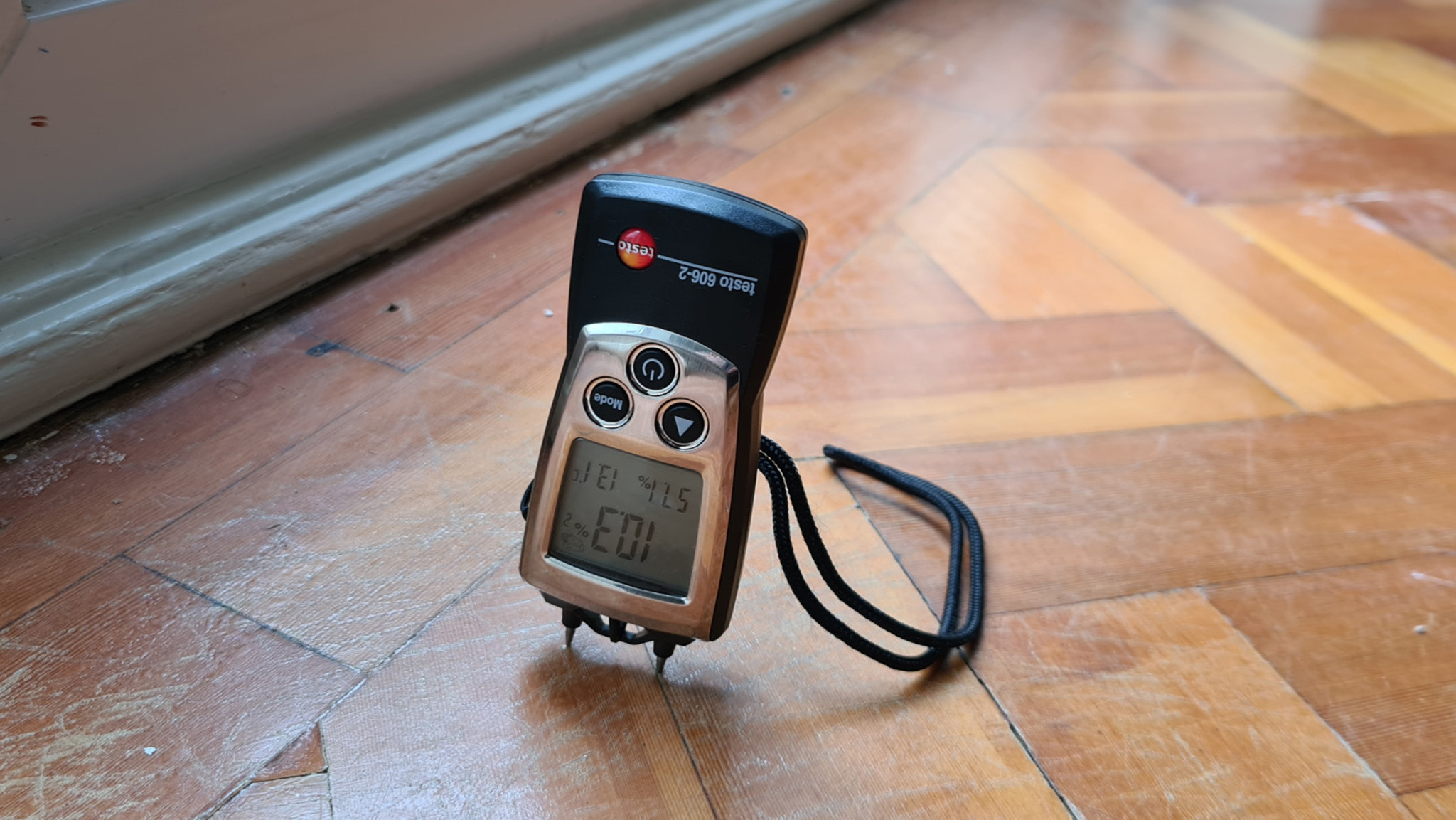
If you're not sure what's causing the issue, a moisture meter reading from the floor and from the subfloor gives you the actual numbers rather than a guess. At Floorworks, this is something we always do before assessing any floor that's showing movement or distortion — because treating the symptom without understanding the cause produces a repair that fails when the same conditions recur.
What You Can Do About It
The good news is that most humidity-related floor problems are preventable, and many are reversible if caught early enough.
Control the Environment
The most effective thing you can do for a timber floor is maintain consistent indoor humidity within the 40–60% RH range throughout the year.
In winter, a humidifier in rooms with significant timber flooring adds moisture back into the air that the heating is removing. This is particularly important in rooms with radiators directly adjacent to the floor, where the localised drying effect is most pronounced.
In summer, good ventilation prevents humidity from building up in rooms that tend to retain moisture — kitchens, bathrooms, and rooms with limited airflow. Extractor fans used properly make a genuine difference. Opening windows when outdoor humidity is lower than indoor is also effective.
A hygrometer — a small, inexpensive device that measures indoor relative humidity — is the simplest way to keep track of conditions. Once you know what the RH is doing in your home throughout the year, you can manage it actively rather than discovering the results after the fact.
Address Moisture at Source
If the problem is damp rising from below, air humidity management alone won't solve it. Rising damp through a concrete subfloor, a failing damp-proof membrane, or condensation forming at the junction of a cold subfloor and warmer room air all require physical intervention at the source — not just dehumidification above.
Before any timber floor is laid in a ground floor room, the subfloor moisture content should be tested with a hygrometer or a calcium chloride test. At Floorworks, we test subfloor moisture content as a standard part of our site assessment for any installation project — because a floor laid on a damp subfloor will develop problems regardless of the quality of the material or the skill of the installation.
Leave Adequate Expansion Gaps
This is a preventive measure taken at installation, but it's worth understanding if you're considering a new floor or trying to explain why an existing one is showing movement. Timber floors need an expansion gap of at least 10–15mm at all perimeters — walls, door frames, fixed obstacles — to allow for the seasonal expansion that will happen regardless of humidity management. A floor installed without adequate expansion gaps has nowhere to go when the boards swell, and the resulting pressure causes cupping, buckling, and joint damage.
Know When Professional Assessment Is Needed
Some humidity-related floor problems resolve on their own when the conditions are corrected. Others need professional intervention.
If cupping is beyond minor — more than 2mm on a solid floor or more than 1mm on engineered — and hasn't resolved after the humidity is brought under control, the floor needs assessment. The boards may have taken on a permanent shape that requires sanding to correct, or sections may need replacing if the damage is too severe to sand back.
If buckling has occurred, professional assessment is always needed — both to establish the source of the moisture causing it and to determine what the floor can realistically recover from. If a leak is the culprit, our guide on what to do when your wooden floor is affected by a leak walks through the immediate steps.
If gaps have become a permanent feature that don't close in summer, gap filling for wooden floors as part of a professional sand and refinish is the right solution — using a flexible resin mixed with the floor's own sanding dust to close the gaps in a way that accommodates future seasonal movement without cracking.
Contact Floorworks™ today for a free consultation

How Different Floor Types Handle Humidity
Not every floor responds to humidity changes in the same way — and understanding the differences helps set realistic expectations.
- Solid wood is the most responsive to humidity changes. Wide boards move more than narrow ones. Species with open grain like oak and ash move more than close-grained species. Solid wood floors in environments with significant humidity fluctuation need more careful management than other floor types.
- Engineered wood is significantly more stable than solid timber. The plywood core resists moisture movement in a way that solid wood can't, which means the floor is less responsive to humidity fluctuations. This is one of the main reasons engineered timber is recommended for kitchens, bathrooms, ground floor rooms, and properties with underfloor heating — all environments where humidity is harder to control consistently.
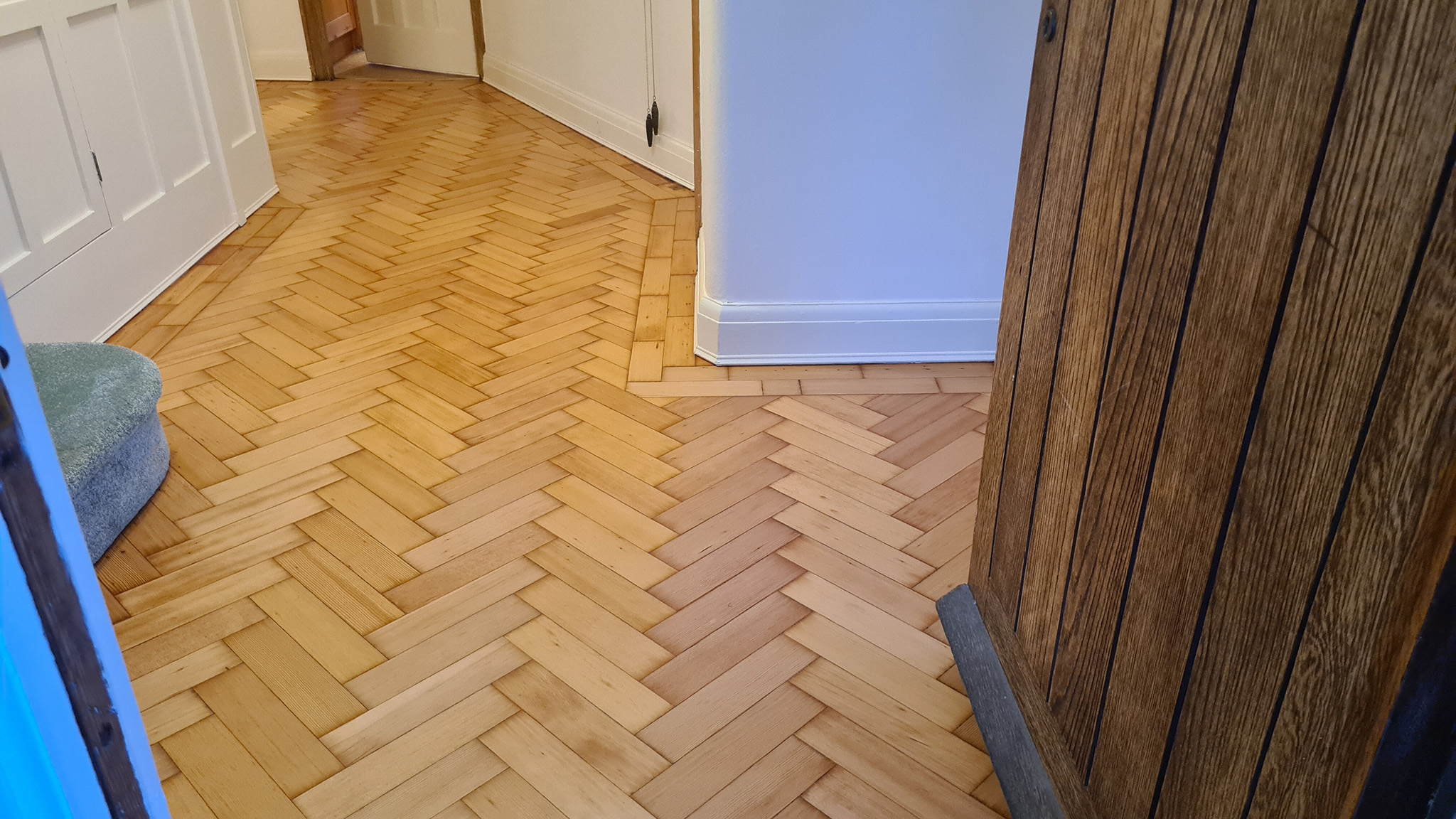
- Parquet flooring — particularly traditional solid block parquet — sits somewhere between the two. The short individual blocks move less than long planks, and the geometric pattern distributes that movement across many small joints rather than concentrating it in a few large ones. This makes parquet more forgiving of humidity fluctuation than a wide plank floor of the same species — but the adhesive beneath the blocks can be stressed by repeated expansion and contraction cycles over decades, which is why loose blocks are a common finding in older parquet.
- Original floorboards in Victorian and Edwardian properties are among the most resilient to humidity fluctuation — partly because of the density of the old-growth timber they're made from, and partly because they've been acclimatising to their environment for over a century. These floors have established a rhythm with their surroundings that modern floors haven't had time to develop.
Humidity is the single most significant environmental factor affecting a wooden floor — more than foot traffic, more than cleaning products, more than almost anything else that happens in a home. Wood absorbs moisture from the air when it's humid and releases it when it's dry, and every change in relative humidity produces movement in the boards. Keep that movement within the expected range through consistent indoor conditions, and the floor manages it gracefully. Let the RH go significantly outside 40–60% consistently, or introduce a moisture source from below, and the floor starts to tell you about it through gaps, cupping, squeaking, and in severe cases, buckling.
Most of these problems are preventable. Many are reversible. All of them are better addressed early rather than after the damage has progressed to the point where boards need replacing.
If your floor is showing signs of humidity-related movement — or if you're planning a new installation and want to make sure the conditions are right before anything goes down — Floorworks offers free site assessments across London. We take moisture readings, assess the subfloor conditions, and give you an honest picture of what your floor needs before any commitment is made.


