
Most people think about floor sanding when their floor looks bad. That's understandable — a dull, scratched, or worn timber floor is hard to ignore. But by the time a floor looks noticeably terrible, it's usually been telling you something for a while. The scratches were there before they became deep. The finish was thinning before it wore through. The gaps were narrowing before they became draughts.
Floor sanding matters — not just as a cosmetic fix, but as the maintenance process that keeps a timber floor functioning properly, protects it from the kind of damage that becomes expensive, and restores something that genuinely makes a home better to live in. Here's exactly why.
A Timber Floor Has a Lifespan — But Only If You Look After It
One of the most underappreciated things about a wooden floor is what it's capable of. A well-maintained solid oak or pine floor can last for centuries. Victorian floorboards laid in the 1880s are still being sanded and restored today — and they look extraordinary. That longevity isn't accidental. It's the result of periodic sanding and refinishing that removes damage before it becomes permanent and renews the protective finish before it fails entirely.
The alternative — leaving the floor until it's visibly in trouble — is what shortens that lifespan. A finish that wears through exposes bare timber to moisture, grime, and the daily abrasion of foot traffic directly on the wood. Once the timber itself starts to absorb that damage, the restoration becomes more invasive, more time-consuming, and more expensive. What could have been a straightforward sand and refinish becomes a repair job before the sanding can even begin.
Looking after a timber floor properly is a bit like looking after your teeth. The maintenance is cheaper than the treatment. And the longer you leave it, the more work it takes to get back to where you should have been.
What Floor Sanding Actually Does
It's worth being precise about this, because "floor sanding" gets used loosely and people sometimes think it just means buffing the surface or applying a new coat of finish. It doesn't.
Professional floor sanding uses heavy-duty drum sanders and edge sanders to mechanically remove the top layer of the timber — stripping away the old finish, the embedded grime, the surface scratches, and the oxidised wood beneath them to reveal fresh, clean timber underneath. It's a process that removes material, not just moves it around.
That fresh timber surface is then ready to absorb a new finish properly — whether that's lacquer, oil, or a stained combination of the two. The finish bonds to clean, open-grained timber in a way it simply can't to a surface that's been polished and re-polished over the years without being properly sanded.
The result isn't just a floor that looks better. It's a floor that's genuinely protected again — sealed against moisture, resistant to daily wear, and set up to last another decade before it needs attention.
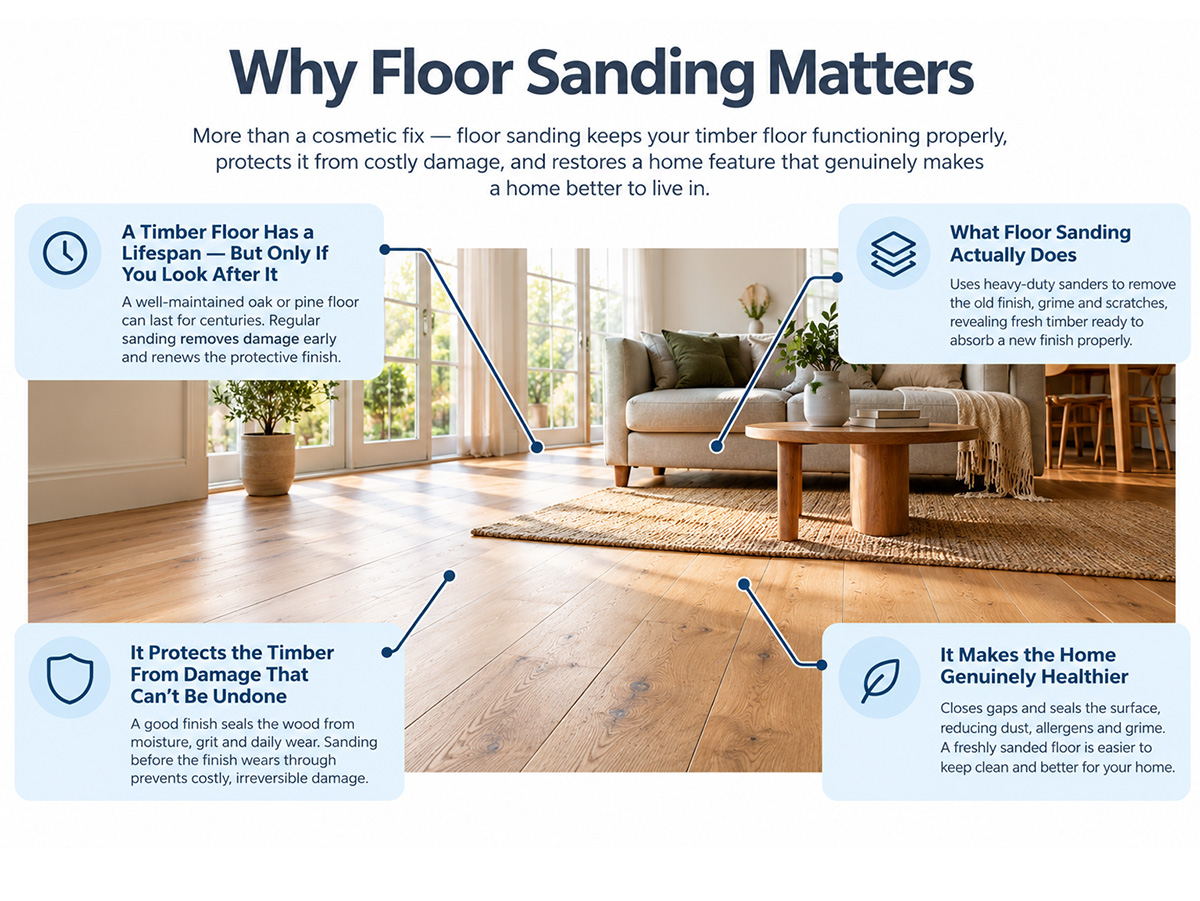
It Protects the Timber From Damage That Can't Be Undone
This is the practical argument for floor sanding that most people don't think about until it's too late.
When a floor's protective finish is intact, the timber beneath it is sealed. Moisture can't penetrate. Grit can't grind directly into the wood. The daily reality of a busy household — shoes, furniture legs, pet claws, spills — is absorbed by the finish rather than by the floor itself.
When the finish wears through — even in a single high-traffic zone like a doorway or in front of the sofa — that protection is gone in that area. Bare timber is exposed. Moisture from cleaning, spills, and the natural humidity of a home starts to penetrate the grain. Grit on the surface acts like sandpaper directly on the wood. Over time, that exposure causes darkening, soft spots, grain raise, and the kind of deep, structural damage that can't be addressed without replacing boards entirely.
A timely sand and refinish — before the finish has worn through completely — avoids all of this. It's a preventive intervention, not just a cosmetic one.
It Makes the Home Genuinely Healthier
This is the benefit that surprises people most, and it's a real one.
A worn timber floor — particularly one with gaps between boards — traps dust, allergens, pet dander, and grime in ways that carpets are famous for but hard floors are assumed to avoid. The reality is that an old, ungapped, unfinished floor surface is porous and accumulates debris at a microscopic level that regular cleaning doesn't reach.
Professional floor sanding — particularly when combined with gap filling — closes those gaps and seals the surface properly. A freshly sanded and lacquered floor is genuinely easier to keep clean, doesn't harbour allergens in the same way, and doesn't release fine dust particles into the air when walked on. For households with allergies, asthma, or young children who spend time on the floor, this isn't a minor benefit.
At Floorworks, we use dust-free sanding equipment throughout every project — machines that capture the sanding dust at source rather than distributing it through the property. This matters both during the process and for the finished result. A surface free of airborne dust at the point of finishing bonds with the lacquer far more effectively than one that's been contaminated by particles settling back onto the floor between coats.
It Adds Real Value to Your Property
A surveyor walking into a property with a worn, dull, scratched floor and a surveyor walking into the same property with a freshly sanded and finished timber floor are making different assessments of the same building. Flooring is a permanent fixture — it stays with the property and forms part of its condition grade. The condition of the floor contributes to the surveyor's valuation, which affects your Loan-to-Value ratio at remortgage time and the offers you receive at point of sale.
Beyond the valuation, there's the simpler reality of buyer perception. A timber floor in excellent condition is one of the most sought-after features in a residential property. A timber floor that looks worn and neglected raises questions about what else hasn't been looked after.
Professional floor sanding and restoration is one of the most cost-effective improvements you can make to a property before it goes to market — the return on investment, in terms of both valuation and buyer interest, consistently exceeds the cost of the work.
It Transforms How a Space Feels
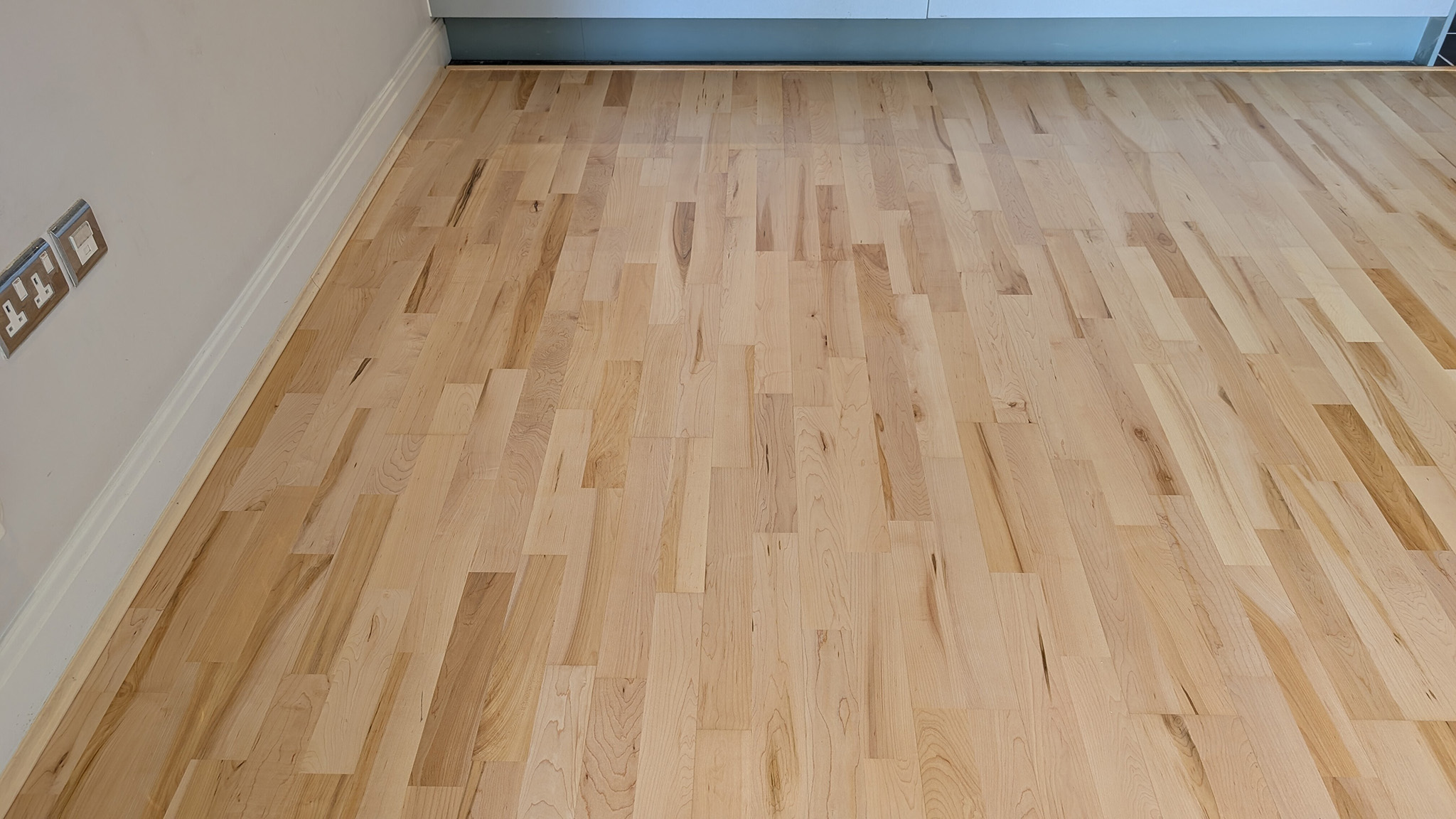
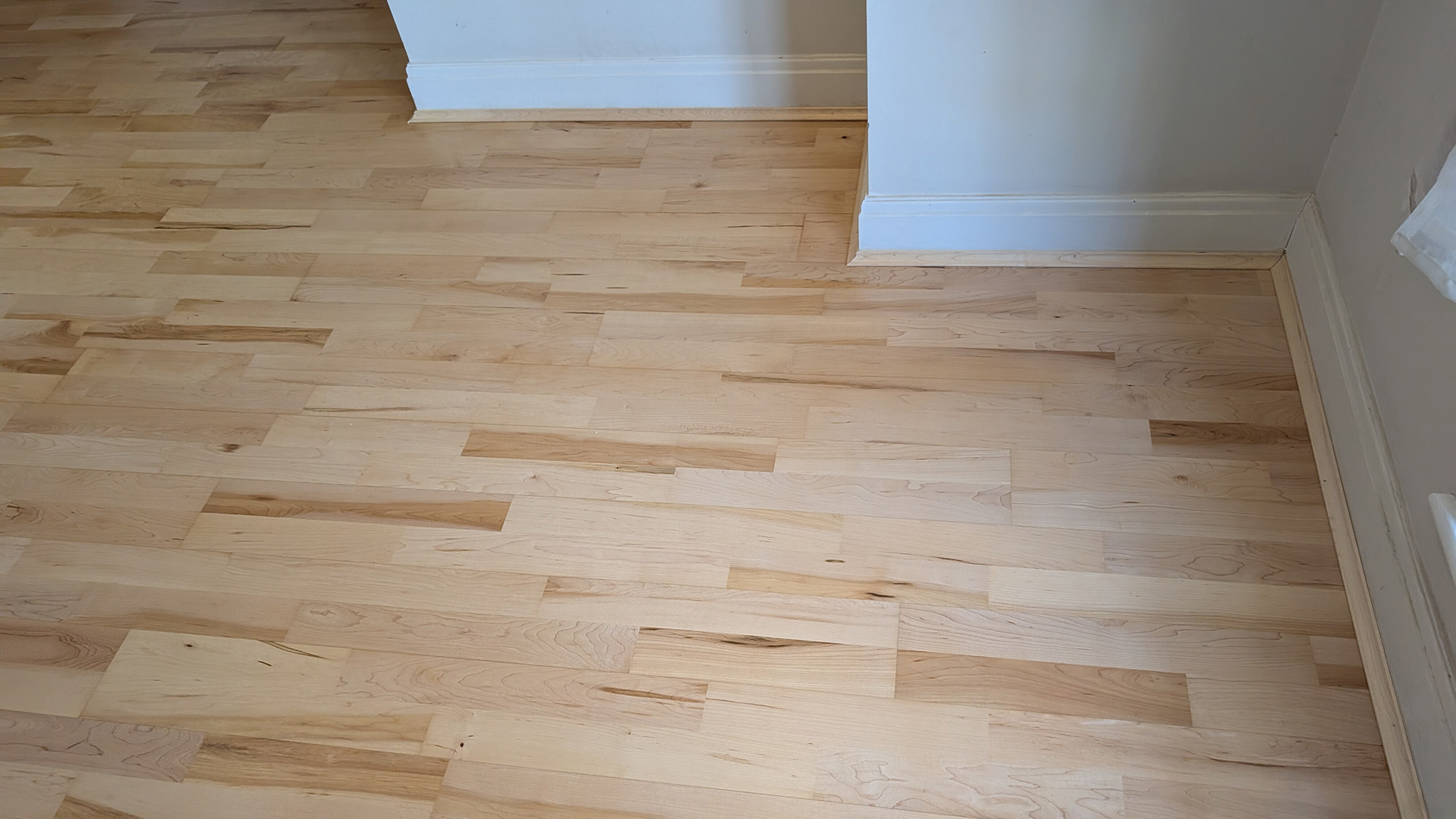
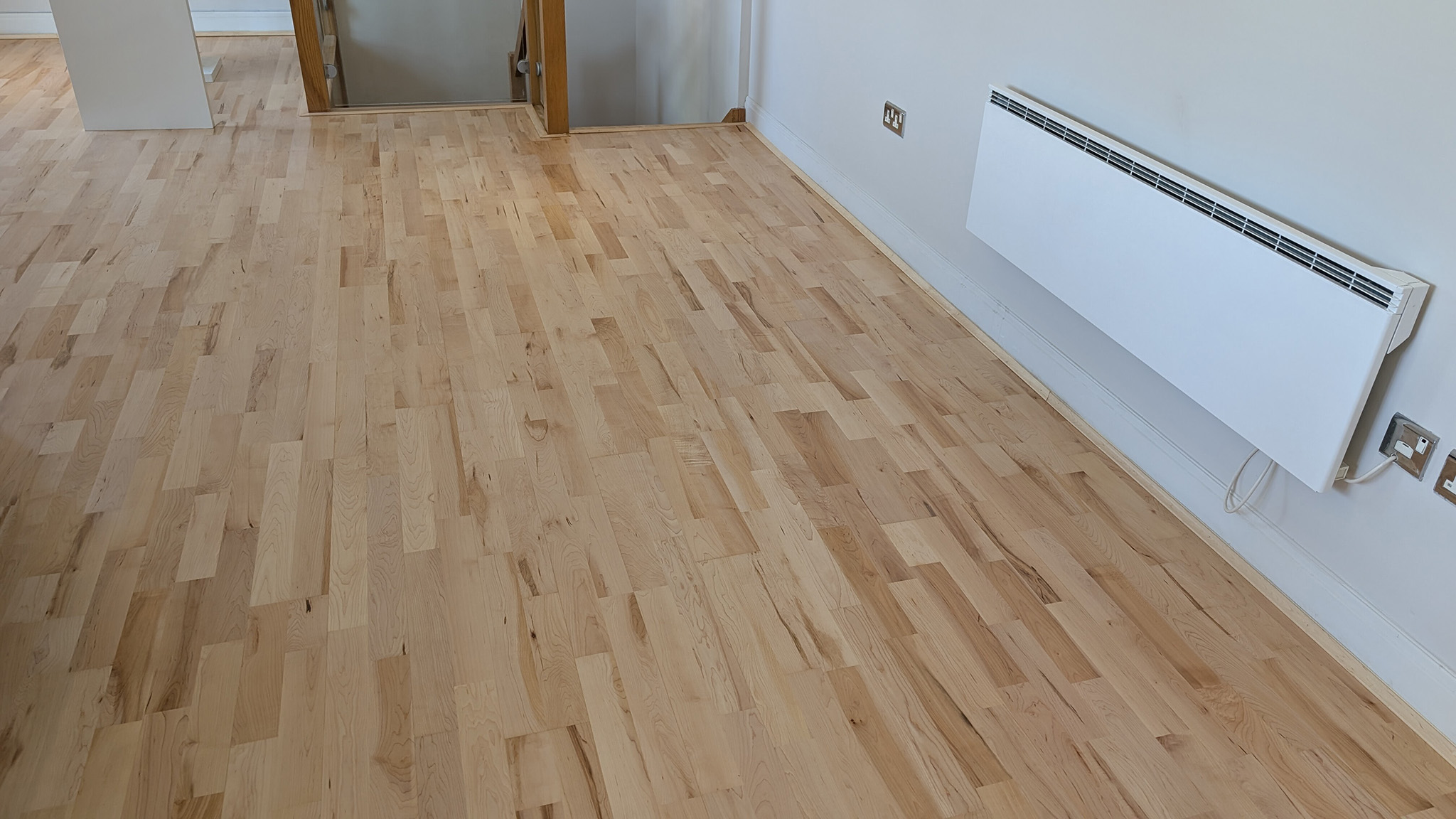
This one is harder to quantify but it's the thing clients mention most often after a floor sanding project is complete. The room feels different. Not just cleaner or brighter — actually different. A freshly sanded and finished timber floor changes the quality of light in a space, makes the room feel larger, and gives everything else in the room — the walls, the furniture, the rugs — somewhere proper to sit.
It's partly because a freshly finished floor reflects light more evenly. It's partly because the uniformity of the finish removes the visual noise of patches, scratches, and worn zones that the eye was constantly navigating around. And it's partly something less tangible — the quality of a material that's been properly restored and is doing what it was made to do.
We've sanded and finished floors in properties across London where the client didn't change anything else about the room — same furniture, same paint, same lighting — and the transformation was significant enough that people assumed more had been done. The floor does more for a room than most people give it credit for.
When Does a Floor Need Sanding?
This is the practical question — and the honest answer is earlier than most people think.
-
The finish has worn through in high-traffic areas
If you can see bare or darkening timber where the protective layer has gone — doorways, hallways, in front of the sofa — the floor needs sanding before the exposure causes permanent damage to the wood itself.
-
The surface has deep scratches
Light surface marks are cosmetic and can be lived with. Deep scratches that catch a fingernail or are visible from a standing position have penetrated through the finish and into the timber. These won't buff out — they need to be sanded away.
-
The floor looks dull and flat regardless of cleaning
A floor that no longer responds to cleaning and polishing has a finish that's exhausted. It doesn't need more product put on top — it needs the surface stripped back and started again.
-
There are gaps between boards
Gaps that have opened through seasonal movement or age are draughty, trap dirt, and affect the visual uniformity of the floor. Gap filling as part of the sanding process addresses them permanently.
-
The floor has been affected by water
A floor that's had contact with water — from a leak, a spill left too long, or condensation over time — may have staining, raised grain, or minor distortion that sanding can correct. See our guide on what to do when a wooden floor is affected by a leak for more on this.
It simply hasn't been done in a long time. Most timber floors benefit from a professional sand and refinish every eight to twelve years, depending on traffic and maintenance. If you're not sure when it was last done — or you've just moved into a property and don't know the floor's history — a site visit will tell you what you're working with.
What to Expect From Us
Not all floor sanding is the same. The difference between a professional result and a disappointing one comes down to a handful of things that are easy to ask about before work begins.
-
Dust-free equipment
Modern professional floor sanding uses machines with integrated dust extraction that captures particles at source. If a contractor isn't using dust-free equipment, the dust goes into the air, settles back onto the floor, and contaminates every coat of finish applied afterwards. At Floorworks, dust-free sanding is standard on every project.
-
The right finish for the space
For high-traffic areas, Bona Traffic HD — a two-component water-based lacquer — is our go-to recommendation. It's hard, clear, non-yellowing, and can handle the daily reality of a busy household without degrading quickly. For spaces where a more natural appearance is the priority, Osmo Polyx Hardwax-Oil penetrates the timber and produces a softer, more organic finish that's easier to spot-repair. We'll recommend the right product for the floor and how the space is used.
-
Enough coats
A primer plus two coats is a minimum for most residential floors. High-traffic areas benefit from three. Cutting coats to reduce cost produces a finish that wears through faster — which means the work needs doing again sooner. It's the same false economy as buying a cheap paint that needs two extra coats to cover properly.
-
An honest assessment first
A good floor sanding contractor will tell you what the floor actually needs before agreeing to any work — not just take the job and hope for the best. At Floorworks, we offer free site visits across London and will give you a clear picture of what's possible, what it involves, and what it costs before any commitment is made.
Contact Floorworks™ today for a free professional consultation

Floor sanding matters because timber floors don't look after themselves. The protective finish wears, the timber beneath gets exposed, and damage that starts as surface scratches becomes structural if it's left long enough. A timely, professional sand and refinish prevents that — restoring the protection, closing the gaps, removing the accumulated damage, and leaving a floor that looks genuinely new while keeping the character that only comes from timber that's been there for decades.
It's also one of the most cost-effective investments you can make in your home — cheaper than replacement, impactful on property value, and significant enough in how it changes a space that clients consistently say it's the single improvement that transformed their home more than anything else they spent money on.


