
Somewhere between choosing a timber species and picking a finish, there's a decision that gets far less attention than it deserves: how the floor actually gets fixed to the ground beneath it. Floating or glue-down sounds like a fitter's technical preference rather than something worth a homeowner's genuine consideration — but it quietly shapes how the finished floor sounds underfoot, how stable it feels over the years, what subfloor conditions it can tolerate, and even how it can be maintained down the line.
It's also one of those decisions where "it depends" is a genuinely honest answer rather than a cop-out — because the right method depends on the floor type, the subfloor, the room, and what you actually want from the finished result. Here's what's actually different between the two, so that "it depends" becomes a decision you understand rather than one you're just told to trust.
What Each Method Actually Means
-
Floating installation
Floating installation doesn't fix the floor directly to the subfloor at all. Individual boards or planks connect to each other — typically via a click-lock or tongue-and-groove joint — forming one continuous connected surface that sits, unattached, on top of an underlay. The whole assembled floor essentially "floats" as one unit above the subfloor, with a small expansion gap left around the room's perimeter to allow for natural movement.
-
Glue-down installation
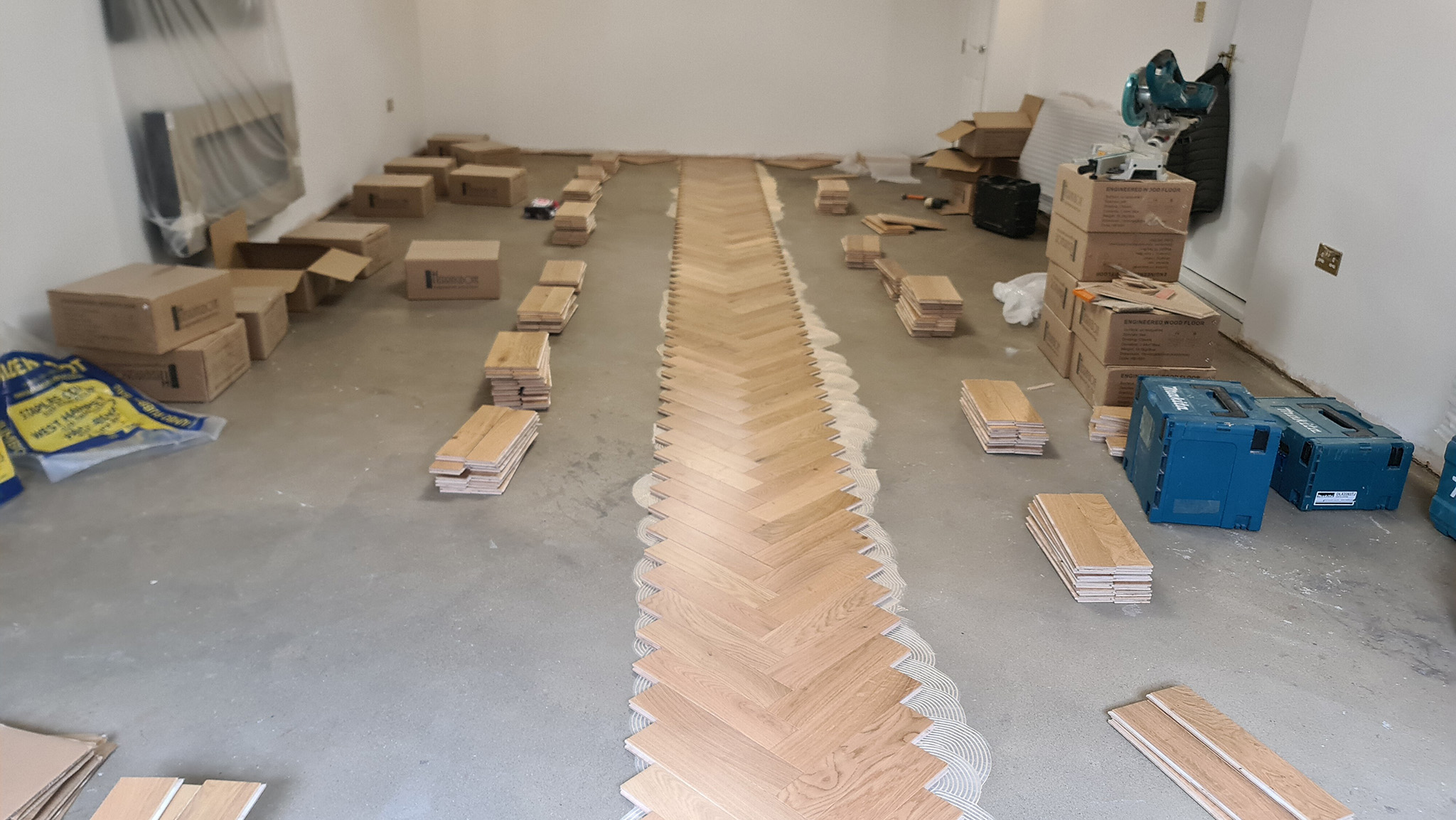
Glue-down installation bonds each board, plank, or block directly and permanently to the subfloor using an adhesive. There's no floating layer between the floor and what's beneath it — the two are fused together, and the floor moves as one with the structure underneath it, for better and for worse.
Both produce a finished floor that can look identical from above. The difference is entirely in how it behaves, both on installation day and for every day after.
Stability and Feel Underfoot
This is often the first thing people notice, even if they can't quite articulate why. A floating floor has a very slight give to it — not a wobble, but a subtle cushioning quality that comes from the underlay beneath it and the fact that the boards aren't rigidly fixed to the structure. Many people find this comfortable, and it's part of why floating installation has become so popular for LVT and laminate in particular.
A glue-down floor feels different — more solid, more directly connected to the building itself, with none of that slight give. For some people this reads as more premium and substantial; for others it's simply a neutral difference in feel rather than a preference either way. It's genuinely worth standing on a sample of each, if you can, before deciding — this is one of those things that's hard to judge from a description alone.
Sound: A Bigger Difference Than People Expect
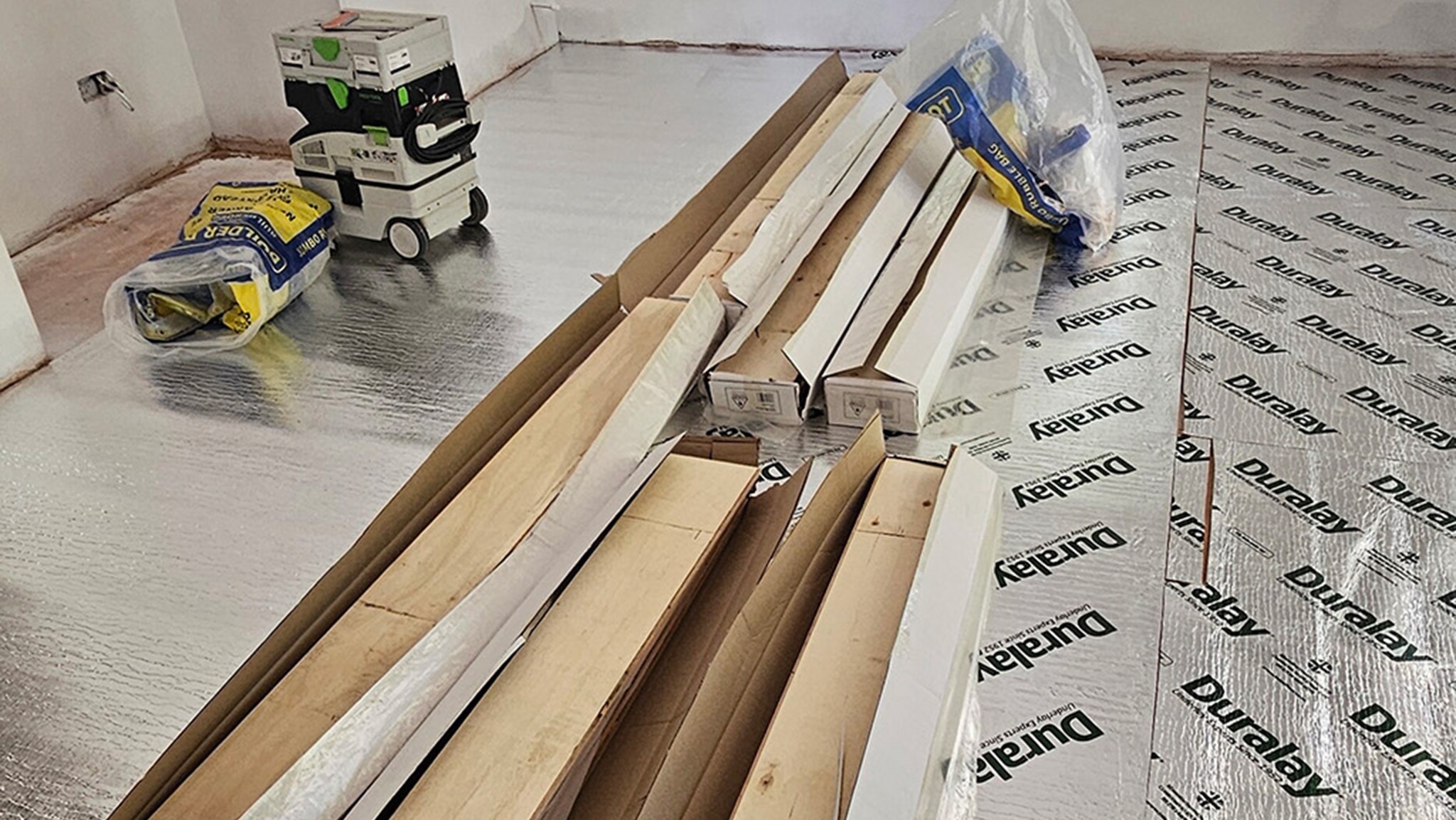
This is where the two methods diverge more than most people anticipate. Floating floors, because they're not rigidly bonded to the subfloor, tend to transmit more airborne and impact sound — footsteps can sound slightly hollow or drummy, particularly on an upper floor, unless a good acoustic underlay is specified alongside it. Get the underlay right, though, and this difference narrows considerably.
Glue-down floors, bonded directly and solidly to the subfloor, generally produce a quieter, more solid-sounding result underfoot without needing as much help from an underlay — the mass and direct connection to the structure itself does a lot of the acoustic work. This is one of the more genuine, if under-discussed, advantages of glue-down in situations where sound matters — multi-storey homes, flats, or any building where noise transfer between floors is a real consideration. Our guide on floor insulation and soundproofing goes into this in more depth, and it's genuinely worth reading before finalising either the installation method or the underlay spec, since the two decisions affect each other.
Subfloor Demands: Which Method Forgives More
Floating installation is considerably more forgiving of a subfloor that isn't perfectly flat or fully sound, because the connected floor above essentially bridges minor inconsistencies rather than bonding to every point of the surface beneath it. This makes floating a sensible choice where the existing subfloor has some minor imperfection that doesn't justify a full levelling project.
Glue-down installation is far less forgiving. Because every part of the floor is bonded directly to the subfloor, any unevenness, weakness, or inconsistency beneath it has the potential to become a problem in the finished floor — which is exactly why proper subfloor preparation matters so much more for glue-down work than for floating. Whether you're working over a concrete slab or an existing timber subfloor, the preparation demands for glue-down installation are genuinely more rigorous, and it's worth going into the decision with that trade-off understood upfront rather than discovering it partway through a project.
Long-Term Stability and Movement
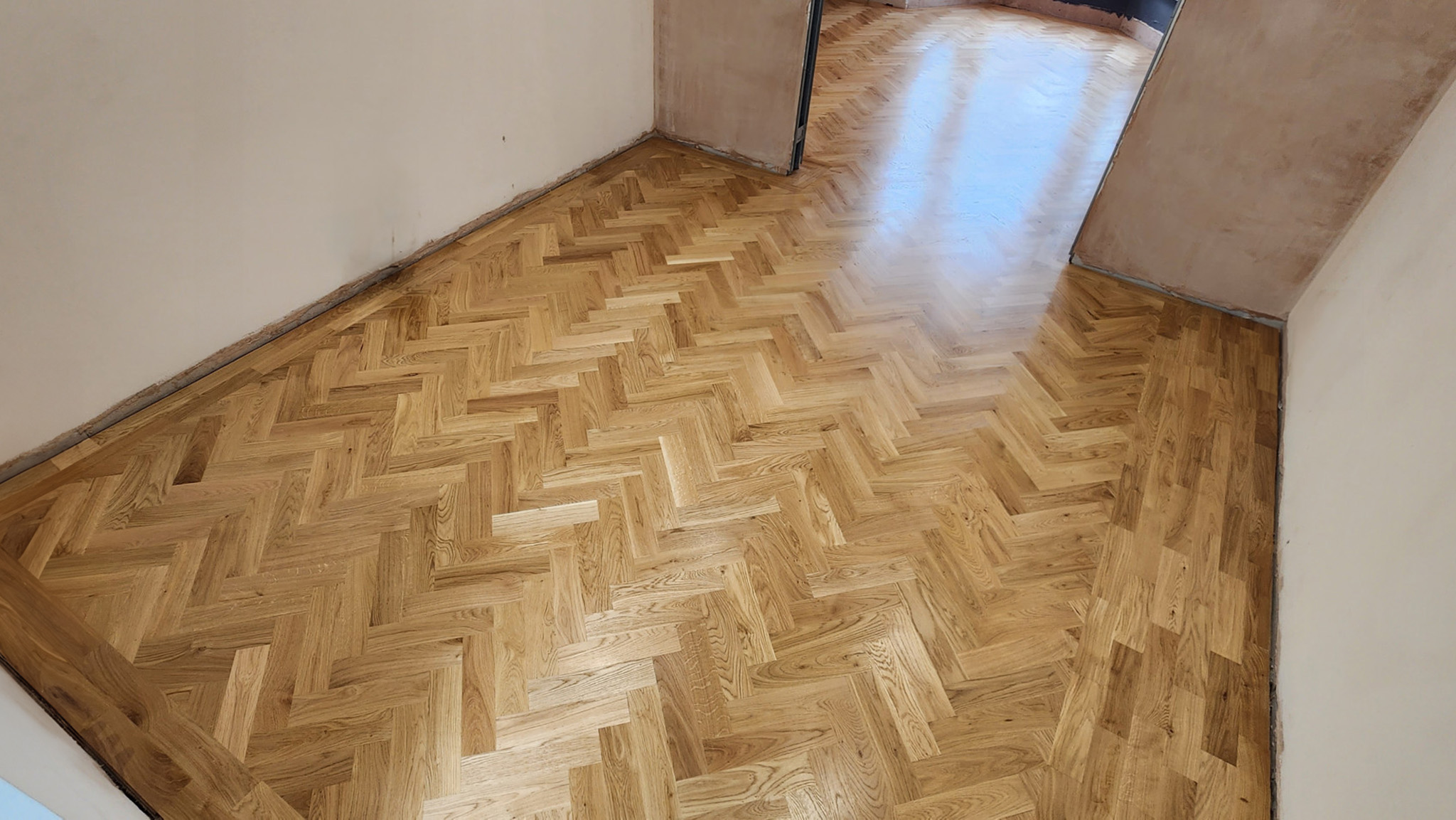
This is where the two methods diverge in a way that particularly matters for parquet and any pattern-laid floor. A floating floor moves as a connected but ultimately mobile unit — which works well for straight-lay boards, but is generally unsuitable for herringbone or chevron parquet, where the geometry of the pattern depends on every individual block staying exactly where it was placed. For this reason, parquet is almost always installed glue-down, regardless of whatever else might be true for plank flooring in the same project.
Glue-down installation also tends to handle sustained heavy loads and high-traffic commercial environments better over the long term, since there's no floating layer that can shift, separate at the joints, or develop movement under repeated heavy use — part of why glue-down remains the preferred specification for busy commercial spaces, not just parquet's geometric requirements.
Underfloor Heating: It Applies to Both, Differently
Both floating and glue-down installations can work over underfloor heating, but the considerations differ. Glue-down installation, with the floor bonded directly to the heated subfloor, generally transfers heat more efficiently and evenly, since there's no air gap or floating layer between the heat source and the floor surface. Floating installations can still work well over underfloor heating, but the underlay needs to be specifically rated for it, and heat transfer through a floating assembly can be marginally less direct than through a bonded one.
Removability and Future Changes
This is a genuine practical consideration that's easy to overlook at the outset of a project. A floating floor can, in most cases, be lifted and removed relatively straightforwardly if you ever need to access the subfloor underneath, or if you want to replace the floor entirely down the line — a genuine advantage for anyone who anticipates changes to the property, or is installing in a rented or short-term property.
A glue-down floor is, by design, considerably more difficult to remove. It's bonded permanently, and removal generally means a genuinely destructive process rather than a straightforward lift. This isn't a flaw in glue-down installation — permanence is precisely what gives it the stability advantages described above — but it is worth factoring in if there's any realistic chance you'll want to change the floor again within a few years, rather than committing to it for the long term.
Cost: Where the Numbers Typically Land
Floating installation is generally quicker and less labour-intensive to fit, which tends to make it the more affordable option in terms of installation cost, even before accounting for the reduced subfloor preparation it often requires. Glue-down installation typically costs more overall, both because of the adhesive materials involved and because of the more rigorous subfloor preparation it demands to perform properly. Our flooring services pricing page gives a general sense of how these costs compare, though the specifics always depend on the floor type, room size, and subfloor condition on your particular project.
So, Which Should You Choose?
If you're installing LVT, SPC, laminate, or straight-lay engineered plank in a straightforward room with a reasonably sound subfloor, and you value a slightly softer feel underfoot, easier future removal, and a lower overall cost — floating is a genuinely sound, sensible choice, and it's why it remains the standard specification across a huge proportion of residential projects. Our LVT and SPC installation guide covers exactly this kind of floating specification in detail.
If you're installing parquet, working in a commercial or high-traffic environment, prioritising the quietest, most solid-feeling result underfoot, or simply committing to a permanent, long-term floor with no plans to change it — glue-down is the stronger choice, and it's worth budgeting for the more thorough subfloor preparation it demands, whether that's over concrete or an existing timber subfloor, so the floor performs the way it should from day one.
Contact Us for Professional Flooring Solutions

Get an Honest Recommendation for Your Room
The right method genuinely depends on your specific floor, room, and subfloor — which is exactly the kind of assessment worth doing in person rather than guessing from general advice. Get in touch via Floorworks for a free site visit, and we'll give you a clear, honest recommendation between floating and glue-down based on what your actual space needs, backed by our service guarantee from the first assessment through to the finished floor.


