
Looking for pet-friendly flooring? Explore durable, scratch-resistant options perfect for homes with dogs and cats.
Welcoming a dog or cat into your home puts your floors under constant pressure. Muddy paws, water bowl spills, and the daily friction of claws all take a toll — which means choosing the right surface from the start matters far more than most homeowners expect. It's not just about surviving the first year, either; it's about a floor that still looks good five years in, after thousands of walks' worth of grit, hundreds of water bowl top-ups, and however many "accidents" a puppy or a nervous rescue dog brings with them while they settle in.
The best pet-friendly flooring balances durability, moisture resistance, comfort, and style, and getting that balance right starts with understanding your options properly — not just going with whatever a showroom sample looks nicest under.
What Pets Actually Do to a Floor?
Before comparing products, it's worth being specific about the kind of wear a pet-owning household generates, because it's genuinely different from ordinary domestic use.
- Claws. Even a small, calm dog puts repeated point-pressure on a floor every time it walks, and an excitable dog on a hard surface — the classic scrabble across a kitchen floor when the doorbell goes — can put real scratching force through a finish. Cats, meanwhile, tend to be lighter on floors but heavier on furniture and skirting.
- Moisture. Water bowls get knocked over. Wet paws come in from the garden in every season, not just winter. Accidents happen, particularly with puppies, older or unwell pets, or animals adjusting to a new home.
- Grit and grime. Paws track in far more debris than shoes do, and it tends to work its way into joints, grout lines, and any gap where a floor isn't fully sealed.
- Weight and jumping. Larger dogs jumping off sofas, or cats leaping from height onto a hard floor, add impact stress that a softer, more resilient surface handles better than a rigid or brittle one.
With that in mind, here's how the main flooring options actually perform.
Luxury Vinyl (LVT): The Top Choice for Pet Owners?
LVT (Luxury Vinyl Tile) flooring has become the go-to recommendation from floor fitters across the UK, and it is easy to see why. Modern luxury vinyl replicates the look of natural wood or stone while offering something those materials cannot — complete waterproofing. Accidents, spills, and tracked-in moisture will not cause warping or long-term damage, and the flooring can simply be cleaned up and left to carry on as normal.
A built-in wear layer also provides strong scratch resistance against even the most active breeds, and the slight softness underfoot — a result of LVT's flexible core — is gentler on a pet's joints than stone or ceramic tile. That matters more than people realise for older dogs, or larger breeds prone to hip and joint issues, who are on that floor several times a day for years.
LVT also comes in a genuinely wide range of realistic wood and stone visuals, including herringbone and chevron layouts, so choosing a pet-friendly floor doesn't mean compromising on the finished look of a room. For a closer look at what's out there, our review of LVT & SPC flooring product types is a good next read.
SPC Flooring: Maximum Resilience for Busy Households
For households with larger dogs, multiple pets, or simply a higher tolerance-testing lifestyle, SPC (Stone Polymer Composite) flooring is often the stronger choice. Where LVT uses a flexible vinyl core, SPC is built around a rigid core of limestone powder and PVC composite — and that difference in construction is exactly what makes it so well suited to pet-heavy homes.
The rigid core gives SPC exceptional dimensional stability. It resists denting under the weight of larger dogs, holds its shape under sustained daily traffic, and shrugs off the kind of impact that comes from a boisterous Labrador skidding across a kitchen floor or a cat launching itself off a windowsill. It's also fully waterproof through its entire structure, not just at the surface, which means it copes just as well with a knocked-over water bowl left unnoticed for a few hours as it does with an immediate wipe-up.
Scratch resistance is another strong point. SPC's wear layer, combined with the unyielding core beneath it, stands up well to claws — including from larger or heavier-clawed breeds that can leave visible marks on softer surfaces over time. For multi-pet households, homes with a dog and young children, or anyone who wants a floor they genuinely don't have to think twice about, SPC tends to be the more forgiving long-term choice.
The one trade-off is underfoot feel — SPC is a harder, firmer floor than LVT, closer to how a stone or tiled floor feels to stand on. Pairing it with the right underlay softens this considerably and also helps manage the sound of claws on a hard surface, which is worth discussing with your installer at the specification stage rather than after the floor's already down.
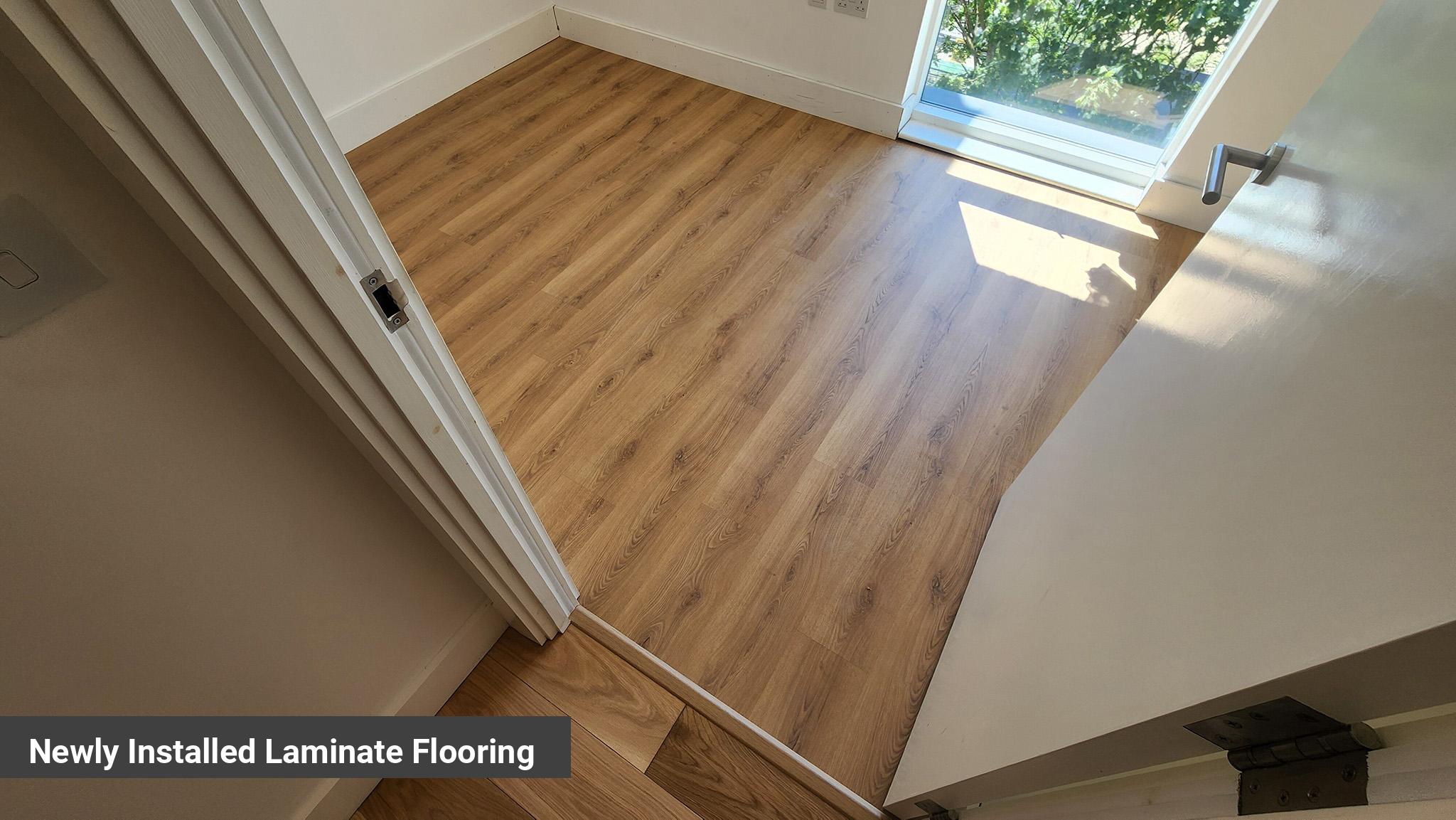
Water-Resistant Laminate: Style at a Practical Price
For homeowners who love the warmth of hardwood, but want something more resilient and affordable, water-resistant laminate is a serious option. Premium laminate features an exceptionally hard surface layer that handles heavy foot traffic and claw friction well, while modern click-lock systems and sealed edges give it meaningful protection against surface moisture — enough to survive a spilled water bowl if it's dealt with reasonably quickly.
One point worth noting: a matte or textured finish is far safer for pets than a high-gloss surface, since gloss laminate can become noticeably slippery underfoot for both pets and people, particularly on stairs or in hallways. Good floor installers will flag this during the selection process — it is one of the less obvious advantages of taking professional advice before purchasing, rather than choosing purely on appearance.
It's worth being clear-eyed about laminate's limits, though. Unlike LVT and SPC, laminate's core is still wood-based and can swell irreversibly if water gets past a seal and sits there — an accident that isn't noticed and mopped up quickly enough can cause damage that isn't repairable. For a household with a new puppy still being house-trained, or an elderly pet with occasional accidents, that's a real consideration worth weighing against the cost saving.
Why Professional Floor Installation Makes the Difference
The product you choose is only half the story. Poor floor installation — particularly inadequate subfloor preparation — can cause even the best materials to fail early, creating gaps where moisture and debris collect, and exactly the kind of weak points that pet-related wear finds first.
Professional floor installers assess the subfloor thoroughly before anything is laid, preventing problems that are costly to fix later. If you want the full detail on how a proper LVT or SPC installation actually works, see our ultimate guide to LVT & SPC floor installation. Experienced floor layers also understand the specific requirements of each product — from the expansion gaps that stop laminate buckling, to the underlay choices that make SPC comfortable and quiet, to how luxury vinyl needs to be specified around underfloor heating. None of this is obvious from a product box, and it's precisely where a rushed DIY installation or an inexperienced fitter tends to go wrong.
Investing in quality floor fitting from the outset is what ensures a beautiful, long-lasting result — one that actually holds up to the realities of living with a pet, rather than looking good for the first few months and then starting to show every scuff, gap, and stain.
Contact Floorworks™ for Professional Flooring Solutions

A Few Habits That Help
Even the best floor benefits from a bit of everyday pet management alongside it:
- Keep nails trimmed. This is the simplest and most effective way to protect any floor surface, and it makes a measurable difference to scratch marks over time.
- Use washable mats at exterior entrances. Catching the majority of dirt and grit before it reaches your main flooring saves both your floor's finish and your cleaning routine.
- Choose a forgiving colour. Mid-toned floors with natural variation or subtle texture are the most forgiving — hiding pet hair and everyday dust far better than very dark or very light finishes.
- Deal with spills and accidents promptly. Even fully waterproof floors like LVT and SPC benefit from a quick wipe, and it's essential for anything laminate-based.
- Use furniture pads and rugs in high-traffic zones. A well-placed rug at a favourite napping spot or by the back door protects the floor underneath from the concentrated wear that pets tend to create in the same few places, day after day.
Which Should You Choose?
If you're weighing these options against your own household, it usually comes down to a few honest questions: How large and active is your pet, or pets? Is moisture a genuine daily risk, or an occasional possibility? And how much are you prioritising underfoot comfort versus outright resilience?
As a rough guide: SPC suits larger dogs, multi-pet homes, and anyone who wants maximum peace of mind. LVT suits most households looking for a comfortable, waterproof, stylish everyday floor. Water-resistant laminate suits those wanting a hardwood look on a tighter budget, provided accidents are dealt with quickly and gloss finishes are avoided.
The right flooring for a pet-friendly home combines the correct material with proper floor fitting by people who know what they are doing. Get both right, and your floors will serve you and your pets well for years to come.


