
Parquet is one of those words that gets used loosely — sometimes to mean herringbone specifically, sometimes to mean any geometric timber floor, sometimes to describe the small square mosaic panels that were popular in the 1970s. In reality, parquet is a category that covers several distinct pattern types, two different material constructions, and a range of installation approaches. Understanding the differences isn't just academic — it changes which product is right for your space, which installation method applies, and how much the project will cost.
This article covers everything: the material types, the patterns, what each one looks like and where it belongs, and the practical considerations that determine which combination makes sense for your specific floor.
Solid vs Engineered Parquet
Before getting into patterns, the material the blocks are made from is the first decision — because it affects where the floor can go, how it's installed, and what its long-term restoration potential looks like.
Solid Wood Parquet
Solid parquet blocks are exactly what they sound like — the same timber species all the way through. Traditional solid oak, pine, or teak blocks have been laid in the same patterns for centuries. The advantages are longevity and restorability — a solid block floor can be sanded and refinished multiple times over its lifetime, which is why Victorian and Edwardian parquet floors are still being beautifully restored today rather than replaced.The practical constraints are moisture sensitivity and installation method. Solid parquet is glued down — always — because the natural movement of solid timber through humidity and temperature cycles makes floating installation impossible without the floor developing problems. Solid parquet also needs more careful subfloor moisture control, since the blocks absorb moisture from below as well as above.At Floorworks, we supply solid parquet blocks from stock — including reclaimed blocks for extending or matching existing floors — and we source from leading brands for new solid installations. See our parquet floor fitting service for more on the installation approach.Engineered Parquet
Engineered parquet has a real hardwood surface layer — the species you see and walk on — bonded to a stable plywood core. The plywood core resists moisture movement, which makes engineered parquet significantly more stable than solid in environments where humidity fluctuates — kitchens, ground floor rooms, and spaces with underfloor heating.The surface layer is the part that can be sanded and restored, but it has a finite depth — typically 3mm to 6mm depending on the product. Once the surface layer is used up, the floor can't be sanded again. For underfloor heating installations specifically, engineered parquet is always the correct specification — we use brands including Kahrs, Boen, and QuickStep, all of which offer engineered parquet across several pattern formats.For a full breakdown of sanding and restoring engineered parquet specifically, see our article on restoring engineered floors.
The Pattern Types: What Each One Is and Where It Belongs
1. Herringbone
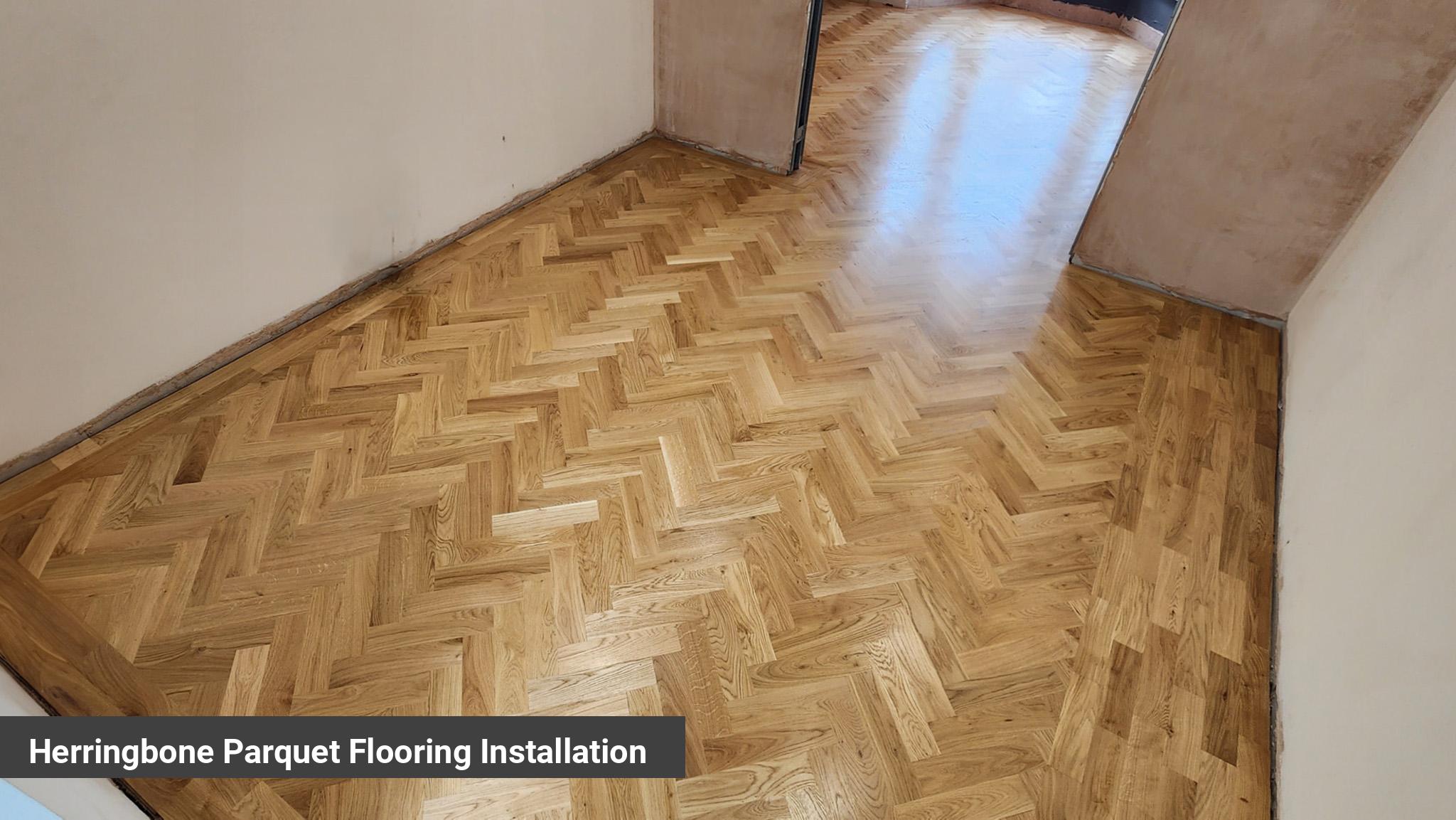
Herringbone is the pattern most people picture when they think of parquet — and with good reason. It's been around since Roman road construction, where stones were laid in this arrangement for structural strength and stability. It was later adopted for timber floors during the Renaissance, and it's been the dominant parquet pattern in European interiors ever since.
The geometry is specific: rectangular blocks laid at 90-degree angles to each other, creating an interlocking zigzag across the whole floor. The visual effect is both dynamic and structured — the eye follows the diagonal movement of the pattern while the overall result feels ordered and elegant.
Herringbone works in virtually every interior context — traditional and contemporary, residential and commercial, hallways and living rooms. It's the most versatile pattern in the parquet family and the one we lay most frequently at Floorworks. The block proportions matter significantly — the ratio of length to width determines how the pattern reads across the floor. Standard proportions typically run 3:1 or 4:1 length to width. The right proportion for a space depends on the room's dimensions and what the pattern needs to do visually.
2. Chevron
Chevron is herringbone's sharper sibling — related in spirit but different in geometry. Where herringbone blocks are cut square at each end, chevron blocks are cut at an angle — typically 45 degrees — so when they're laid, the pattern forms continuous, unbroken V-shapes rather than the offset zigzag of herringbone.
The result is cleaner and more contemporary in feel. The pattern flows continuously across the floor without the interruption that the offset in herringbone creates. This gives chevron a slightly more formal, more precise quality — it's the pattern choice when someone wants the sophistication of parquet with a sharper, more modern edge.
Chevron requires more precise cutting than herringbone — the angled ends have to be exactly consistent across every block for the V-shapes to meet cleanly. Any variation in the angle produces a visible misalignment at the point of each V that draws the eye immediately. For a dedicated guide to chevron installation, see our chevron pattern installation guide.
3. Basket Weave
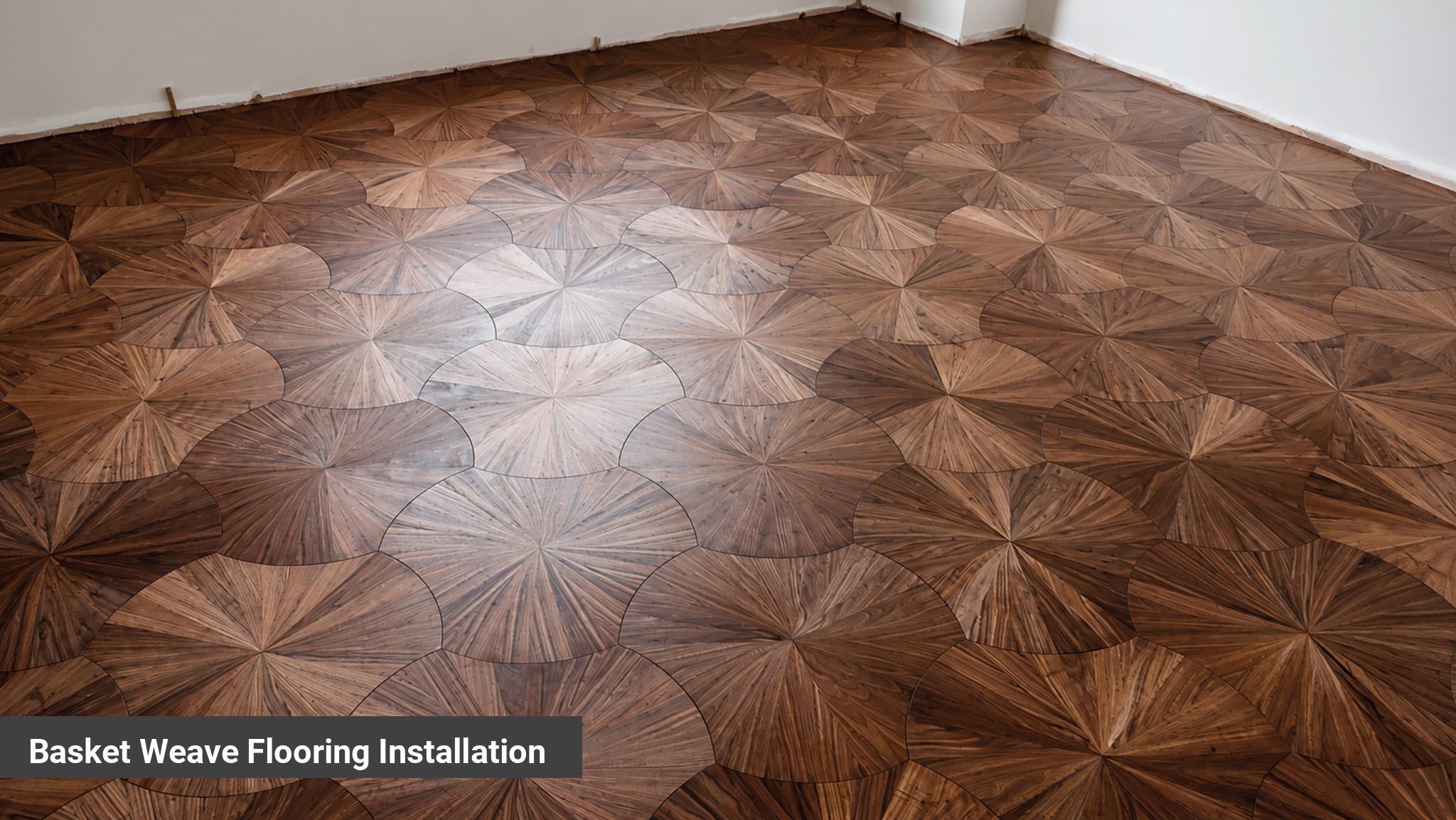
Basket weave is one of the older parquet patterns — inspired by woven fabrics and popularised in European flooring during the early 20th century. The arrangement mimics the over-and-under appearance of woven material: short rectangular blocks are laid in alternating horizontal and vertical groups, creating a pattern that has the visual texture of a woven surface rather than the directional movement of herringbone or chevron.
It adds depth and warmth to a room in a way that's distinctly different from the linear energy of herringbone. Dining rooms, studies, and offices are where basket weave tends to work best — spaces where the pattern's quieter, more structured character suits the purpose of the room without competing with it.
4. Versailles Panel
The Versailles pattern is in a category of its own. Named after the Palace of Versailles where it was first used in the 17th century, it's the most elaborate parquet pattern and the one that requires the most skilled installation. Each Versailles panel is a pre-constructed square unit — typically between 600mm and 1000mm across — that combines squares, rectangles, and diagonal elements within a single panel that is then repeated across the floor.
The effect is extraordinary in the right space — genuinely grand, architecturally significant, and completely unlike anything a plank floor can achieve. Formal dining rooms, reception halls, large commercial spaces, and luxury hotels are where Versailles belongs. It's not a modest floor. It's a statement that defines the room around it.
Installation is significantly more demanding than other parquet patterns — both in terms of the skill required and the time it takes. The panels have to be laid with the same geometric precision as any parquet pattern, but the complexity of the design within each panel makes any misalignment more immediately visible.
5. Brick Pattern
The brick pattern is the most understated member of the parquet family — and often the most overlooked. It follows the same principle as a brick wall: rectangular blocks laid in straight rows, with each row offset by half a block's length from the one beside it.
The result is simple and timeless — more structured than a random plank floor, more discreet than herringbone. It works well in spaces where the floor needs to be present without dominating — kitchens, corridors, and commercial spaces where a clean, geometric floor is the aim without the visual complexity of a more elaborate pattern. It's also the easiest of the parquet patterns to install correctly, which makes it a practical choice for larger areas where installation time is a factor.
6. Hexagon
Hexagonal parquet is the most distinctive pattern in the category — and the one that requires the most precise cutting. Each piece is a true hexagon, and they're arranged in the same honeycomb tessellation pattern found in nature. The effect is striking and contemporary, with a geometric quality that's unlike any other floor type.
Victorian interiors used hexagon extensively — in tiles particularly, but also in timber — and the pattern has seen a significant resurgence in contemporary interiors where the desire for something genuinely individual drives the specification. It suits eclectic interiors and spaces where the floor is meant to be noticed as a design choice rather than a backdrop.
The cutting precision required is significant — any variation in the hexagon geometry produces visible gaps or overlaps at the joints that are impossible to ignore. This is the pattern where the quality of the cutting and the skill of the installation matter most among all the parquet types.
7. Squares and Diamonds
The squares and diamonds pattern is rooted in classical tile mosaics — Roman and Islamic design traditions adapted into timber flooring during the Renaissance. Square blocks are laid either in a grid or rotated 45 degrees to form diamond shapes, sometimes in alternating orientations to create a more complex visual effect.
It's a formal, considered pattern that suits entry halls, dining rooms, and spaces where symmetry and order are part of the design intention. The grid orientation is clean and classical; the diamond orientation has more visual energy and suits slightly larger-scale spaces where the diagonal movement of the pattern can develop properly.
With or Without a Border
Every parquet pattern can be laid with or without a decorative border around the perimeter of the room — and the border choice changes the character of the floor significantly.
A single border — a single row of blocks laid perpendicular to the main pattern around the edge — frames the floor and gives it a defined boundary that separates the parquet from the skirting boards. It adds formality and finish to any pattern.
A double border adds a second framing element — typically the same block in a complementary orientation or a contrasting species for visual distinction. This is the choice for rooms where the floor needs to feel finished and considered in every detail.
No border leaves the pattern running to the wall without interruption — a choice that can look clean and contemporary in the right context, particularly with chevron or brick patterns where the geometry is already sufficiently structured.
At Floorworks, we lay parquet with single or double borders across all the patterns we install — the border decision is always discussed at the site visit as part of the overall design conversation.
Solid vs Engineered: Which Pattern Format Works for Which?
Not every pattern is available in both solid and engineered formats — and where both are available, the installation environment determines which is appropriate.
- Herringbone and chevron are available in both solid and engineered formats across most product ranges. For underfloor heating, engineered is always the specification. For ground floor rooms over concrete with moisture considerations, engineered is again the safer choice. For upper floor rooms over timber subfloors where underfloor heating isn't a factor, solid is a legitimate option.
- Versailles panels are almost exclusively produced in solid timber — the complexity of the pattern within each panel makes the engineered format impractical from a manufacturing standpoint. For spaces with underfloor heating where Versailles is the design choice, the heating system specification has to accommodate the solid timber constraint.
- Basket weave, brick, and hexagon are most commonly available in solid format — check the product range at the site visit to confirm availability in engineered if underfloor heating is part of the project.
The Products We Supply and Install
At Floorworks, parquet is the work we're most passionate about — it's where the craft of flooring is most visible and the result has the most impact. We supply solid and engineered parquet from brands including Kahrs, Boen, QuickStep, Timberlay, Timberlock, and Elka, and we hold solid parquet blocks from stock for immediate availability and for matching existing floors.
We install all the patterns described in this article — herringbone, chevron, basket weave, Versailles, brick, hexagon, and squares and diamonds — with single or double borders where specified, using professional-grade adhesives from Bona, Tover, Wacol, and Mapei. Every installation comes with our two-year Service Guarantee covering both labour and materials.
For existing parquet floors that need restoration rather than new installation, see our parquet floor restoration service — and for the decision between restoration and new installation, our article on parquet floor restoration vs replacement covers exactly that question.
For a deeper look at what makes parquet installation more involved — and more expensive — than a standard plank floor, our article on what makes parquet flooring more expensive to install covers every factor.
Contact Floorworks™ for Professional Flooring Solutions
Parquet flooring covers a genuinely wide range of patterns — from the classic versatility of herringbone and the sharp contemporary quality of chevron, through the textural character of basket weave, the grandeur of Versailles, the simplicity of brick, the individuality of hexagon, to the classical formality of squares and diamonds. Each pattern has a character that suits specific spaces and specific interior approaches — and the right choice depends as much on the room and how it's used as on personal preference.
At Floorworks, we offer free, no-obligation site visits across London for parquet projects — new installation, restoration, or both. We'll discuss the pattern options, the material choice, the border decision, and the finish, and give you a clear picture of what the project involves before any commitment is made.
Get in touch to book a free site visit and start the conversation — because parquet, when it's done right, is one of the most transformative things you can do to a space.


