
Parquet has a way of making a decision feel more complicated than it needs to be. There's something about the herringbone or chevron pattern — the sense that it's a "proper" investment floor rather than a quick refresh — that makes people want to get every detail right, and the solid-versus-engineered question is usually the first one that trips them up.
Here's the reassuring part: it's not actually a difficult decision once you understand what's genuinely different between the two, rather than what the marketing on either side would have you believe. Both are real oak. Both can look absolutely identical once they're down and finished. The difference is entirely in what's underneath the surface — and that difference matters more in some rooms than others.
They Look the Same. That's the Point.
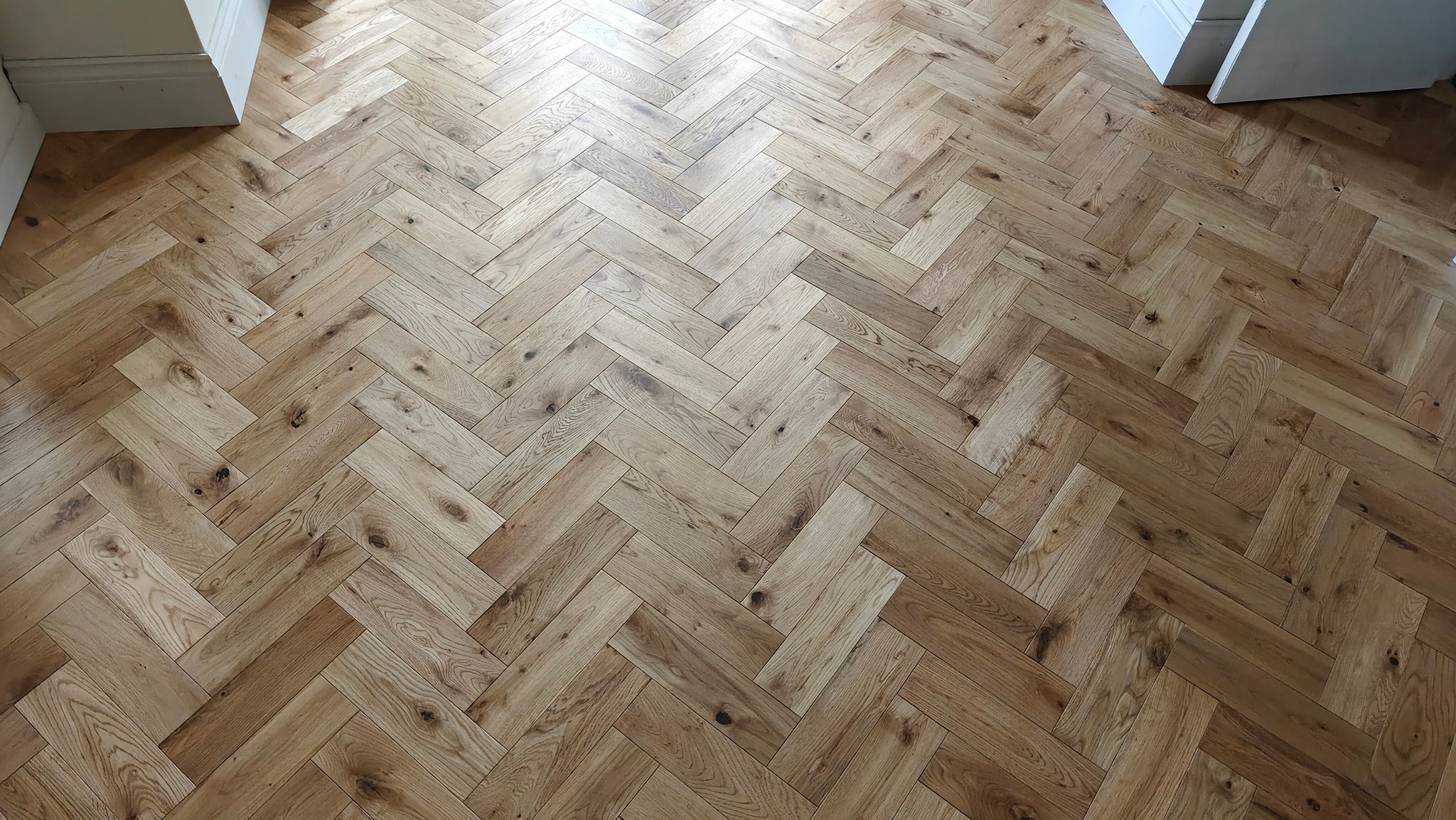
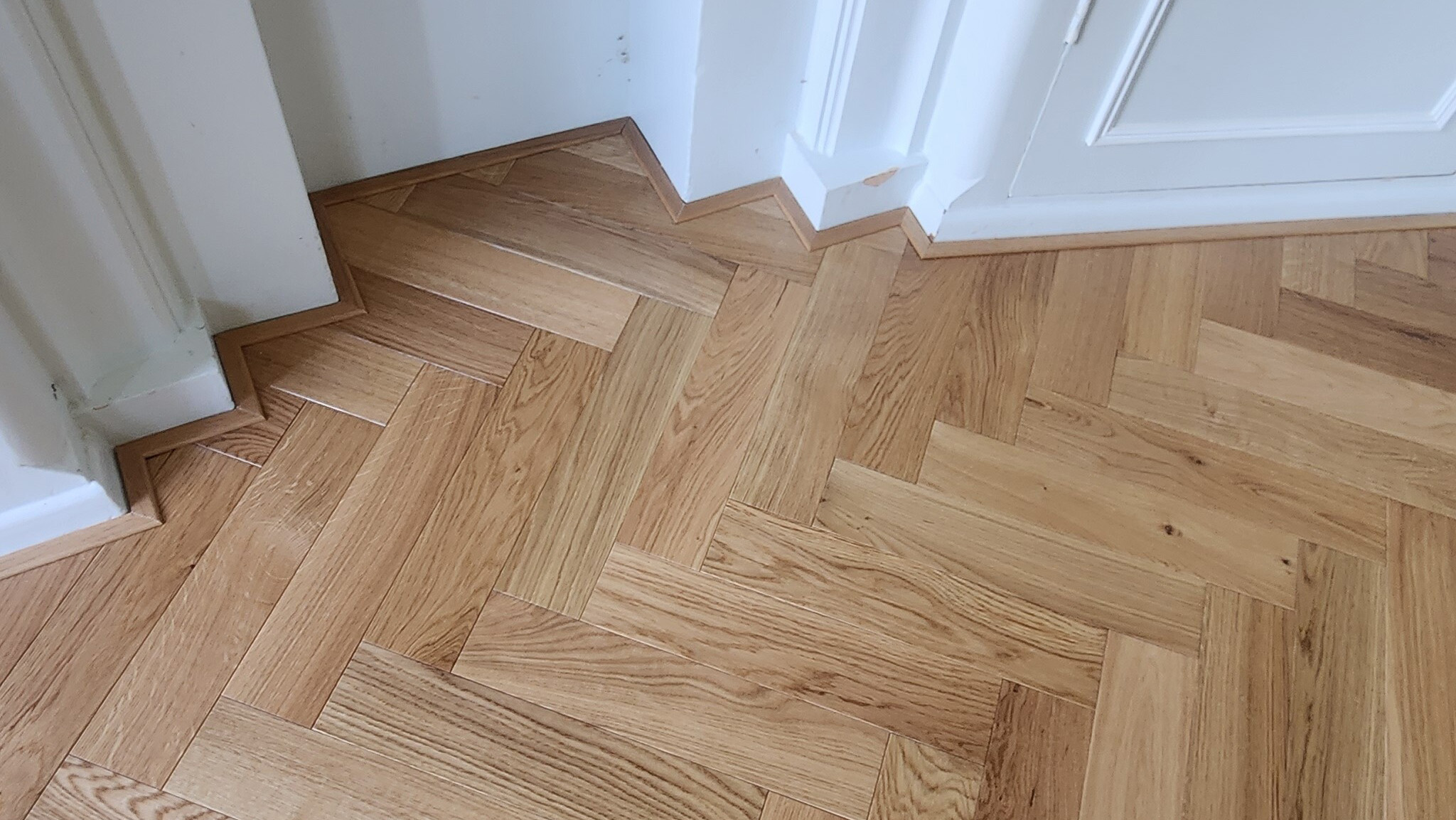
Let's deal with the misconception first, since it's worth clearing up before anything else: engineered oak parquet is not a lesser, fake, or compromised version of solid oak — and if you want the wider context on why oak in particular remains the most-specified species for UK flooring generally, our guide on which timbers are most popular in the UK for wood flooring is a good companion read to this one. The visible wear layer on a good engineered block is genuine solid oak, sanded and finished exactly the same way solid parquet is. Stand in a finished room and look down, and you generally can't tell the difference by eye at all. Anyone telling you engineered parquet "isn't real wood" hasn't looked closely at how it's actually made.
The difference is structural, not visual — and it's entirely about what happens beneath that top layer.
What's Actually Different Underneath
-
Solid oak parquet
Solid oak parquet is exactly what it sounds like: a single, solid block of oak all the way through, top to bottom. It's the traditional construction, the one found in period properties across the UK, and there's something satisfying about a floor that's genuinely one material from surface to subfloor.
-
Engineered oak parquet
Engineered oak parquet has a real oak wear layer bonded onto a multi-ply base — typically several layers of cross-laminated timber, similar in principle to how engineered plank flooring is built. That layered construction is specifically designed to resist the natural movement that solid timber goes through as humidity changes through the year.
This isn't a cost-cutting shortcut. It's a genuine engineering solution to one of solid timber's real limitations, and it's worth understanding exactly what that limitation is before deciding which construction suits your home.
Movement, Humidity, and Where Each One Belongs
Timber is what's known as a hygroscopic material — it absorbs and releases moisture from the surrounding air constantly, expanding and contracting as it does. Solid oak is more responsive to this than engineered oak, because engineered construction's layered, cross-grain build resists that movement far more effectively than a single solid block can.
In a stable, temperature-controlled living room with no major humidity swings, this difference barely matters in practice — solid parquet performs beautifully for decades in exactly this kind of environment, which is why so much original Victorian and Edwardian parquet is still going strong today. But in rooms with genuine humidity challenges — kitchens, bathrooms, ground floor rooms over a solid or occasionally damp subfloor, or any room with underfloor heating — engineered construction's greater dimensional stability becomes a genuinely practical advantage rather than a marginal one.
This is exactly the same underlying principle that makes engineered timber the safer specification in new-build properties, where residual construction moisture takes time to fully dry out, and it's also why underfloor heating compatibility tends to favour engineered oak over solid in the vast majority of floor installations.
Cost: Where the Numbers Actually Land
Solid oak parquet is generally the more expensive option, both in material cost and often in installation, since it typically requires more careful handling and acclimatisation before laying. Engineered oak parquet tends to come in more affordably for a comparable visual quality — though it's worth being clear this isn't because it's a lesser product, but because the multi-ply base beneath the wear layer uses timber more efficiently than a fully solid block does.
That said, cost comparisons within parquet specifically can vary a lot by supplier, grade, and wear layer thickness — a premium engineered parquet with a generous top layer can cost more than an entry-level solid option. It's worth getting genuine like-for-like quotes rather than assuming one category is automatically cheaper across the board.
Refinishing: How Many Times Can You Sand It?
This is one of the most practical long-term differences, and it's worth understanding properly rather than relying on rules of thumb. Solid oak parquet, being timber all the way through, can generally be sanded back and refinished many times over its lifetime — often cited as somewhere in the range of six to ten sandings across a well-maintained floor's life, which is part of why genuinely old parquet floors can still be restored to looking brand new today.
Engineered oak parquet can also be sanded and refinished — this is another point where the "it's not real wood so you can't restore it" misconception falls apart — but the number of times is limited by the thickness of the real oak wear layer sitting on top of the ply base. A generous wear layer of around 4–6mm can typically take two to three sandings over its lifetime; a thinner wear layer allows for fewer. This is genuinely one of the more important numbers to ask about when comparing engineered products, since wear layer thickness varies significantly between manufacturers and price points, and it directly determines how many decades of restoration life you're buying into.
Whichever construction you choose, the finish applied on top plays a real part in how long that surface lasts between sandings. A hard-wearing option like one of the most durable water-based lacquers on the UK market extends the practical life of the wear layer, while an oil finish such as Osmo Polyx hardwax oil offers a different maintenance rhythm — one that suits parquet's many small joints and blocks particularly well, since localised marks can often be spot-treated rather than requiring the whole floor to be resanded.
Installation: A Genuine Practical Difference
Solid parquet blocks are traditionally laid using an adhesive bond directly to a suitable subfloor, and because of the timber's natural movement, they generally need a longer acclimatisation period on-site before installation — allowing the wood to settle to the room's actual conditions before it's fixed in place.
Engineered parquet's greater dimensional stability means a shorter, more predictable acclimatisation period and, in some cases, a floating installation option in addition to the traditional glue-down method — though glue-down remains the preferred approach for parquet specifically, given how much the interlocking pattern relies on every block staying exactly where it's set. If you're weighing this up alongside other engineered flooring, it's worth knowing that the general principles of engineered timber's stability apply consistently across parquet and plank formats alike.
Underfloor Heating: A Common Deciding Factor
If underfloor heating is part of your project, it's genuinely one of the more decisive factors in this whole comparison. Engineered oak parquet is, in the large majority of cases, the more suitable and better-supported choice — its layered construction handles the consistent, gentle heat cycling far more predictably than solid timber does, and most manufacturer warranties reflect this by favouring or requiring engineered construction for underfloor heating installations. Solid oak parquet can sometimes be specified over underfloor heating, but it demands considerably more careful management of heat output and humidity, and it's a conversation worth having honestly with your installer before committing, not after the heating's already in and running.
So, Which Should You Choose?
If you're working with a stable, well-ventilated living space, without underfloor heating, and you want the most traditional, all-the-way-through construction with the longest possible sanding lifespan ahead of it — solid oak parquet is a genuinely excellent choice, and it's the one that most closely matches the character of a period property's original floor.
If your project involves a kitchen, a ground floor room, underfloor heating, or a newer build where humidity conditions are less predictable, engineered oak parquet is very often the more sensible specification — delivering the same genuine oak surface and the same visual impact, with meaningfully better real-world stability for the room it's actually going into.
And if you're simply not sure which category your room falls into, that's precisely the kind of question worth asking before ordering material, not after — because the herringbone pattern looks identical either way, but the two constructions are solving genuinely different problems underneath it.
Ask Floorworks™ and Get the Flooring Answers You Need

Get an Honest Recommendation for Your Room
Every one of the factors above — subfloor condition, humidity, underfloor heating, budget — plays out differently room by room, which is why a proper site assessment matters more for parquet than for almost any other flooring decision. Get in touch via Floorworks for a free site visit, and we'll give you a clear, honest recommendation on solid versus engineered based on your actual space — not a generic rule of thumb.


